Quranic Answer
Difficult times and facing challenges are an inseparable part of human life, and in the teachings of the Holy Quran, these periods are presented not merely as punishment, but as opportunities for spiritual growth, self-purification, and deepening one's connection with the Lord. Allah explicitly states in the Quran that humans will be tested to gauge their patience, faith, and reliance (Tawakkul). Therefore, understanding this Quranic truth—that difficulties are part of Divine wisdom—is the first step towards drawing closer to God during these times. One of the most crucial ways to draw near to God during hardship is through 'patience' (Sabr) and 'prayer' (Salat). The Quran, in Surah Al-Baqarah, verse 153, states: "O you who have believed, seek help through patience and prayer. Indeed, Allah is with the patient." This verse clearly indicates that patience is not merely passive endurance of problems; rather, it is an active force that stabilizes a person against adversities. Patience manifests in three main forms: patience in obedience (perseverance in fulfilling obligations), patience from disobedience (abstaining from sins despite temptations), and patience in affliction (enduring difficulties and calamities). All three types of patience lead a person towards God, because at the heart of each is submission to Divine will and trust in His planning. Prayer, too, is the pillar of religion and the ascension of the believer; a peaceful refuge in the midst of storms. In moments of prayer, free from worldly attachments, a person speaks directly with their Creator, presents their grievances, and seeks tranquility from Him. Prayer, especially when performed with presence of heart and humility, cleanses the heart and strengthens the soul, and this spiritual reinforcement empowers one to face difficulties. Another strategy is 'Dhikr' (remembrance of Allah). Surah Ar-Ra'd, verse 28, states: "Unquestionably, by the remembrance of Allah hearts are assured." In moments of distress and anxiety, nothing can be as calming as the remembrance of God. Dhikr is not merely reciting tasbih or specific litanies; it also includes contemplating divine verses, reciting the Quran, and remembering the beautiful names and attributes of Allah. When a person, amidst hardship, recalls the absolute power, infinite wisdom, and boundless mercy of Allah, they feel secure and assured. This constant remembrance reduces human dependence on anything other than God and makes them more steadfast on the path of pure monotheism and reliance. The deeper and more insightful this remembrance, the closer the heart becomes to its Lord. 'Tawakkul' (reliance on God) is also a fundamental principle on this path. When a person exerts their utmost effort and then entrusts the outcome to God, the heavy burden of responsibility is lifted from their shoulders. The Quran in Surah At-Talaq, verse 3, says: "And whoever relies upon Allah - then He is sufficient for him." Tawakkul does not mean ignoring worldly means and causes; rather, it is the belief that even the means are in God's power, and He alone can resolve difficulties. In hardship, when all paths seem closed, reliance on Allah opens a window of hope and connects the person to the infinite Divine power. This deep reliance eradicates feelings of weakness and helplessness, replacing them with trust in Allah's absolute power. 'Du'a' (supplication) and sincere prayer are among the most effective ways to draw closer to God during difficulties. Surah Al-Baqarah, verse 186, states: "And when My servants ask you, [O Muhammad], concerning Me - indeed I am near. I respond to the invocation of the supplicant when he calls upon Me." Du'a is a direct bridge between the servant and the Lord. In moments of weakness and inability, when a person feels they have no helper but God, they raise their hands in supplication, sharing all their needs, fears, and hopes with Him. This acknowledgment of inherent poverty before Allah's absolute richness brings about the utmost servitude and closeness. Even if a prayer is not immediately answered, the act of supplication itself brings incomparable peace to the heart and frees a person from feelings of loneliness and despair. Du'a makes a person realize that everything that happens is by Allah's will and knowledge, and the way out of any problem is through seeking assistance from His Holy Essence. Finally, 'contemplation on the philosophy of trials' and 'gratitude' also play key roles. The Quran, in Surah Al-Inshirah, verses 5 and 6, emphasizes: "For indeed, with hardship [will be] ease. Indeed, with hardship [will be] ease." This divine promise keeps hope alive in the heart of the believer. Difficulties are opportunities for a person to realize their weakness before divine power and awaken from heedlessness. They purify sins, elevate one's status, and teach lessons that would never be learned in ease. Even amidst problems, one can find aspects for gratitude: remaining health, a supportive family, or even simply the opportunity of life itself. Gratitude during hardship changes a person's perspective and directs them towards the positive aspects of life, which in turn increases hope and a feeling of closeness to God. With every step a person takes towards patience, prayer, remembrance, reliance, supplication, and gratitude, the veils between them and their Lord are lifted, and they find themselves in the secure refuge of Allah, closer than ever before. This inner journey is transformative and profound, turning a person into a stronger and more spiritual version of themselves.
Related Verses
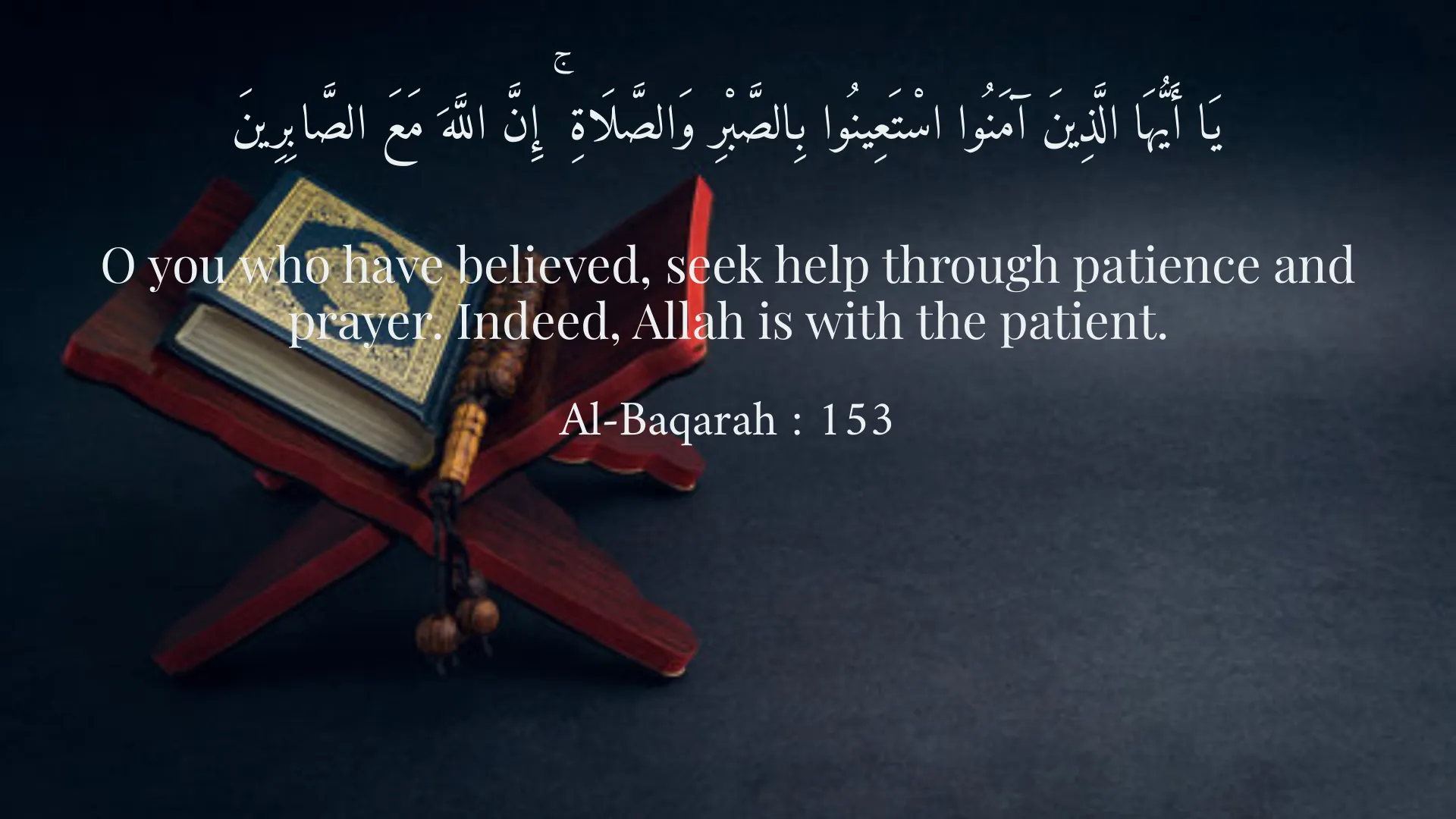
يَا أَيُّهَا الَّذِينَ آمَنُوا اسْتَعِينُوا بِالصَّبْرِ وَالصَّلَاةِ ۚ إِنَّ اللَّهَ مَعَ الصَّابِرِينَ
O you who have believed, seek help through patience and prayer. Indeed, Allah is with the patient.
Al-Baqarah : 153
وَإِذَا سَأَلَكَ عِبَادِي عَنِّي فَإِنِّي قَرِيبٌ ۖ أُجِيبُ دَعْوَةَ الدَّاعِ إِذَا دَعَانِ ۖ فَلْيَسْتَجِيبُوا لِي وَلْيُؤْمِنُوا بِي لَعَلَّهُمْ يَرْشُدُونَ
And when My servants ask you, [O Muhammad], concerning Me - indeed I am near. I respond to the invocation of the supplicant when he calls upon Me. So let them respond to Me [by obedience] and believe in Me that they may be [rightly] guided.
Al-Baqarah : 186
الَّذِينَ آمَنُوا وَتَطْمَئِنُّ قُلُوبُهُم بِذِكْرِ اللَّهِ ۗ أَلَا بِذِكْرِ اللَّهِ تَطْمَئِنُّ الْقُلُوبُ
Those who have believed and whose hearts are assured by the remembrance of Allah. Unquestionably, by the remembrance of Allah hearts are assured.
Ar-Ra'd : 28
فَإِنَّ مَعَ الْعُسْرِ يُسْرًا
For indeed, with hardship [will be] ease.
Al-Inshirah : 5
إِنَّ مَعَ الْعُسْرِ يُسْرًا
Indeed, with hardship [will be] ease.
Al-Inshirah : 6
Short Story
Once, a wealthy merchant journeyed with his caravan across a desolate desert. Suddenly, a fierce sandstorm erupted, scattering his possessions and plunging him into despair. Amidst the chaos, a wise and ascetic dervish, who was with the caravan, sat calmly, murmuring prayers. The astonished merchant asked him, "How can you be so calm and undisturbed amidst this great calamity? All my wealth is lost!" The dervish smiled and said, "O friend, what you lost was but fleeting dust. My true treasure is in my heart, a treasure that no storm can scatter and no thief can steal: the treasure of trust in the Creator. Whenever the outer world crumbles, the inner world, built on the remembrance of God, remains steadfast and firm. Indeed, it is in such moments of utter helplessness that one truly feels the hand of divine mercy, closer than one's own jugular vein. The more the world turns its back, the more fervently the soul turns to its Maker, finding peace in His boundless presence." Deeply moved by these wise words, the merchant looked inward and, for the first time amidst the desolation, found a profound sense of peace, turning his heart towards the One True Provider. The storm subsided, and some lost goods were found, but the merchant had discovered a far more precious treasure: unwavering faith.