Quranic Answer
In today's fast-paced and clamorous world, where we are surrounded by all sorts of material and intellectual concerns, the question often arises: how can we achieve peace and connection with the Divine essence amidst this chaos and confusion? Has God truly “gone missing” that we should seek to find Him, or has this clamor merely cast a veil over our eyes? The Holy Quran, with its luminous words, clearly shows us the way and emphasizes that God is not lost; rather, He is always present, observant, and closer to us than we can imagine. Finding God amidst the busyness of life is more an inner journey than an external search; a journey to awaken one's innate nature (fitra), purify the heart, and practice presence. This path requires a deeper understanding of the Divine essence, paying attention to His signs in the universe, and committing to actions that bring us closer to Him. One of the most fundamental Quranic teachings in this regard is the concept of “Divine Proximity.” Almighty God states in Surah Qaf, verse 16: “وَنَحْنُ أَقْرَبُ إِلَيْهِ مِنْ حَبْلِ الْوَرِيدِ” (And We are closer to him than [his] jugular vein). This verse clearly indicates that God is not in distant realms, but is present within the depths of our being and in every moment of our lives. Thus, the challenge is not to find God, but to perceive this presence and remove the dust of heedlessness from the eyes of our hearts. The clamor of the world often stems from material attachments, endless ambitions, and baseless worries that create a veil between us and this constant presence. To remove this veil, it is necessary to turn inward and pay attention to God's signs in the horizons and within ourselves. The Holy Quran invites us to “contemplate” (Tadabbur) and “reflect” (Tafakkur) on creation. In Surah Al-Imran, verse 191, believers are described as: “الَّذِينَ يَذْكُرُونَ اللَّهَ قِيَامًا وَقُعُودًا وَعَلَى جُنُوبِهِمْ وَيَتَفَكَّرُونَ فِي خَلْقِ السَّمَاوَاتِ وَالْأَرْضِ” (Those who remember Allah while standing or sitting or [lying] on their sides and reflect upon the creation of the heavens and the earth). Every atom of existence, from the smallest cell to the vastest galaxies, bears witness to the Creator's power, wisdom, and beauty. Paying attention to the exquisite order of nature, the blossoming of flowers, the majesty of mountains, the movement of clouds, and the flow of water can all be windows to Divine knowledge. When we look at these signs with profound insight, we actually find God in His manifestations, and our hearts are drawn towards Him. This deep and conscious reflection not only calms the mind but also elevates the soul, distancing it from external clamor. One of the most effective and tangible ways to find God amidst the clamor is through continuous connection via “acts of worship” (Ibadat). Prayer (Salat), as the pillar of religion and the ascension of the believer, provides us with moments to break free from worldly constraints and speak directly with our Lord. In prayer, by focusing on the words and their meanings, the mind is saved from dispersion, and the heart turns towards the Origin of existence. This daily connection is like a spiritual shower that purifies the soul and brings deep tranquility. God says in Surah Al-Baqarah, verse 153: “يَاأَيُّهَا الَّذِينَ آمَنُوا اسْتَعِينُوا بِالصَّبْرِ وَالصَّلَاةِ” (O you who have believed, seek help through patience and prayer). Prayer is not only a means of seeking help but also a way to find the Divine presence in the moment. Along with prayer, “Dhikr” or remembrance of God is the key to the tranquility of hearts. In Surah Ar-Ra'd, verse 28, we read: “أَلَا بِذِكْرِ اللَّهِ تَطْمَئِنُّ الْقُلُوبُ” (Unquestionably, by the remembrance of Allah hearts are assured). Dhikr is not limited to merely repeating specific words; it encompasses any form of heartfelt, verbal, or practical remembrance of God. This can include reciting the Quran, glorifying Allah (Tasbih), praising Him (Hamd), declaring His greatness (Takbir), and even simply being mindful of the Divine presence in all matters. The more prominent the remembrance of God is in our lives, the less the clamor of the world can disturb our peace. A mind and heart occupied with the remembrance of God leave no room for worldly temptations and baseless worries. This continuous remembrance guides us towards a more meaningful and purposeful life. Furthermore, “serving creation” and “doing good to others” are also ways that bring a person closer to God. The Quran repeatedly emphasizes kindness and benevolence (Ihsan). When we help others with sincere intentions, we are indeed walking on the path of Divine pleasure, and we observe the manifestations of Divine mercy and majesty in the needy. Imam Ali (AS) said: “Seek God in broken hearts.” This saying beautifully illustrates that compassion and empathy for God's servants are a direct path to God. Giving Zakat, charity, caring for orphans and the poor, and any good deed performed with a divine intention connects a person to the primary source of goodness and blessings, which is God. To find God amidst the clamor, it is necessary to avoid “excessive attachment to this world.” The world is the cultivation ground for the Hereafter and should not be the ultimate goal of life. The Holy Quran states in Surah Al-Hadid, verse 20: “اعْلَمُوا أَنَّمَا الْحَيَاةُ الدُّنْيَا لَعِبٌ وَلَهْوٌ وَزِينَةٌ وَتَفَاخُرٌ بَيْنَكُمْ وَتَكَاثُرٌ فِي الْأَمْوَالِ وَالْأَوْلَادِ” (Know that the life of this world is only play and amusement, pomp and mutual boasting among you, and rivalry in respect of wealth and children). This verse serves as a warning that material values and worldly appearances should not distract us from the primary purpose of creation and connection with the Creator. Releasing egoistic and material attachments does not mean giving up on striving for a good life, but rather having a realistic view of the transient nature of this world and prioritizing enduring values of the Hereafter. When the heart is freed from worldly attachments, it finds more space for Divine light. “Patience” (Sabr) and “steadfastness” (Istiqaamah) in the face of difficulties and challenges are also a way to find God. In difficult moments, when all doors seem closed, relying on and seeking refuge in God is not only comforting but also leads to a deeper understanding of Divine wisdom. Trials and tribulations are opportunities to draw us closer to God and to recognize His power and assistance. “إِنَّ اللَّهَ مَعَ الصَّابِرِينَ” (Indeed, Allah is with the patient) – this companionship is the very Divine presence and assistance that manifests itself in times of hardship. Ultimately, finding God amidst the clamor of the world is a continuous process of “self-purification” and “inner cleansing.” A heart cleansed of arrogance, envy, hypocrisy, and other moral vices will be a clearer mirror for reflecting Divine light. Purifying the self and striving to acquire moral virtues is a way to approach Divine attributes and, consequently, to better understand His essence. This path is an endless journey, where every step brings a person closer to the source of peace and meaning. By adhering to these Quranic principles – paying attention to God's constant presence, contemplating creation, connecting through acts of worship, constant remembrance of Him, serving creation, and detaching from material desires – one can experience true peace and Divine presence amidst the world's chaos. This presence not only gives meaning to life but also guides humanity towards eternal felicity.
Related Verses
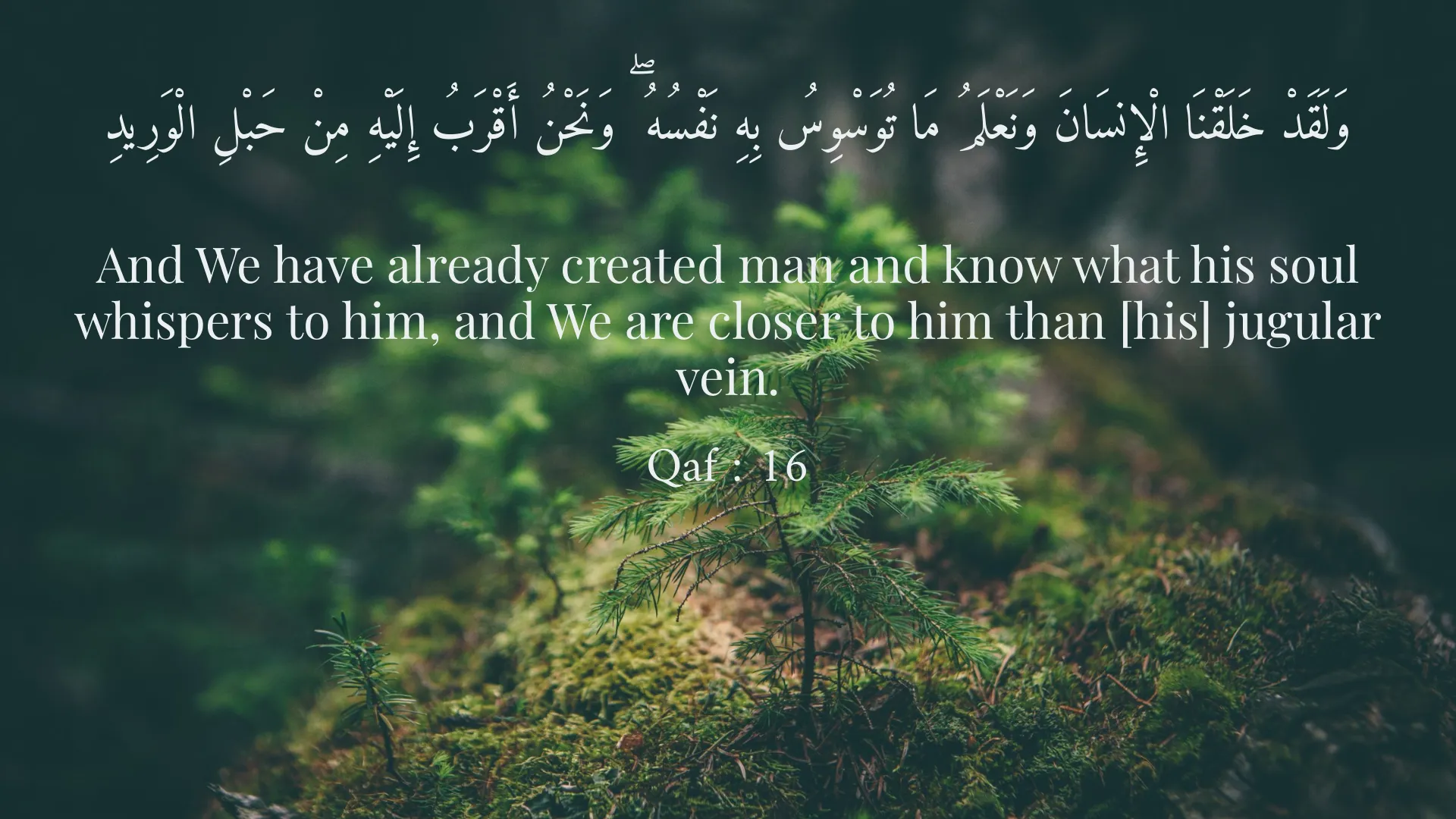
وَلَقَدْ خَلَقْنَا الْإِنسَانَ وَنَعْلَمُ مَا تُوَسْوِسُ بِهِ نَفْسُهُ ۖ وَنَحْنُ أَقْرَبُ إِلَيْهِ مِنْ حَبْلِ الْوَرِيدِ
And We have already created man and know what his soul whispers to him, and We are closer to him than [his] jugular vein.
Qaf : 16
الَّذِينَ يَذْكُرُونَ اللَّهَ قِيَامًا وَقُعُودًا وَعَلَىٰ جُنُوبِهِمْ وَيَتَفَكَّرُونَ فِي خَلْقِ السَّمَاوَاتِ وَالْأَرْضِ رَبَّنَا مَا خَلَقْتَ هَٰذَا بَاطِلًا سُبْحَانَكَ فَقِنَا عَذَابَ النَّارِ
Those who remember Allah while standing or sitting or [lying] on their sides and reflect upon the creation of the heavens and the earth, [saying], "Our Lord, You did not create this in vain; exalted are You [above imperfection], so protect us from the punishment of the Fire."
Al-Imran : 191
الَّذِينَ آمَنُوا وَتَطْمَئِنُّ قُلُوبُهُم بِذِكْرِ اللَّهِ ۗ أَلَا بِذِكْرِ اللَّهِ تَطْمَئِنُّ الْقُلُوبُ
Those who have believed and whose hearts are assured by the remembrance of Allah. Unquestionably, by the remembrance of Allah hearts are assured.
Ar-Ra'd : 28
Short Story
One of Saadi Shirazi's disciples asked, "O Master of Eloquence, how can one find a jewel like peace and connection to the Divine amidst the clamor of this world's marketplace?" Saadi smiled and said, "It is told that in ancient times, there lived a wealthy merchant in the city of Baghdad. He possessed immense wealth and possessions but was constantly in turmoil and anxiety. He sought peace from every sage and traveled to every corner of the world; yet, he found no peace. One day, he arrived at a remote village and saw a dervish sitting in a corner, dressed in simple clothes, engaged in remembrance with complete tranquility. The merchant asked him, 'O Dervish, how do you live so peacefully and carefree in this poverty, while I, with all my wealth, do not have a moment's peace?' The dervish sighed and said, 'O master, you seek God in wealth, status, and distant travels, but I have found Him within my own heart and in His constant remembrance. The clamor of the world has distanced you from yourself. If you look within and remove the dust of attachments from your heart, you will see that He is closer to you than your jugular vein, and you will find peace right there, not in the noisy marketplaces.' The merchant was deeply moved by the dervish's words and changed his way of life, realizing that God and inner peace are not found externally, but by polishing the mirror of the heart.