Quranic Answer
Religious upbringing is undoubtedly one of the essential pillars of human growth and development. In a world increasingly characterized by materialism and moral ambiguity, instilling a sense of spirituality and understanding of one's beliefs is crucial for nurturing a compassionate and responsible individual. This discussion delves into the profound impact of a religious upbringing, emphasizing the necessity of love and mercy as foundational elements, particularly within the Islamic context as articulated in the Holy Quran. The Quran explicitly emphasizes the significance of love and mercy in various aspects of human interaction, particularly in the upbringing of children. A religious upbringing cannot effectively shape individuals without the nurturing influence of love; conversely, love devoid of religious principles can lead individuals astray. The Quran’s teachings provide a clear framework for nurturing children in a loving environment while instilling strong moral and ethical guidance. For instance, Surah Ar-Rum, verse 21, states: 'And among His signs is that He created for you from yourselves mates that you may find tranquility in them; and He placed between you affection and mercy.' This particular verse underscores the importance of love and kindness within the familial structure. A family that embodies these qualities serves as a fertile ground for spiritual growth and development. It is within the loving embrace of family that children learn the values that will guide them throughout their lives. Moreover, to impart a religious upbringing to children, employing a loving language is fundamental. Communication laden with empathy, warmth, and affection leads children closer to God and fosters a genuine love for their Creator. This loving dialogue can manifest in numerous ways, including storytelling, shared experiences, and guided reflections on religious texts. The objective is to create a nurturing atmosphere where children feel safe and valued, allowing them to explore and express their faith freely. Additionally, Surah Al-Baqarah, verse 177, articulates that belief in God should be paired with good deeds and love for others: 'Righteousness is not that you turn your faces toward the east or the west, but [true righteousness] is in one who believes in Allah and the Last Day, and the angels and the Book and the prophets and gives his wealth, in spite of love for it, to relatives, orphans, the needy, the traveler, those who ask [for help], and for freeing slaves; [and who] establishes prayer and gives zakah; [those who] fulfill their promise when they promise; and [those who] are patient in poverty and hardship and during battle. It is those who have been true, and it is those who are the righteous.' This verse highlights that genuine belief must be active and manifested through righteous actions. Parents are entrusted with not only educating their children about religious concepts but also modeling these behaviors through their actions. When parents embody the values of love, service, and community, children are more likely to internalize these principles and incorporate them into their daily lives, thus shaping them into responsible and loving individuals. Religious values can serve as a compass for making ethical decisions and understanding one’s responsibilities toward others and society at large. By creating an environment rich in love and compassion, parents can instill these vital religious principles into their children. This foundational love encourages children to extend kindness and understanding beyond their families and into their communities. When children witness love in action, be it in the form of charitable acts or simple gestures of kindness, they learn the essence of compassion and the importance of empathy. Furthermore, fostering a loving and merciful environment is essential for engaging children in religious practices. Participation in communal prayers, religious events, or activities centered around helping those in need can significantly impact a child's spiritual development. Such activities reinforce the notions of belonging and community while also promoting an understanding of faith as a living and active force within their lives. Moreover, schools and educational institutions play an important role in complementing a religious upbringing by providing structured opportunities for spiritual education. These institutions must also foster an environment where love and mercy are paramount. Educators who embody these qualities can inspire children to embrace their faith sincerely and meaningfully. Integrating religious education with emotional growth prepares children not only academically but spiritually and ethically. In conclusion, the essence of religious upbringing is intricately tied to love and mercy. The teachings of the Holy Quran provide a clear framework for fostering an environment conducive to spiritual growth while emphasizing the ties of affection within families. As parents implement loving communication and model righteous behavior, children will naturally gravitate toward the principles of their faith, nurturing an enduring relationship with God and a commitment to love for others. It is through this lens of love and mercy that religious education becomes a transformative experience, shaping the next generation to be compassionate, responsible, and engaged members of society. Ultimately, instilling these values within our children promises not only to enrich their personal lives but also to contribute positively to the broader community, creating a world rooted in love, understanding, and harmony.
Related Verses
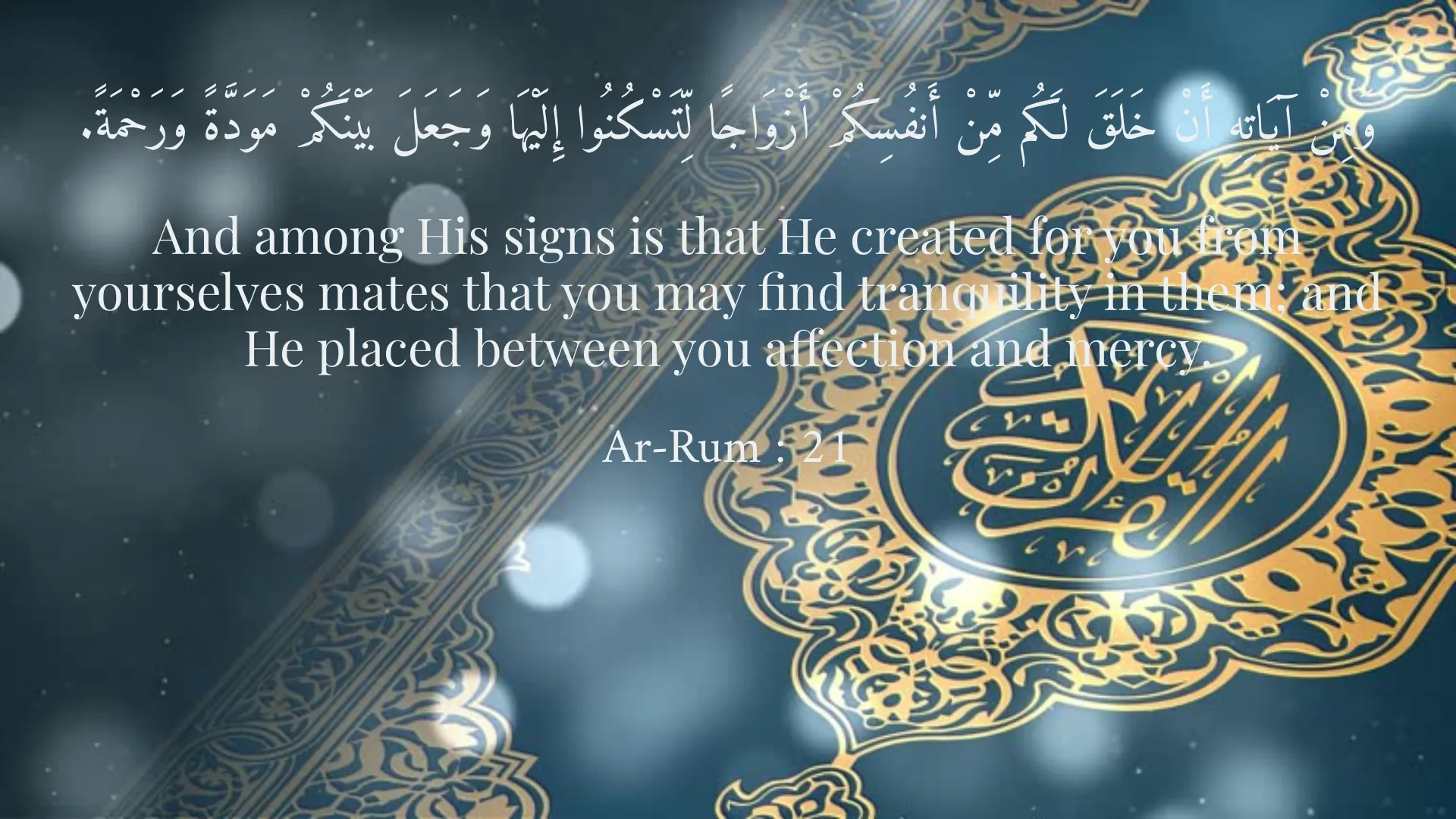
وَمِنْ آيَاتِهِ أَنْ خَلَقَ لَكُم مِّنْ أَنفُسِكُمْ أَزْوَاجًا لِّتَسْكُنُوا إِلَيْهَا وَجَعَلَ بَيْنَكُمْ مَوَدَّةً وَرَحْمَةً.
And among His signs is that He created for you from yourselves mates that you may find tranquility in them; and He placed between you affection and mercy.
Ar-Rum : 21
لَيْسَ الْبِرَّ أَنْ تُوَلُّوا وُجُوهَكُمْ قِبَلَ الْمَشْرِقِ وَالْمَغْرِبِ وَلَـٰكِنَّ الْبِرَّ مَن آمَنَ بِاللَّـهِ وَالْيَوْمِ الْآخِرِ.
Righteousness is not that you turn your faces toward the east or the west, but [true righteousness] is in one who believes in Allah and the Last Day.
Al-Baqarah : 177
Short Story
Once upon a time, a boy named Ali was speaking to his parents and asking them to help him learn the Quran. His parents, with kindness and patience, explained the verses to him and shared stories about love and friendship with God. With this affection and interest, Ali turned towards studying the Quran and became closer to God day by day. He also tried to learn the affectionate behaviors from his parents and spread them among his friends.