Quranic Answer
Raising children is a fundamental responsibility that every parent takes on, particularly in the context of Islamic teachings. In Islam, the upbringing of children is not merely a duty but a sacred task that requires dedication and adherence to principles laid out in the Holy Quran. The Quran serves as a comprehensive guide for parents, embedding mutual respect, faith, and moral character into the child-rearing process. This article delves into the principles and guidelines presented in the Quran regarding child-rearing, emphasizing the spiritual connection parents must foster with God, the moral teachings they should impart, and the influence of parental behavior on children. At the heart of Quranic teachings regarding child-rearing lies the establishment of a connection between the parent, the child, and God. This connection is paramount as it lays the foundation for a child’s spiritual and moral development. The Quran conveys this in many verses, with Surah Al-Isra, verse 23, standing out as a powerful reminder. In this verse, Allah commands us to treat our parents with kindness, emphasizing that respect for one’s parents is a significant virtue in Islam. This instruction not only reflects the importance of honoring one’s parents but also teaches children the value of respecting their elders and, more broadly, the significance of ethical behavior towards others. Further deepening this religious foundation is Surah Luqman, verse 13, where Luqman imparts wisdom to his son, advising him to worship Allah alone and to abstain from associating partners with Him. This advice is not simply a call to worship but an essential guideline indicating that the foundational element of a child’s upbringing should be rooted firmly in faith. By instilling the belief in monotheism and the oneness of God at an early age, parents lay the groundwork for a child’s future moral compass, guiding them toward righteousness. In addition to instilling faith, the behavior of parents plays a critical role in shaping their children’s character and outlook on life. The Prophet Muhammad (peace be upon him) elucidates this relationship succinctly in his saying: "Every child is born with a pure nature; its parents make him a Jew, a Christian, or a Zoroastrian." This profound statement underlines the parental responsibility to embody virtuous qualities and serve as role models for their children's development. Parents must navigate their own faith and convictions to provide a consistent example, ensuring that their actions align with the lessons they impart. Moreover, it is essential to understand and recognize the collaborative nature of parenting highlighted in the Quran. In Surah Al-Baqarah, verse 233, Allah speaks to the virtues of raising children, asserting that each parent plays an integral role in the nurturing process. He states, "Mothers may breastfeed their children two complete years for whoever wishes to complete the nursing [period]." This verse underscores the importance of shared responsibilities in child-rearing, showing that both mothers and fathers have unique contributions to make in a child’s life. The mention of a mother’s role in breastfeeding is particularly significant as it illustrates the importance of nurturing and caring for the child from infancy. Breastfeeding not only provides physical sustenance but also cultivates emotional bonds between mother and child, laying the groundwork for a child's social and emotional development. Fathers too are encouraged to take active roles in their children’s lives, contributing to their upbringing through love, guidance, and emotional support. Indeed, in this shared journey of parenting, mutual respect and collaboration are imperative. Parents are encouraged to communicate effectively, sharing responsibilities while making collective decisions that cater to their children's spiritual and emotional upbringing. Such interactions foster a harmonious environment where children can thrive and absorb lessons that extend beyond mere words, as children learn much from observing their parents' behaviors and their approach to life's challenges. As parents strive to raise morally upright and spiritually conscious children, they must also teach essential values such as honesty, compassion, patience, and humility. These moral lessons, which are deeply rooted in Islamic teachings, should be emphasized during everyday interactions and experiences. Parents could draw upon stories from the Quran to impart values, as stories often resonate more profoundly with children, providing them with practical examples of virtuous behavior. Additionally, involving children in community activities and religious gatherings can also reinforce the teachings of Islam, enabling them to engage with their peers in a supportive and spiritually enriching environment. Such practices help children develop a sense of belonging and connection within their community, which is crucial for their growth and social development. Ultimately, the Quranic principles of child-rearing advocate for a holistic approach that encompasses spiritual, moral, and emotional dimensions. Parents must maintain a close relationship with God and model devout behavior, reinforcing faith as a guiding principle in their children’s lives. This dedication materializes through actions, conversations, and a nurturing environment—culminating in raising children who are aware of their duties to themselves, to God, and to society. In summary, the responsibility of raising children in Islam transcends mere obligation; it embodies a sacred trust vested in parents by Allah. By adhering to the principles laid out in the Quran—prioritizing a connection with God, imparting moral guidance, and exemplifying virtuous behavior—parents can fulfill their roles effectively, ensuring their children grow into righteous individuals. It is through a combination of faith, respect, and commitment that the next generation can navigate the complexities of life while remaining anchored to the principles of Islam. By investing in the upbringing of their children, parents contribute not only to their personal growth but also to the broader society, fostering a community grounded in faith and ethical values.
Related Verses
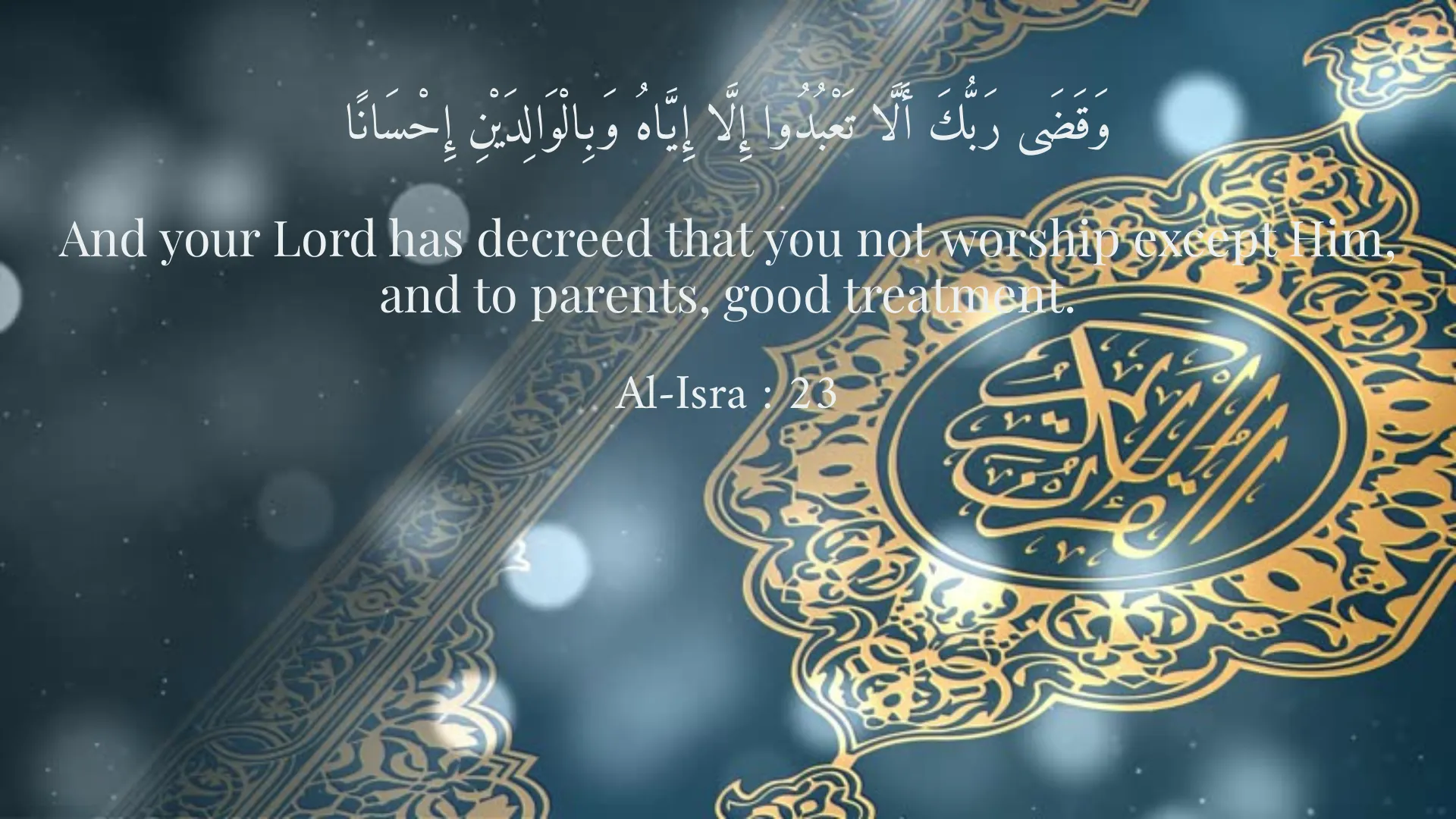
وَقَضَى رَبُّكَ أَلَّا تَعْبُدُوا إِلَّا إِيَّاهُ وَبِالْوَالِدَيْنِ إِحْسَانًا
And your Lord has decreed that you not worship except Him, and to parents, good treatment.
Al-Isra : 23
وَإِذْ قَالَ لُقْمَانُ لِابْنِهِۦ وَهُوَ يَعِظُهُ يَـٰبُنَيَّ لَا تُشْرِكْ بِاللَّهِ إِنَّ الشِّرْكَ لَظُلْمٌ عَظِيمٌ
And (mention) when Luqman said to his son while he was instructing him, 'O my son, do not associate [anything] with Allah. Indeed, association [with Him] is great injustice.'
Luqman : 13
وَإِنْ أَرَادُوا أَن يُرْضِعُوا أَولَـٰدَهُمْ فَلَهُنَّ أَجْرٌۭ ۖ عَلَى الْمَعْرُوفِ
And if they decide on weaning through nursing, there is no blame upon either of them if they give suck to their children.
Al-Baqarah : 233
Short Story
One day an old man would go to his garden and stand in front of the old trees that he had cared for over the years. He remembered how he had planted a tiny seed initially and, through watering and nurturing it, it had grown strong. He thought, "Raising children is just like these trees. They must be nurtured with love and care to bear fruit and provide good yields."