Quranic Answer
The feeling of being distant from God, or even trying to “run away” from Him, is a deeply human experience that can stem from guilt, despair, overwhelming worldly concerns, or a profound misunderstanding of His true nature. However, the Holy Quran explicitly teaches us that it is truly impossible to run away from the Merciful Lord, for He is closer to us than our jugular vein and encompasses all things with His knowledge and power. The concept of “not running away from God” actually means finding solace and security in His refuge, turning to Him in all circumstances, and maintaining a profound spiritual and practical connection with the Originator of all existence. The Quran outlines several paths to strengthen this bond and dissipate any sense of flight or separation from the Divine, guiding us towards tranquility and assurance in His divine embrace. The first and perhaps most crucial step to prevent “running away” from God is to truly grasp His perpetual presence and boundless closeness. Allah explicitly states in the Quran: “And We have already created man and know what his soul whispers to him, and We are closer to him than [his] jugular vein.” (Surah Qaf, 50:16). This verse serves as a powerful reminder that Allah is not only ever-present but is also intimately aware of every thought, intention, and whisper within our minds. Therefore, a physical escape from God is meaningless; what must be prevented is a spiritual and emotional flight, one that arises from ignorance, heedlessness, or unfounded fear. This proximity should be a source of immense comfort and reassurance, not fear or dread. When we understand that He is always Hearing and Seeing, perpetually observing our actions and listening to our pleas, we are naturally more inclined to communicate and supplicate to Him, rather than distance ourselves. This unwavering belief that Allah is always with us and fully aware of every detail of our lives can eradicate feelings of loneliness and aimlessness, drawing us closer to Him. Secondly, the principle of “Dhikr” or remembrance of Allah holds immense importance. Dhikr is not merely the recitation of specific words; it encompasses a state of constant mindfulness and recollection of Allah in all aspects of life, from daily routines to major decisions. In Surah Ar-Ra’d, Allah declares: “Those who have believed and whose hearts are assured by the remembrance of Allah. Unquestionably, by the remembrance of Allah hearts are assured.” (Surah Ar-Ra’d, 13:28). This verse provides the essential key to freedom from anxiety, worry, and the urge to flee. When the heart finds tranquility in the remembrance of Allah, we no longer feel the need to escape from our problems, from past sins, or from our true selves. Prayer (Salah), recitation of the Quran, supplication (Du’a), and glorification (Tasbih) are all profound forms of Dhikr that help us remain perpetually connected to the Divine orbit, preventing us from straying. The more we remember Allah, the more His presence permeates our being, and this constant awareness dispels feelings of solitude and the inclination to escape. Furthermore, Allah states: “So remember Me; I will remember you. And be grateful to Me and do not deny Me.” (Surah Al-Baqarah, 2:152). This divine promise is a strong motivator for constant remembrance, as Allah’s remembrance of us signifies His boundless mercy, profound guidance, unwavering support, and special attention to His servant, effectively closing all avenues of flight. The third step involves comprehending Allah’s vast mercy and the always-open door of “Tawbah” (repentance). Often, overwhelming feelings of guilt and shame stemming from misdeeds lead individuals to believe there is no way back, causing them to, in a sense, “run away” from God, when in fact, this very feeling of guilt can be the impetus for return. However, the Quran clearly states that despairing of Allah’s mercy is a grave sin in itself and a sign of misknowing God. In Surah Az-Zumar, it is revealed: “Say, 'O My servants who have transgressed against themselves [by sinning], do not despair of the mercy of Allah. Indeed, Allah forgives all sins. Indeed, it is He who is the Forgiving, the Merciful.'” (Surah Az-Zumar, 39:53). This verse, as if, opens the arms of divine mercy wide to all sinful servants, reassuring them that no matter how many sins they have committed, the path to return and forgiveness is always open, provided they turn to Him with sincerity and genuine remorse. Repentance is not running away from God; rather, it is running towards God, a desperate but hopeful flight from the darkness of sin towards the illuminating light of His mercy and forgiveness. True repentance involves deep remorse, a firm resolve to abandon the sin in the future, rectifying wrongs towards others (if applicable), and ultimately, seeking Allah’s forgiveness sincerely. This return not only erases sins but also strengthens the bond with Allah, transforming the feeling of “running away” into one of “returning to the secure divine embrace.” The fourth strategy is seeking refuge in “Sabr” (patience) and “Salah” (prayer) when faced with life’s myriad challenges and trials. In many instances, when people encounter difficulties, setbacks, or life's pressures, they feel weak and helpless, and sometimes this feeling leads to a kind of separation from God, as if He has forgotten them or is not coming to their aid. But the Quran offers the clear solution: “O you who have believed, seek help through patience and prayer. Indeed, Allah is with the patient.” (Surah Al-Baqarah, 2:153). Patience entails steadfastness on the path of truth, enduring calamities with calm and acceptance, and controlling one’s desires in the face of temptation. Prayer is a direct and powerful connection with the Creator, through which a servant shares all their concerns and seeks His assistance. These two powerful tools not only prevent us from fleeing and dry up the root of weakness and loneliness but also connect our hearts to the infinite source of strength and tranquility. Whenever you feel the urge to flee, take refuge in prayer and, with patience, ask Allah to keep you steadfast on the right path. Indeed, prayer is the pillar of faith and the believer's ascension; a sanctuary where the soul finds liberation from worldly anxiety and attains divine peace. The fifth point is understanding Allah’s “Asma al-Husna” (Beautiful Names and Attributes). The more we become acquainted with Allah’s attributes such as Ar-Rahman (The Most Merciful), Ar-Rahim (The Especially Merciful), Al-Wadud (The Most Loving), Al-Ghaffar (The All-Forgiving), Al-Haleem (The Most Forbearing), Al-Hadi (The Guide), and Ar-Razzaq (The Provider), the more loving, perfect, and hopeful an image of Him takes shape in our minds. This profound understanding leads us to be drawn to His mercy, grace, and perfection instead of fear and flight, fostering complete and unwavering trust (Tawakkul) in Him. Tawakkul means entrusting our affairs entirely to Him and having full confidence in His divine plan and wisdom. This state eliminates the need to flee, as we know we are under the protection of an infinite power, boundless knowledge, and unparalleled kindness that desires only the best for us. When we practice Tawakkul, the heavy burden of worries and fears is lifted from our shoulders, and we understand that no one can guide or shelter us better than Him. In summary, to avoid running away from God, we must discard misconceptions about Him and truly understand that He is always near, hearing, and merciful. We must calm our hearts with His remembrance, never despair of His vast mercy, and continually return to Him through sincere repentance. In times of trouble, we should seek help through patience and prayer, and deepen our love and trust in Him by profoundly understanding His beautiful attributes. These are all essential tools provided by the Quran to forge an unbreakable bond with Allah, guiding us towards eternal peace and divine satisfaction. The path of closeness to God is a transformative journey where every step converts the feeling of flight into a sense of profound presence, ultimate security, and complete contentment, making life truly meaningful and blessed.
Related Verses
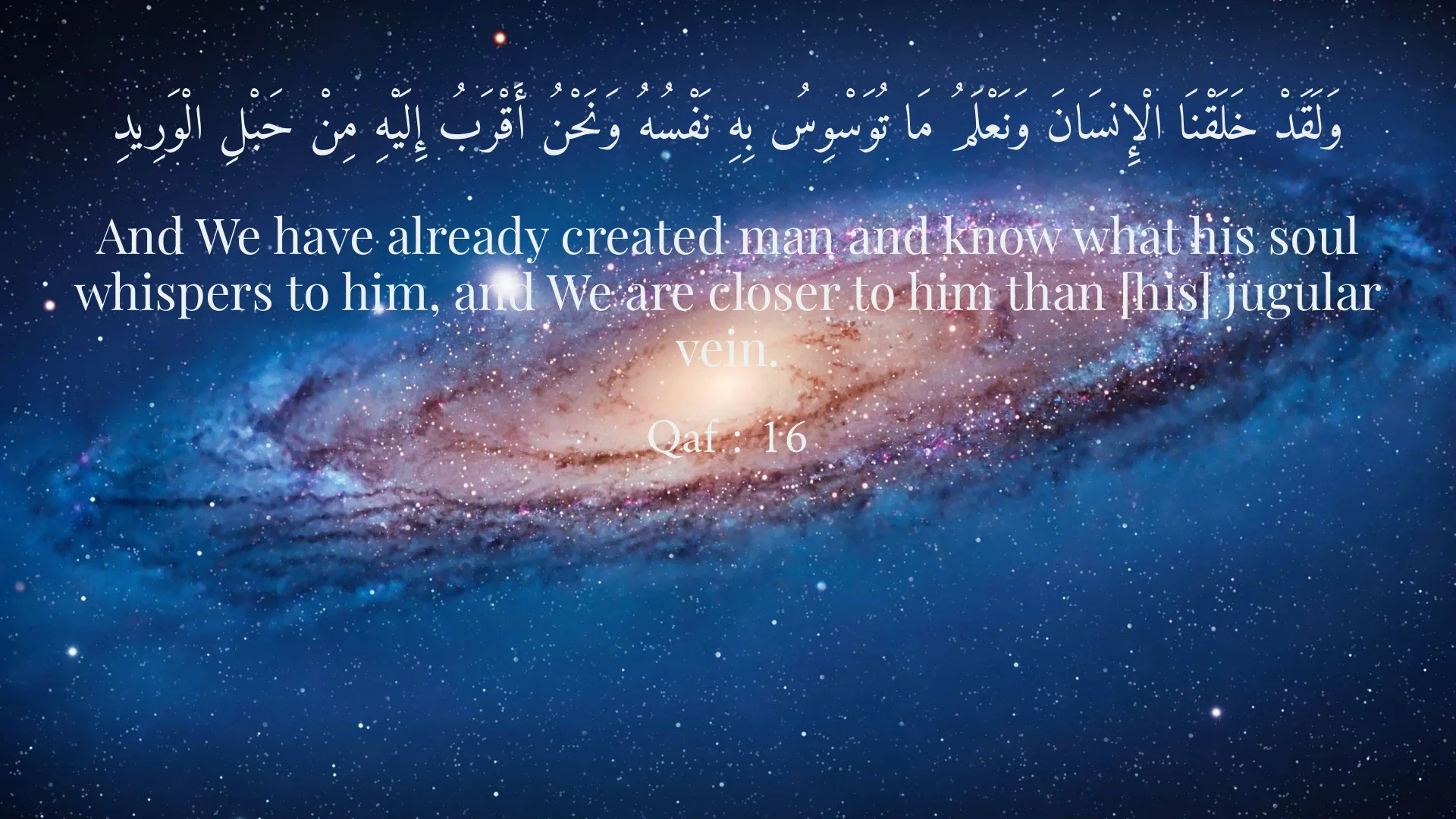
وَلَقَدْ خَلَقْنَا الْإِنسَانَ وَنَعْلَمُ مَا تُوَسْوِسُ بِهِ نَفْسُهُ وَنَحْنُ أَقْرَبُ إِلَيْهِ مِنْ حَبْلِ الْوَرِيدِ
And We have already created man and know what his soul whispers to him, and We are closer to him than [his] jugular vein.
Qaf : 16
فَاذْكُرُونِي أَذْكُرْكُمْ وَاشْكُرُوا لِي وَلَا تَكْفُرُونِ
So remember Me; I will remember you. And be grateful to Me and do not deny Me.
Al-Baqarah : 152
الَّذِينَ آمَنُوا وَتَطْمَئِنُّ قُلُوبُهُم بِذِكْرِ اللَّهِ ۗ أَلَا بِذِكْرِ اللَّهِ تَطْمَئِنُّ الْقُلُوبُ
Those who have believed and whose hearts are assured by the remembrance of Allah. Unquestionably, by the remembrance of Allah hearts are assured.
Ar-Ra'd : 28
قُلْ يَا عِبَادِيَ الَّذِينَ أَسْرَفُوا عَلَىٰ أَنفُسِهِمْ لَا تَقْنَطُوا مِن رَّحْمَةِ اللَّهِ ۚ إِنَّ اللَّهَ يَغْفِرُ الذُّنُوبَ جَمِيعًا ۚ إِنَّهُ هُوَ الْغَفُورُ الرَّحِيمُ
Say, 'O My servants who have transgressed against themselves [by sinning], do not despair of the mercy of Allah. Indeed, Allah forgives all sins. Indeed, it is He who is the Forgiving, the Merciful.'
Az-Zumar : 53
Short Story
In a distant time, there lived a merchant who was deeply engrossed in worldly affairs, accumulating vast wealth. Out of fear of losing his possessions, he built taller walls around his house and hired more guards. Yet, the more his wealth grew, the greater his anxiety became, and he constantly tried to escape the adversities of life within himself. One night, an elderly dervish passing by saw the merchant pacing restlessly in his garden with an anxious expression. The dervish, with a kind smile, said: “O friend, why do you build so many walls and flee from your own shadow? You will not find peace in accumulating wealth, but in surrendering your heart to the One who is self-sufficient. The more you run from divine decree, the more entangled you become in fears. Turn your face towards the Lord, for He is the true refuge, and you will find a tranquility in your heart that no fear or harm can touch.” The dervish's words struck the merchant deeply, prompting him to reflect. He realized that his entire life had been spent fleeing from himself and from the truth that peace could only be found in God. From then on, he turned towards God; his heart found tranquility in His remembrance, and he no longer felt the need to run from anything.