Quranic Answer
Understanding God's presence with us during difficulties is one of the most profound and comforting beliefs in Islam. The Holy Quran is replete with verses that convey this truth to the hearts of believers, assuring us that even in the toughest moments, we are never alone. This divine presence is not a physical proximity, but rather encompasses His encompassing knowledge, power, wisdom, sustenance, protection, and boundless grace. Nothing is hidden from His sight, and no power surpasses His. Indeed, Allah Himself describes His 'companionship' (Ma'iyyah) with His servants; a companionship that is sometimes general, encompassing all creation, and sometimes specific, reserved for the believers, the righteous, and the patient. One of the most fundamental ways to perceive God's presence in hardships is by accepting the truth that problems and afflictions are an inseparable part of God's divine tradition for testing and nurturing human beings. The Quran repeatedly emphasizes that worldly life is full of trials to reveal the extent of people's faith, patience, and gratitude. This perspective helps us to view difficulties not as punishment, but as opportunities for growth, purification of sins, and elevation of spiritual ranks. Allah says: "And We will surely test you with something of fear and hunger and a loss of wealth and lives and fruits, but give good tidings to the patient." (Al-Baqarah: 155). This verse indicates that trials are inevitable, but there is also good news for the patient. Patience on this path is itself a sign of reliance on God and an understanding of His presence; for a human being cannot be patient in the face of calamities without hope and reliance on a higher power. Another way to feel the divine presence is by turning to Him and seeking refuge through prayer (Salat) and supplication (Du'a). Allah instructs us in the Quran: "And seek help through patience and prayer, and indeed, it is difficult except for the humbly submissive [to Allah]." (Al-Baqarah: 153). Prayer is a source of tranquility and a direct connection with the Creator. In difficult moments, when the heart remembers God and the tongue opens in supplication, a deep sense of peace and divine support envelops one's being. This inner peace is the strongest sign of God's presence. As we read in Surah Ar-Ra'd, verse 28: "Those who have believed and whose hearts are assured by the remembrance of Allah. Unquestionably, by the remembrance of Allah hearts are assured." Remembrance (Dhikr) of God not only includes prayer and supplication but also encompasses recitation of the Quran, contemplation of divine greatness, and any act that reminds a person of the Creator and His boundless power. These acts of remembrance, like a light in the darkness of problems, illuminate the path and strengthen the feeling of divine companionship. Complete trust in God, or "Tawakkul," is another crucial pillar in understanding this presence. When a person wholeheartedly believes that God is the absolute Wise and the Controller of all affairs, and that nothing happens without His permission and wisdom, their heart finds peace. Even if the situation appears difficult and insurmountable, Tawakkul means that one performs their duties and then entrusts the outcome to God. This entrustment itself is a sign of faith in God's presence and power to manage affairs. The Quran states: "And whoever fears Allah - He will make for him a way out and will provide for him from where he does not expect." (At-Talaq: 2-3). These verses promise that piety and trust in God will bring unexpected openings and provisions. This 'way out' and 'provision' can manifest as a sudden solution, help from an unexpected source, or even inner tranquility to endure the situation. Furthermore, understanding that "with hardship comes ease," repeated twice in Surah Ash-Sharh: "For indeed, with hardship [will be] ease. Indeed, with hardship [will be] ease," assures us that difficulties are temporary, and God provides relief after every hardship. This divine promise, like a beacon in the dark, keeps hope alive and empowers individuals to view challenges with a more positive outlook. This feeling of hope and assurance is itself an indication of God's presence, promising a brighter future. Ultimately, God's presence in difficulties is not only about unseen and spiritual help but can also manifest through assistance from other people, the emergence of new opportunities from within hardships, or a change in one's perspective towards the problem to find a solution. When we allow ourselves to see these signs and approach divine wisdom with an open heart and mind, we can feel God's presence in every challenging moment of life. Understanding this presence not only alleviates the suffering of problems but also gives them a deeper meaning, guiding us toward spiritual growth and a stronger connection with the Creator.
Related Verses
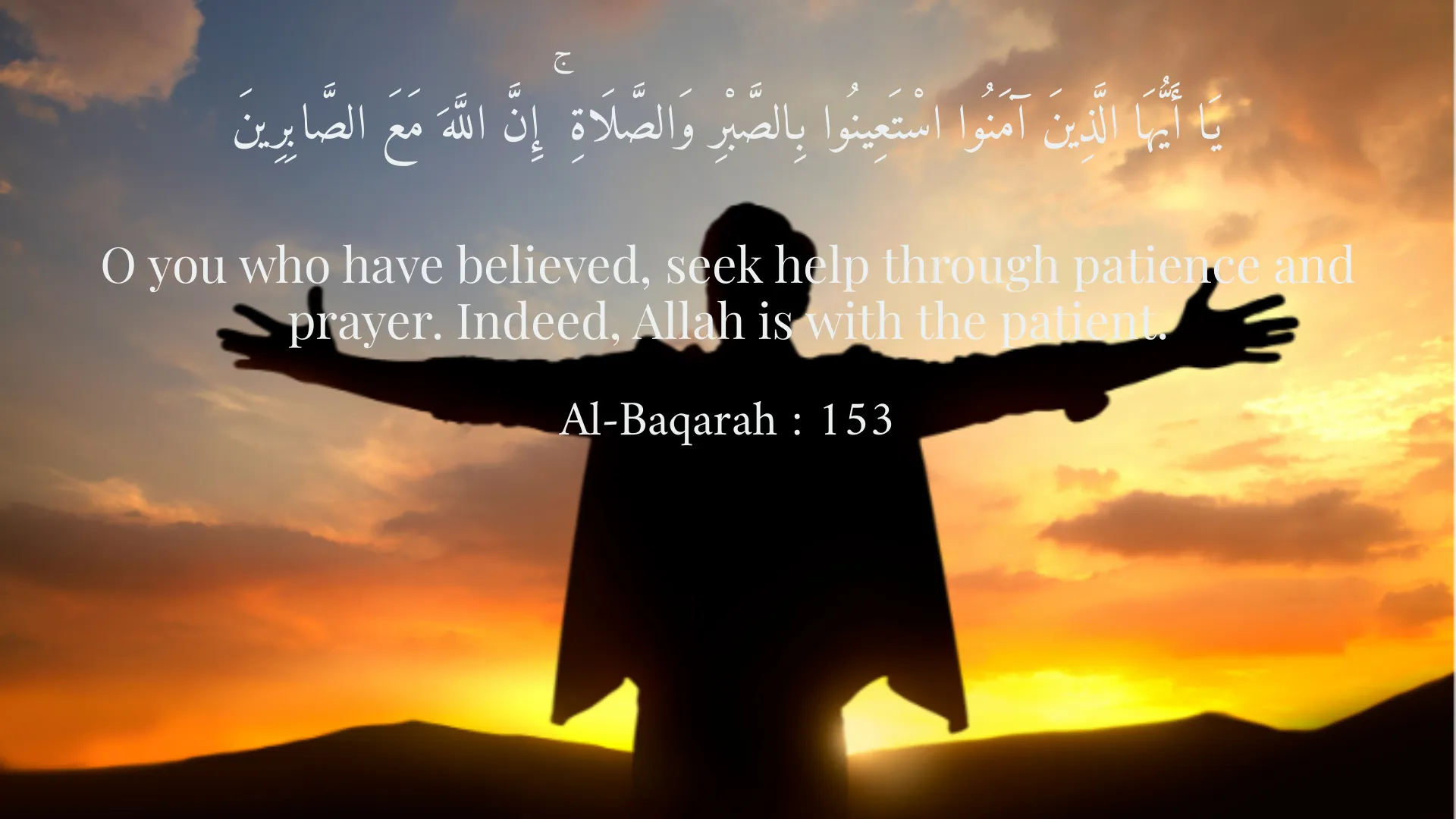
يَا أَيُّهَا الَّذِينَ آمَنُوا اسْتَعِينُوا بِالصَّبْرِ وَالصَّلَاةِ ۚ إِنَّ اللَّهَ مَعَ الصَّابِرِينَ
O you who have believed, seek help through patience and prayer. Indeed, Allah is with the patient.
Al-Baqarah : 153
فَإِنَّ مَعَ الْعُسْرِ يُسْرًا
For indeed, with hardship [will be] ease.
Ash-Sharh : 5
إِنَّ مَعَ الْعُسْرِ يُسْرًا
Indeed, with hardship [will be] ease.
Ash-Sharh : 6
هُوَ الَّذِي خَلَقَ السَّمَاوَاتِ وَالْأَرْضَ فِي سِتَّةِ أَيَّامٍ ثُمَّ اسْتَوَىٰ عَلَى الْعَرْشِ ۚ يَعْلَمُ مَا يَلِجُ فِي الْأَرْضِ وَمَا يَخْرُجُ مِنْهَا وَمَا يَنزِلُ مِنَ السَّمَاءِ وَمَا يَعْرُجُ فِيهَا ۖ وَهُوَ مَعَكُمْ أَيْنَمَا كُنتُمْ ۚ وَاللَّهُ بِمَا تَعْمَلُونَ بَصِيرٌ
He is the One who created the heavens and the earth in six days and then established Himself above the Throne. He knows what penetrates into the earth and what emerges from it and what descends from the sky and what ascends therein. And He is with you wherever you are. And Allah is Seeing of what you do.
Al-Hadid : 4
الَّذِينَ آمَنُوا وَتَطْمَئِنُّ قُلُوبُهُم بِذِكْرِ اللَّهِ ۗ أَلَا بِذِكْرِ اللَّهِ تَطْمَئِنُّ الْقُلُوبُ
Those who have believed and whose hearts are assured by the remembrance of Allah. Unquestionably, by the remembrance of Allah hearts are assured.
Ar-Ra'd : 28
Short Story
It is narrated that a pious man lost his way in a desert and, overcome by thirst and despair, lost all strength. No matter how much he searched, he found no water, seeing only a withered tree in the distance. With a broken heart and parched lips, he remembered God and cried out with all his being: “O Almighty Lord, You are my sole refuge in this barren desert!” Before his words had even finished, he suddenly heard a voice, and a kind hand offered him a cool pitcher of water. He drank and refreshed himself, and when he looked up, he saw nothing but a gentle breeze. The pious man knew that this was an unseen hand from his Lord, who had rushed to his aid at the peak of his despair. From then on, no difficulty made him forget God's presence and grace, and whenever he faced hardship, he would say with certainty: “God is present, He is our only refuge, and in every difficulty, He is our sole Helper and Supporter.”