Quranic Answer
The Holy Quran, the divine word of Allah, offers a profound and comprehensive response to the issue of the emptiness or absurdity of life. In essence, one of the primary messages of the Quran is a firm rejection of any notion of futility or meaninglessness in existence and human creation. By elucidating the purposeful nature of creation and humanity's special place within it, the Quran fundamentally uproots the foundations of nihilism and sketches a bright, meaningful horizon for human life. From the Quranic perspective, existence is built upon divine wisdom and justice, and nothing within it is absurd or purposeless. The creation of the heavens and the earth, the alternation of night and day, and everything that exists in the universe are all signs and manifestations of Allah's infinite power, knowledge, and wisdom. Humans, as the noblest of creations and Allah's vicegerents on Earth, are endowed with a great mission and a lofty destiny. The Quran explicitly states that humanity was not created in vain nor will it be left to its own devices; rather, the purpose of its creation is the worship of the Creator. This worship, however, is not about humiliation or subservience, but rather about elevation, perfection, and achieving eternal bliss. The life of this world is merely a passage and a testing ground where individuals, through good deeds and adherence to divine teachings, prepare themselves for the eternal abode of the hereafter. Nihilism often stems from a lack of understanding of life's ultimate purpose, despair over justice in this world, and an attachment to fleeting and temporary worldly pleasures. The Quran addresses these issues by presenting a broad concept of time and space that encompasses both this world and the hereafter. This worldly life is only a part of humanity's long journey, and death is not the end of the road but rather a gateway to true and eternal life. In this view, worldly sufferings and difficulties are also not meaningless; instead, they are opportunities for testing faith, spiritual growth, and earning immense rewards in the hereafter. Patience and perseverance in the face of calamities, reliance on Allah, and striving for goodness and righteous deeds all gain meaning within this framework, transforming individuals into purposeful and hopeful beings. Furthermore, the Quran clearly addresses the issue of divine justice and the precise reckoning of deeds on the Day of Judgment. This divine promise that not an atom's weight of good or evil deeds will go unaccounted for gives meaning and purpose to life, preventing despondency and despair in the face of oppressors and wrongdoers. Although complete justice may not be fully realized in this world, the promise of absolute divine justice in the hereafter provides humanity with peace and assurance that no good deed will be lost, and no injustice will go unanswered. This future outlook creates a strong incentive for performing good deeds and refraining from evil, thereby rescuing life from the abyss of absurdity. The Quran also places great emphasis on human relationships, empathy, cooperation, and assisting those in need. Social activities and striving to establish justice in society are also part of humanity's divine mission. These social dimensions of life, which are highly emphasized in the Quran, inherently give meaning and purpose to life. When individuals feel that they are part of a larger whole and can contribute to improving the condition of their fellow human beings and society, feelings of emptiness and meaninglessness dissipate. Connection with community and family, and fulfilling duties and responsibilities towards them, not only gives meaning to individual life but also contributes to the creation of a healthy and purposeful society. In summary, the Holy Quran offers a decisive response to the issue of life's absurdity by presenting a monotheistic and purposeful worldview. This response is based on several fundamental principles: the purposeful creation of existence and humanity, the worldly life as a testing ground, the existence of the Hereafter for reward and retribution, and the emphasis on divine justice and human social responsibility. These principles not only give meaning to life but also provide practical guidance for achieving true happiness and perfection, filling the human heart with hope and zest for life, freeing it from despair and hopelessness.
Related Verses
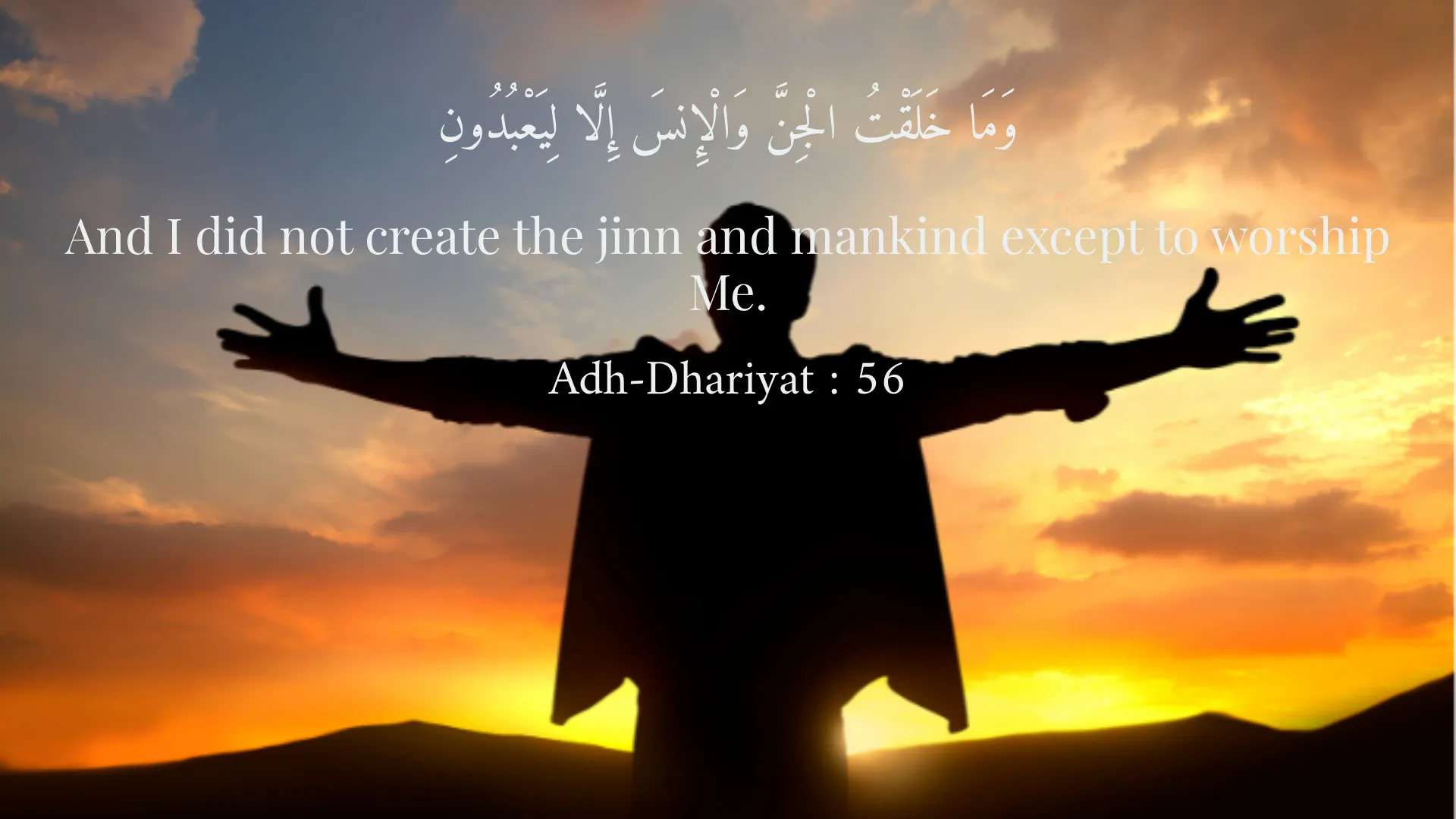
وَمَا خَلَقْتُ الْجِنَّ وَالْإِنسَ إِلَّا لِيَعْبُدُونِ
And I did not create the jinn and mankind except to worship Me.
Adh-Dhariyat : 56
الَّذِي خَلَقَ الْمَوْتَ وَالْحَيَاةَ لِيَبْلُوَكُمْ أَيُّكُمْ أَحْسَنُ عَمَلًا ۚ وَهُوَ الْعَزِيزُ الْغَفُورُ
He who created death and life to test you [as to] which of you is best in deed - and He is the Exalted in Might, the Forgiving.
Al-Mulk : 2
الَّذِينَ يَذْكُرُونَ اللَّهَ قِيَامًا وَقُعُودًا وَعَلَىٰ جُنُوبِهِمْ وَيَتَفَكَّرُونَ فِي خَلْقِ السَّمَاوَاتِ وَالْأَرْضِ رَبَّنَا مَا خَلَقْتَ هَٰذَا بَاطِلًا سُبْحَانَكَ فَقِنَا عَذَابَ النَّارِ
Who remember Allah while standing or sitting or [lying] on their sides and give thought to the creation of the heavens and the earth, [saying], 'Our Lord, You did not create this in vain; exalted are You [above such a thing]; then protect us from the punishment of the Fire.'
Al-Imran : 191
Short Story
It is narrated in Sa'di's Gulistan that a wealthy king, despite immense riches and power, always felt restlessness and despair in his heart. His servants would try to cheer him with all kinds of delicacies and splendid garments, yet he remained sorrowful. One day, he asked his wise vizier, 'Why, with all these blessings, does my heart not find peace, and why do I feel more emptiness each day?' The vizier replied, 'O King, you are seeking something in this world that cannot be found within it. Worldly life is like a bridge that must be crossed, not a home to reside in. Whoever forgets the purpose of crossing and becomes attached to the adornments of the bridge will neither reach the destination nor escape restlessness. One must connect their heart to the true source of existence, which is the Almighty God, for whoever does so will find true peace and meaning even in this fleeting world.' The king took heed of the vizier's words and from then on, instead of adding to worldly pleasures, he turned to worship and helping the needy. Eventually, he found true peace and contentment in his heart.