Quranic Answer
Achieving peace during the final moments of life is a profound desire shared by many individuals across cultures and beliefs. The end of life can be a time of fear and uncertainty, but it can also be a period filled with anticipation, hope, and spiritual fulfillment. For countless people, finding serenity as they approach death is not just a wish, but a crucial aspect of their existence. This desire for tranquility at life's end has been beautifully articulated in the Quran, specifically in Surah Al-Fajr, verses 27-30. These verses declare: 'O serene soul, return to your Lord, well-pleased and pleasing [to Him]. Enter among My righteous servants and enter My Paradise.' This passage encapsulates the essence of what it means to achieve peace at the end of life—through a deep, personal relationship with God, fostering a spirit of hope, and engaging in righteous actions. The verses from Surah Al-Fajr highlight that to attain peace during the critical moment of death, one must first establish a firm relationship with God. This relationship is built upon trust, love, and a sincere effort to follow His guidance throughout life. To cultivate this connection, it is essential for individuals to consistently engage in prayer, as it serves as a direct line to the Divine. Prayer allows one to express their fears, aspirations, gratitude, and repentance. By pouring out their hearts in supplication, individuals can find solace and maintain hope in God's boundless mercy, thereby reinforcing their faith even in the face of mortality. In addition to prayer, engaging in acts of charity and goodness lays the groundwork for tranquility in one's final moments. The essence of doing good not only contributes to the well-being of others but also enhances one's spiritual state. Each act of kindness, whether it's helping a neighbor, donating to a charitable cause, or simply spreading joy and positivity, creates ripples of goodness. These good deeds illuminate our lives and prepare us to transition to the afterlife with confidence. The Quran emphasizes the importance of righteous actions, as they serve to purify the soul and align it with divine principles, paving the way for peace during death. Furthermore, faith coupled with righteous actions can envelop us during the time of death, granting us a profound sense of serenity. When individuals live a life dedicated to goodness and integrity, they often find comfort in reflecting on their deeds as they near the end. This inner reassurance comes from understanding that they have lived in alignment with their values and have made a positive impact in the lives of others. Peace at life's end is, therefore, intricately linked to the manner in which one lived. In this sacred atmosphere created by faith and righteous actions, the act of remembering God plays a pivotal role. Engaging in the recitation of the Quran and self-remembrance can soothe our spirits and provide clarity. Verses from the Quran serve as reminders of God's mercy, love, and grace, helping individuals navigate through these delicate moments with dignity and reassurance. In particular, the recitation of verses that speak of God's mercy and the Promised Paradise can imbue a sense of hope, encouraging individuals to look forward to what lies beyond this life rather than dread the unknown. Moreover, achieving peace in the final moments of life influences not only the individual but also those around them. Family and friends who witness the serene state of a loved one nearing death are often comforted themselves. The peaceful demeanor of a dying person can serve as a source of strength for grieving family members, giving them a sense of closure and acceptance. The beauty of a serene transition becomes a powerful reminder of the importance of fostering loving relationships and maintaining good ethical conduct throughout one’s life. In contemporary society, where discussions about death can feel taboo or unsettling, emphasizing the spiritual guidance provided by religious texts becomes increasingly vital. Encouraging meaningful conversations around death can demystify the experience and help individuals confront their fears. With a clearer understanding drawn from religious teachings, individuals may find comfort in the belief that death is not an end, but rather a transformation and a return to the Creator who loves them unconditionally. In conclusion, peacefulness during life's final moments is not merely a fleeting desire but can be embraced through a committed relationship with God, hope, charity, and righteous actions. The verses from Surah Al-Fajr remind us that achieving this peace requires intention, dedication, and an unwavering faith in divine compassion. Life is a journey, and as we approach its final chapter, we have the opportunity to reflect on our journey and derive peace from our faith, actions, and the love shared with others. Ultimately, the comfort of knowing that we are returning to a compassionate Creator can bring profound serenity to our hearts as we embrace the end of this worldly existence. The essence of life is intertwined with the inevitability of death, and by preparing our souls for this transition, we can walk gracefully towards the afterlife, enveloped in peace.
Related Verses
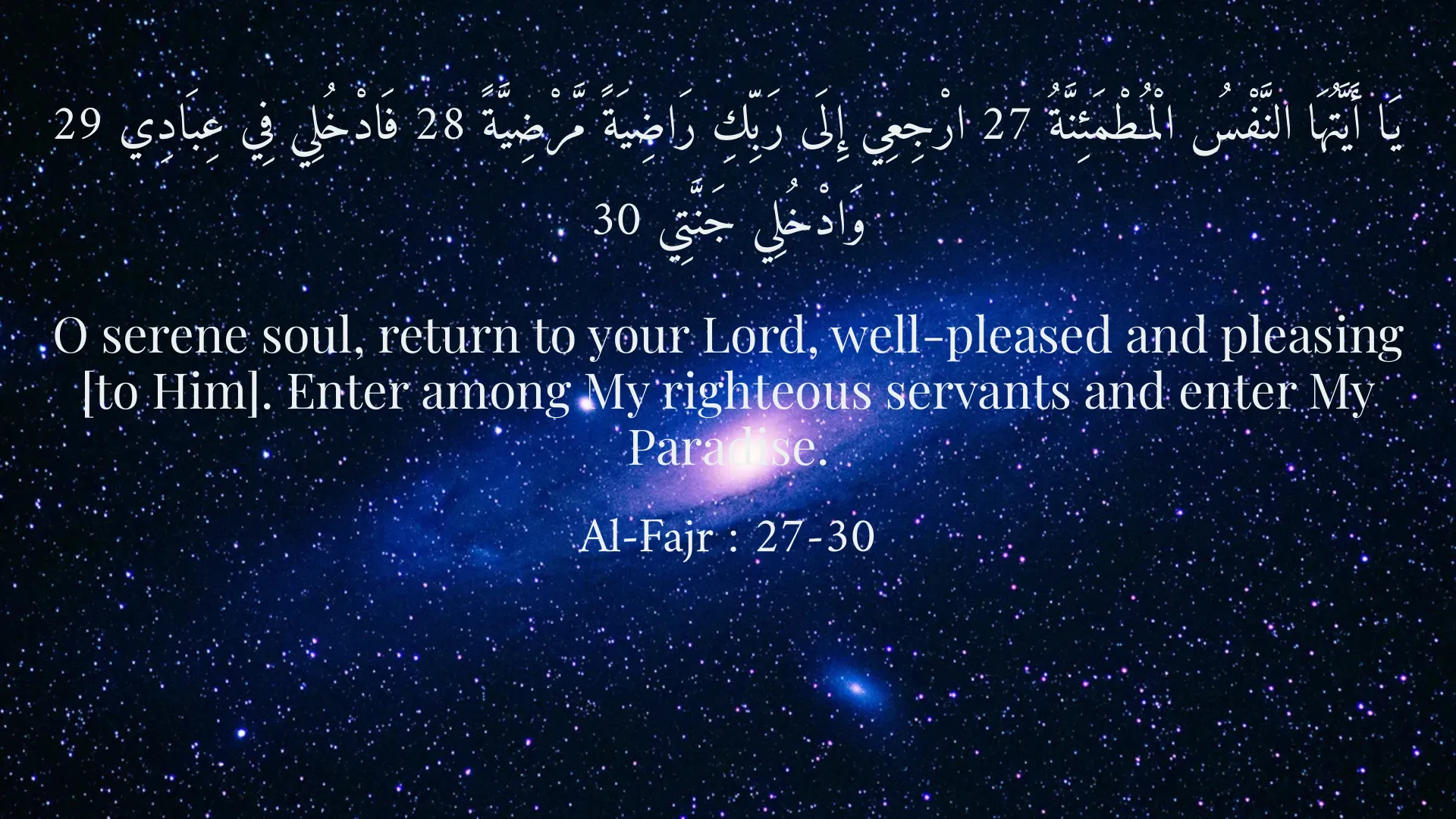
يَا أَيَّتُهَا النَّفْسُ الْمُطْمَئِنَّةُ 27 ارْجِعِي إِلَى رَبِّكِ رَاضِيَةً مَّرْضِيَّةً 28 فَادْخُلِي فِي عِبَادِي 29 وَادْخُلِي جَنَّتِي 30
O serene soul, return to your Lord, well-pleased and pleasing [to Him]. Enter among My righteous servants and enter My Paradise.
Al-Fajr : 27-30
Short Story
One day, a man named Hassan found himself nearing death. Throughout his life, he had engaged in good deeds and helped others. In his final moments, he felt a deep peace in his heart while remembering God and praying. He told his family that nothing mattered to him more than God's love and mercy, and he was ready to depart to the next world. Hassan bid farewell to this world with a smile, grateful for his life.