Quranic Answer
The Holy Quran, the religious text of Islam, has an overwhelming emphasis on the importance of sincerity and the avoidance of hypocrisy (Nifaq). Throughout various verses, it addresses the consequences of insincerity and the necessity of genuine faith that stems from the heart. One notable reference is found in Surah Al-Baqarah, verses 8 and 9, where Allah Almighty states: "And of mankind are some who say: 'We believe in Allah and the Last Day,' while in fact they believe not." This assertive proclamation highlights the fundamental concept that true belief must run deeper than mere verbal acknowledgment. The Quran continually reinforces that faith should emanate from authenticity and pure intentions, and that any belief founded on showmanship or hypocrisy bears no merit in the eyes of the Almighty. Hypocrisy in faith is depicted as a profound flaw, one that can severely tarnish one's relationship with God. The underlying message in these verses serves as a reminder to believers that true faith must be deeply rooted in sincerity, for when actions do not align with beliefs, the essence of faith becomes compromised. As such, it is imperative for individuals to engage in a process of self-reflection, examining their motives and intentions behind their actions. This level of introspection is vital for fostering a genuine relationship with Allah, steering clear from the traps of hypocrisy that can ensnare even the most devoted individuals. An additional perspective on the grave consequences of deviations from true faith can be found in Surah Al-Ma'idah, verse 54: "O you who believe! Whoever of you turns back from his religion, Allah will bring forth a people He will love and they will love Him, humble toward the believers, stern toward the disbelievers. They strive in the cause of Allah and do not fear the blame of a critic. This is the grace of Allah, which He gives to whom He wills. And Allah is All-Encompassing and Knowing." This verse emphasizes the importance of connection with God and the necessity of striving to attain His satisfaction. It should be understood that the avoidance of hypocrisy is not an easy task. It requires continuous awareness of one's own intentions and a commitment to ensuring that actions are aligned with core beliefs. A believer must recognize that their motives are highly impactful in the sight of God, and He knows the inner workings of every heart. The Quran encourages believers to seek righteousness through consistent prayer, reflection, and heartfelt worship, thereby creating a barrier against hypocrisy's influence. In essence, an individual aiming to rid their life of hypocrisy must first cultivate a strong sense of self-awareness. They must question their intentions and desires, examining whether their actions are driven by a genuine desire to please God or a wish to impress others. Setting clear, meaningful goals is essential. This approach enables believers to navigate their spiritual journey with integrity and authenticity. The idea of sincerity in worship is saturated across different narrations within Islamic teachings. The Prophet Muhammad (peace be upon him) elucidated that actions are judged by their intentions, stating, "Indeed, actions are judged by intentions, and everyone will have what they intended." This assertion reinforces the fact that in Islam, the inner condition of a person's heart is of paramount importance, often superseding the act itself. Furthermore, the emphasis on sincerity as a critical component of faith aligns with the broader Islamic principle of striving for excellence (Ihsan) in all aspects of life. Ihsan encompasses not only one's relationship with God but also provides guidance for interpersonal relationships within the community. A sincere believer actively seeks to contribute positively to society, embodying the values of empathy, compassion, and integrity. In Islamic discourse, hypocrisy is not limited to outward displays of faith that undermine one's words. It extends to unfulfilled promises, societal discord, and insidious motives that degrade the communal fabric. Such demeanor is tantamount to being duplicitous, suggesting an incongruence between personal values and public actions. To cultivate genuine faith, Muslims are encouraged to engage in acts of worship that nurture a strong connection with Allah, such as regular prayer, reciting the Quran, and engaging in community service. These actions serve as powerful reminders of one's duty to God and to others, and they actively counteract the development of hypocritical tendencies by fostering an environment of sincerity and transparency. Moreover, community plays an essential role in the believer's journey toward sincerity. One's companions can profoundly influence the path of faith. The Quran advises believers to surround themselves with those who share similar values, quote: "And keep your soul content with those who call upon their Lord in the morning and the evening, seeking His countenance. And let not your eyes pass beyond them, desiring the adornments of worldly life" (Surah Al-Kahf, 28). This serves as a poignant reminder that spiritual growth often flourishes in the presence of like-minded individuals who reinforce sincerity and authenticity. In addition to engaging with the community meaningfully, prayer (Salah) stands as a pillar of Islamic practice, crucial for purifying one's intentions and reinforcing the connection with God. It serves as a conduit for expressing gratitude, seeking guidance, and fostering awareness of the Creator's omnipotence and compassion. Prayer, therefore, becomes a liberating tool that allows believers to reflect, recalibrate, and realign their hearts toward a path of sincerity. In conclusion, the Quran serves as a profound guide in distinguishing true faith from hypocrisy by emphasizing the heartfelt purity of intentions behind every action. The divine wisdom imparted within its verses calls for a collective endeavor to reflect deeply on the inner workings of our hearts and to actively pursue an authentic relationship with Allah. Moreover, the journey to avoiding hypocrisy requires substantial dedication, self-awareness, and communal support among believers. By thoroughly understanding the essence of sincerity and recognizing the detrimental nature of hypocrisy, individuals can strive to cultivate a life that harmonizes inner beliefs with outward expressions. In this way, the beauty of true faith, characterized by devotion, compassion, and integrity, can significantly contribute to personal transformation, community well-being, and spiritual elevation. Ultimately, it is this unwavering pursuit of authentic faith that allows believers to display the true essence of the teachings of Islam, fostering a world founded on sincerity and truthfulness.
Related Verses
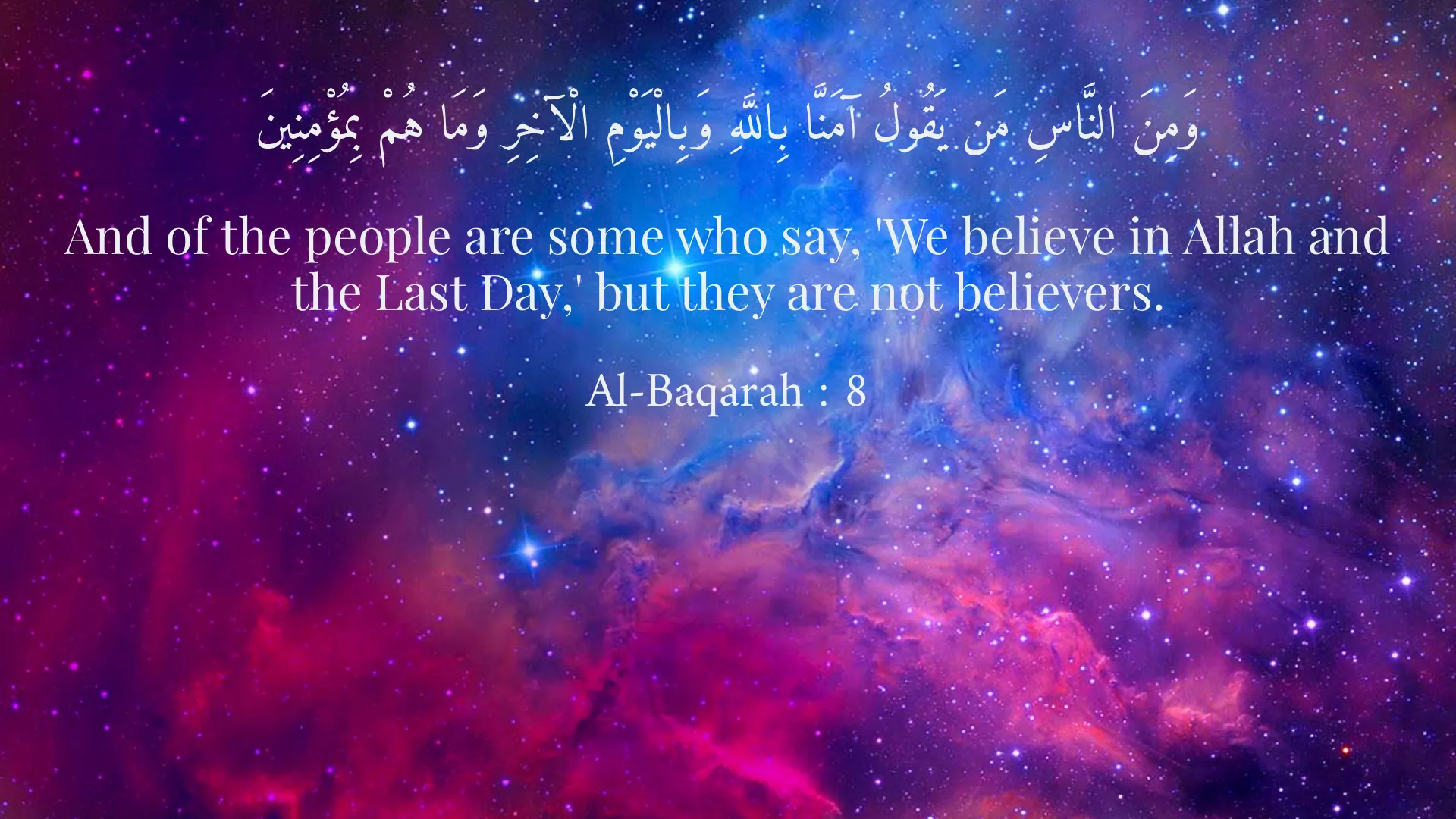
وَمِنَ النَّاسِ مَن يَقُولُ آمَنَّا بِاللَّهِ وَبِالْيَوْمِ الْآخِرِ وَمَا هُمْ بِمُؤْمِنِينَ
And of the people are some who say, 'We believe in Allah and the Last Day,' but they are not believers.
Al-Baqarah : 8
يَا أَيُّهَا الَّذِينَ آمَنُوا! مَن يَرْتَدَّ مِنكُم عَنْ دِينِهِ فَسَوْفَ يَأْتِي اللَّهُ بِقَوْمٍ يُحِبُّهُمْ وَيُحِبُّونَهُ أَذِلَّةٍ عَلَى الْمُؤْمِنِينَ أَعِزَّةٍ عَلَى الْكَافِرِينَ يُجَاهِدُونَ فِي سَبِيلِ اللَّهِ وَلَا يَخَافُونَ لَوْمَةَ لَائِمٍ ۚ ذَلِكَ فَضْلُ اللَّهِ يُؤْتِيهِ مَن يَشَاءُ ۗ وَاللَّهُ وَاسِعٌ عَلِيمٌ
O you who have believed, whoever of you should revert from his religion - Allah will bring forth for the people He will love and they will love Him.
Al-Ma'idah : 54
Short Story
Once upon a time, a hypocritical man arrived in a neighborhood. Everyone regarded him as a respectable figure because he was very diligent in his prayers and fasting, and people introduced him as a devout believer. However, his true intention was solely to attract others’ attention. One day, during his prayer, one of the locals noticed that his heart was not pure and said, "God knows the hearts and sees the intentions; if your worship is not sincere, it's better to refrain from it." The man pondered upon this and decided that from that day onward, he would worship Allah sincerely and pay no mind to people's opinions.