Quranic Answer
Using religion for self-validation or to gain social status is a subtle pitfall that can derail one's spiritual journey. At the heart of Quranic teachings lies a profound emphasis on 'Ikhlas' (sincerity). Ikhlas means purifying one's intention and will from any non-divine motive; that is, all our actions, acts of worship, and even daily behaviors should be solely for the purpose of gaining God's pleasure and drawing closer to Him, not for seeking people's admiration, gaining fame, or achieving worldly benefits. The Holy Quran repeatedly invites humanity towards this purity of intention and warns that our good deeds must not lose their value under the influence of egoistic desires or worldly aspirations. From the Quranic perspective, deeds performed with the intention of 'Riya'' (showing off) are devoid of true spiritual worth. In Surah Al-Baqarah, verse 264, Allah gives an example of those who nullify their charity by reminders of their generosity or injury, which bears strong resemblance to Riya'. Deeds that appear good outwardly but are inwardly devoid of sincerity are likened to a garden on a hard rock that is washed away by heavy rain. This imagery illustrates that the foundation of every righteous deed must be built upon a pure and sincere divine intention to ensure its durability and fruitfulness. If the intention is merely to prove oneself before creation, the deed, no matter how grand, is like a bubble that vanishes with the slightest breeze, leaving nothing but exhaustion for the doer. The primary purpose of human creation and the revelation of divine religions is the sincere servitude and worship of the Almighty. In Surah Adh-Dhariyat, verse 56, Allah states: "And I did not create the jinn and mankind except to worship Me." This servitude necessitates complete devotion to the One God, free from any partnership in intention. When we use religion to validate ourselves, we are, in essence, associating partners with God, because we have shifted the primary goal of the action from divine pleasure to the approval of creation. This is a subtle form of 'Shirk' (polytheism) that can nullify all deeds. The Quran strongly condemns all forms of Shirk, whether apparent or hidden, considering it an unforgivable sin unless repented for. To safeguard ourselves from this hidden affliction, we need constant introspection and self-awareness. The first step is to accurately identify our intentions. Before any act of worship or charity, we should ask ourselves: "What is my primary goal in doing this? Do I want to be praised by people? Do I want to gain credibility or status?" If we sense even the slightest inclination towards these worldly matters, we must strive to purify our intention and focus solely on God's pleasure. This mental exercise gradually guides us towards 'Taqwa' (God-consciousness); Taqwa is that state of fearing God and piety that makes a person aware of God's presence at all times, performing their actions solely for Him. Furthermore, our religion invites us to humility and modesty. Showing off and boasting contradict the spirit of religion. Prophet Muhammad (peace be upon him) always emphasized that a person's worth in the sight of Allah is not measured by the quantity of outward deeds, but by the sincerity of intention and the depth of inner faith. The Holy Quran also describes righteous servants with qualities such as humility, spending in secret and openly, and modesty. Those who seek to validate themselves through religion often fall prey to arrogance and conceit, and these qualities act as barriers to spiritual growth and closeness to God. Religion is meant to free us from the bondage of the self and worldly desires, guiding us towards true freedom and connection with the Origin of existence. Ultimately, we must understand that the final judgment of our deeds rests solely with Allah. He is aware of what is hidden and what is manifest, and He knows our true intentions. In Surah Al-Mulk, verse 6:13, He states: "And conceal your speech or publicize it; indeed, He is Knowing of that within the breasts." This verse reminds us that even if we can adorn the outward appearance of our deeds for people, we can never hide from Allah's absolute knowledge. Therefore, instead of being preoccupied with the approval of others, our entire concern should be to gain the Creator's pleasure. This approach not only brings inner peace and freedom from the shackles of human expectations but also purifies our deeds from any impurity, granting them true value and reward. Religion is a tool for spiritual elevation and inner journey, not a ladder to worldly positions or a means of boasting to others. The path to salvation lies in sincerity and truthful servitude.
Related Verses
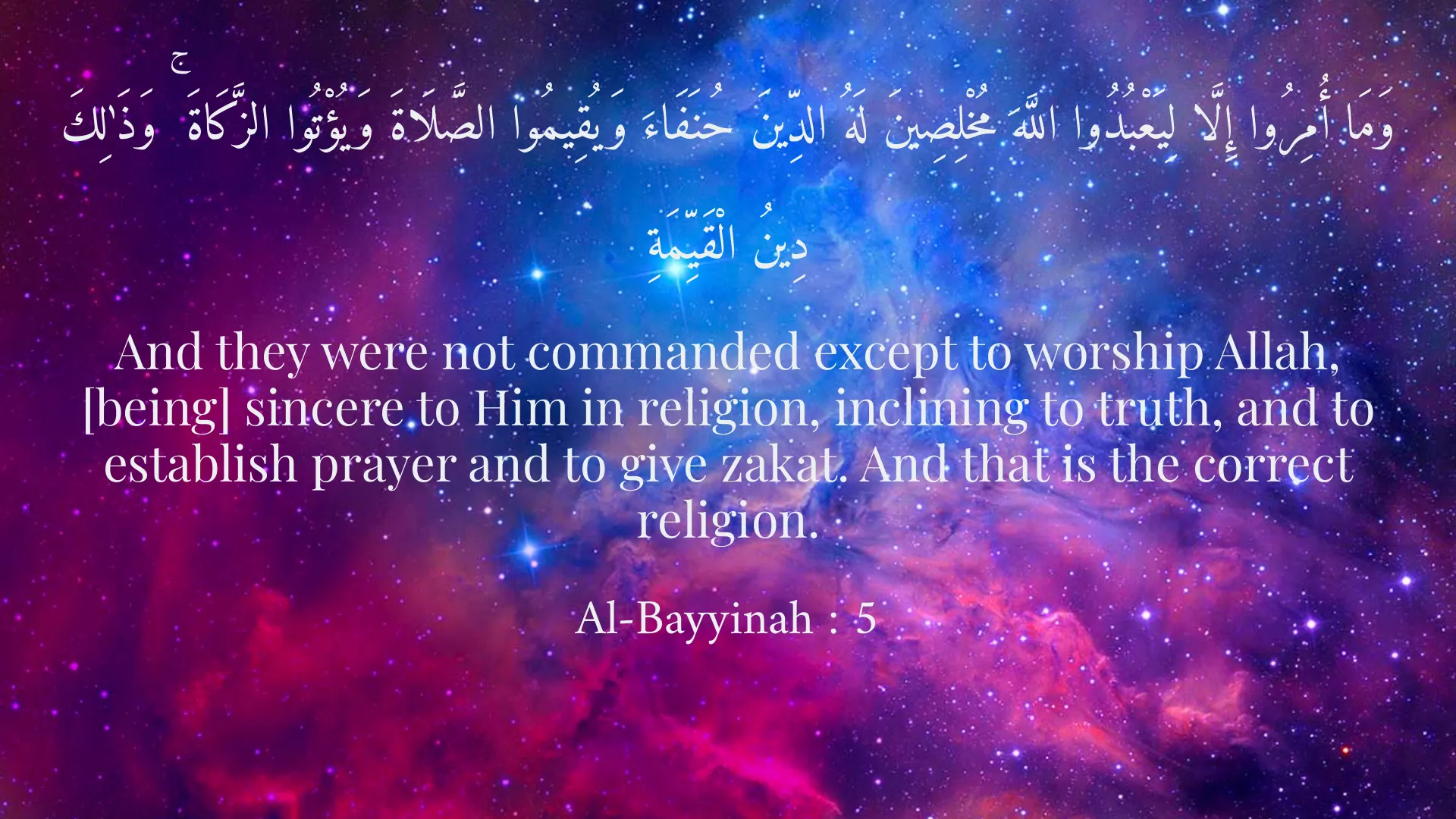
وَمَا أُمِرُوا إِلَّا لِيَعْبُدُوا اللَّهَ مُخْلِصِينَ لَهُ الدِّينَ حُنَفَاءَ وَيُقِيمُوا الصَّلَاةَ وَيُؤْتُوا الزَّكَاةَ ۚ وَذَٰلِكَ دِينُ الْقَيِّمَةِ
And they were not commanded except to worship Allah, [being] sincere to Him in religion, inclining to truth, and to establish prayer and to give zakat. And that is the correct religion.
Al-Bayyinah : 5
إِنَّ الْمُنَافِقِينَ يُخَادِعُونَ اللَّهَ وَهُوَ خَادِعُهُمْ وَإِذَا قَامُوا إِلَى الصَّلَاةِ قَامُوا كُسَالَىٰ يُرَاءُونَ النَّاسَ وَلَا يَذْكُرُونَ اللَّهَ إِلَّا قَلِيلًا
Indeed, the hypocrites [think to] deceive Allah, but He is deceiving them. And when they stand for prayer, they stand lazily, showing [themselves to] the people and not remembering Allah except a little.
An-Nisa : 142
وَأَسِرُّوا قَوْلَكُمْ أَوِ اجْهَرُوا بِهِ ۖ إِنَّهُ عَلِيمٌ بِذَاتِ الصُّدُورِ
And conceal your speech or publicize it; indeed, He is Knowing of that within the breasts.
Al-Mulk : 13
Short Story
In Saadi's Gulistan, it is told that two dervishes lived as neighbors. One was always engaged in long, public prayers and devotions, so much so that people called him the 'Ascetic of the City' and he was praised from all sides. The other dervish rarely performed worship in public, but in his solitude, he was immersed in the remembrance of God, his heart full of love and sincerity. One day, a disciple of the first dervish asked him, "Why does the neighboring dervish not perform as many outward acts of worship as you, so that people may know him?" The outwardly pious dervish replied, "He hides his servitude and seems to worship less." But when this remark reached the second dervish, he said with a serene smile, "He worships for the sake of people's gaze and to gain their praise, and that is his reward in this world. But I worship solely for the pleasure of the Almighty, and my reward is with Him. I have no need to prove myself to creation, for the Creator Himself is aware of intentions." This beautiful story reminds us that the true value of deeds lies in the sincerity of intention and a heartfelt connection with God, not in display or showing off for others.