Quranic Answer
Title: Overcoming Despair: Insights from the Holy Quran Introduction In times of hardship and tribulation, it is natural for individuals to experience feelings of despair and hopelessness. However, the Holy Quran offers profound insights and guidance for coping with such feelings, emphasizing resilience, faith, and the importance of maintaining hope. This article delves into several Quranic verses that provide strategies to combat despair, explore the significance of reliance on God, the strength of prayer, and the power of gratitude in fostering resilience and hope. The Foundation of Trust in Allah One of the cornerstones of Islamic teachings when facing despair is the concept of reliance on God (Tawakkul). Surah Al-Imran, verse 159 states: "And when you have decided, then rely upon Allah." This verse serves as a powerful reminder that true strength lies in entrusting one's concerns and affairs to Allah. It teaches us that after making an effort and coming to a decision, we should place our trust in God and accept His wisdom regarding the outcome. In moments of despair, this principle can be particularly uplifting as it encourages believers to surrender their worries and anxieties to a higher power. By doing so, individuals can alleviate the burden of despair, recognizing that they are not alone in their struggles. This act of reliance helps cultivate a sense of inner peace, allowing individuals to face challenges with courage and determination. The Quran imbues hope by reminding us that Allah is always present, guiding us through our difficulties with love and mercy. Capacity Beyond Burdens: A Comforting Reminder The Holy Quran also addresses the nature of human struggles and encourages believers to understand their own capacities. Surah Al-Baqarah, verse 286 states: "Allah does not burden a soul beyond that it can bear." This verse acts as a comforting assurance that whatever challenges we may face, they are within our ability to handle. This principle is instrumental in confronting despair, as it reassures us that struggles are a part of life, but they are never meant to overwhelm us. Understanding that God assigns tasks according to our strength empowers individuals to face their challenges with resilience. This mindset encourages a proactive approach to adversity by fostering the belief that we possess the necessary tools to navigate through tough times. Therefore, whenever despair begins to creep in, reflecting on this verse can inspire individuals to push through and strive for better outcomes. The Power of Prayer as a Source of Strength In addition to reliance on God, the Quran places great emphasis on the power of prayer and worship, considering them vital methods for rejuvenating the spirit. Surah Al-Ghafir, verse 60 fortifies this view by asserting: "And your Lord says, 'Call upon Me; I will respond to you.'" Prayer serves as a means of connecting with the divine, providing individuals with renewed hope and strength. Engaging in prayer is not merely a ritual; it is an intimate conversation with Allah in which believers can express their fears, hopes, and desires. In times of despair, individuals may seek solace through supplication, turning to Allah with sincerity. This direct line of communication allows for a release of pent-up emotions, fostering emotional healing and resilience. Regularly seeking Allah's guidance through prayer further cultivates a sense of community and support, as it connects believers with the greater Muslim Ummah. Moreover, prayer serves as a reminder that we have the ability to shape our own realities through faith. Each prayer, whether in times of ease or hardship, reinforces our connection to Allah, fortifying our spirit to endure and overcome challenging moments with grace. The act of seeking Allah's assistance through prayer also serves as a proactive step towards tackling despair, transforming it into a powerful source of strength and motivation. Gratitude as a Shield Against Despair Another critical aspect of combating despair outlined in the Holy Quran is the importance of acknowledging and reflecting on the blessings bestowed upon us by Allah. Surah An-Nahl, verse 18 highlights this invaluable lesson: "And if you should count the blessings of Allah, you could not enumerate them." Cultivating an attitude of gratitude is paramount in fostering positivity and resilience in the face of despair. Practicing gratitude encourages individuals to shift their focus away from their challenges and towards the myriad of blessings in their lives—no matter how small they may seem. Engaging in gratitude has been shown to enhance mental well-being and emotional health by promoting feelings of contentment and reducing stress levels. Furthermore, recognizing Allah's blessings serves to reinforce our faith and trust in His wisdom, reminding us that despite our trials, we are surrounded by countless gifts. To enhance this practice, individuals can consider maintaining a gratitude journal or dedicating moments each day to reflect on what they are thankful for. By consciously enumerating their blessings, individuals can build resilience against despair, fortifying their spirits against life's uncertainties. Conclusion In conclusion, the Holy Quran presents various strategies to navigate the tumultuous waves of despair, offering a profound framework that encourages believers to maintain hope and resilience. By placing our trust in God, understanding our capacities, engaging in prayer, and practicing gratitude, individuals can combat feelings of hopelessness and emerge stronger in their faith. As we encounter life's challenges, it is essential to remember that despair is a temporary state, while hope and faith can guide us towards tranquility and strength. The teachings of the Quran not only provide comfort in difficult times but also encourage individuals to cultivate a profound connection with Allah, transforming times of despair into opportunities for growth and renewal.
Related Verses
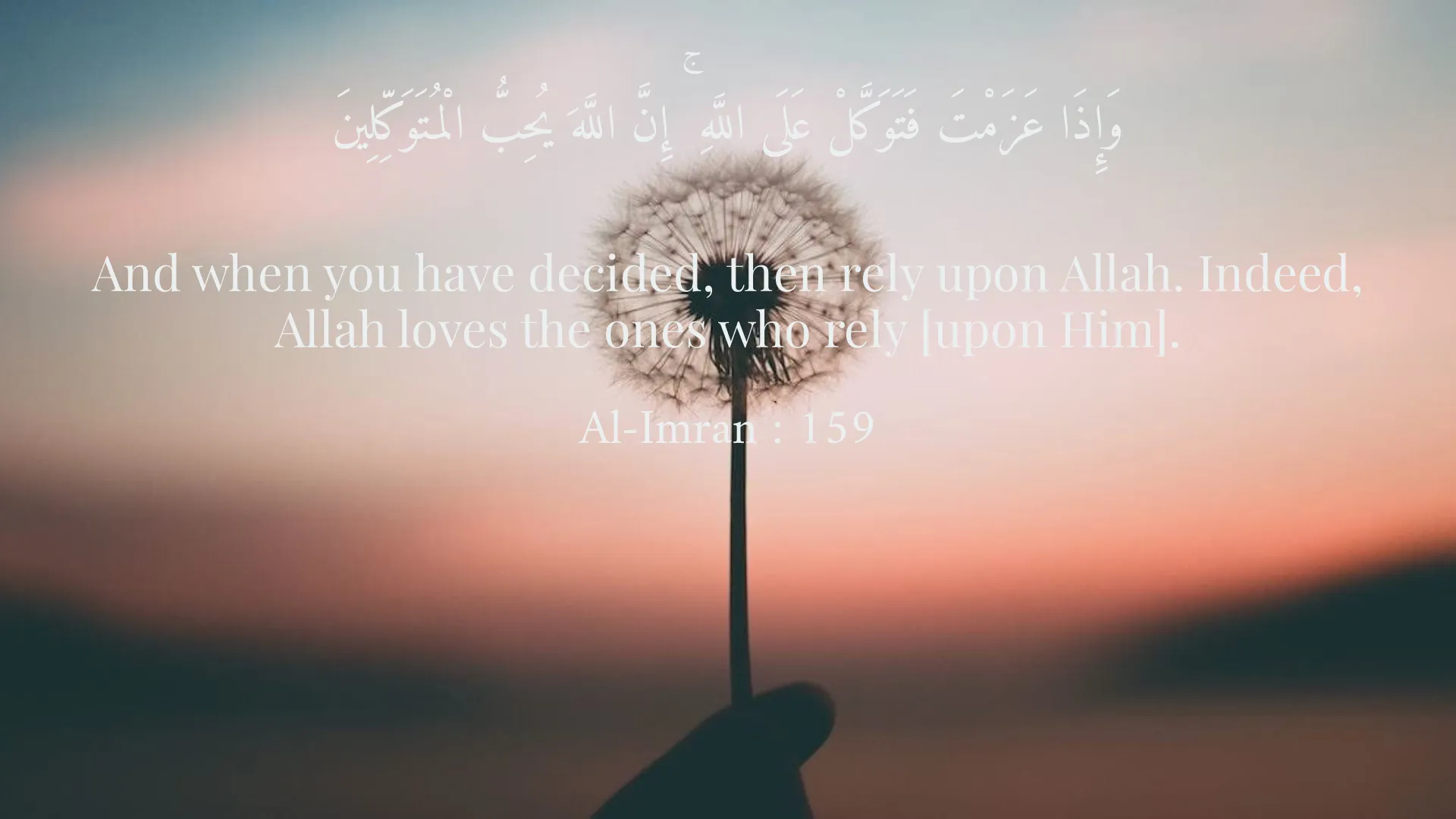
وَإِذَا عَزَمْتَ فَتَوَكَّلْ عَلَى اللَّهِ ۚ إِنَّ اللَّهَ يُحِبُّ الْمُتَوَكِّلِينَ
And when you have decided, then rely upon Allah. Indeed, Allah loves the ones who rely [upon Him].
Al-Imran : 159
لَا يُكَلِّفُ اللَّهُ نَفْسًا إِلَّا وُسْعَهَا ۚ لَهَا مَا كَسَبَتْ وَعَلَيْهَا مَا اكْتَسَبَتْ ۗ رَبَّنَا لَا تُؤَاخِذْنَا إِن نَّسِينَا أَوْ أَخْطَأْنَا ۚ رَبَّنَا وَلَا تَحْمِلْ عَلَيْنَا إِصْرًا كَمَا حَمَلْتَهُ عَلَى الَّذِينَ مِن قَبْلِنَا
Allah does not burden a soul beyond that it can bear. It will have [the consequence of] what [good] it has gained, and it will bear [the consequence of] what it has earned. Our Lord, do not impose blame upon us if we have forgotten or made a mistake.
Al-Baqarah : 286
وَقَالَ رَبُّكُمْ ادْعُونِي أَسْتَجِبْ لَكُمْ ۚ إِنَّ الَّذِينَ يَسْتَكْبِرُونَ عَنْ عِبَادَتِي سَيَدْخُلُونَ جَهَنَّمَ دَاخِرِينَ
And your Lord says, 'Call upon Me; I will respond to you.' Indeed, those who disdain My worship will enter Hell, humiliating.
Al-Ghafir : 60
وَإِن تَعُدُّوا نِعْمَةَ اللَّهِ لَا تُحْصُوهَا ۚ إِنَّ اللَّهَ لَغَفُورٌ رَّحِيمٌ
And if you should count the favors of Allah, you could not enumerate them. Indeed, Allah is Forgiving and Merciful.
An-Nahl : 18
Short Story
One day, a man named Ali was feeling hopeless due to financial and family problems. He decided to turn to the Quran for guidance. Reflecting on its verses, he realized he should not let despair affect his life. Ali prayed and relied on God. Over time, his financial situation improved, and he fostered feelings of gratitude and renewed hope in his heart.