Quranic Answer
The Holy Quran, as the sacred text of Islam, is a profound source of guidance for countless individuals across the globe. Its verses encompass various aspects of life, including moral conduct, spirituality, and interpersonal relationships. While the Quran does not directly address the concept of unhealthy dependencies or codependencies, it provides several concepts and principles that can aid individuals in overcoming such challenges. Two central themes that emerge from the Quranic text are reliance on God and the journey of self-discovery. In Surah Al-Imran, verse 159, Allah advises the Prophet Muhammad (peace be upon him) with a message that is deeply relevant to interpersonal relations: 'And by mercy from Allah, you were lenient with them. And if you had been rude in speech and harsh in heart, they would have disbanded from about you.' This verse highlights the importance of approaching others with kindness and understanding. It teaches us that effective communication and the nurturing of relationships begin with a gentle demeanor and an open heart. When we exhibit leniency and compassion, we pave the way for healthier relationships—both with others and with ourselves. The need for patience and kindness is particularly important when it comes to overcoming unhealthy dependencies. In moments of vulnerability, individuals may cling to relationships as a source of security or comfort, even if these relationships are detrimental to their emotional well-being. The Quran encourages us to seek strength and solace in our dependence on God rather than on other individuals. When our primary reliance is placed on the divine, we begin to recognize our inherent strength and capabilities, ultimately leading us to healthier connections with those around us. Furthermore, Surah Al-Anfal, verse 23 states: 'But Allah guides you to what is good.' This verse carries significant implications regarding self-guidance and the importance of aligning our actions with divine intentions. For individuals grappling with dependencies, this guidance can be transformative. By focusing on God and being aware of our spiritual beliefs, we may gain clarity in our lives. This clarity helps us discern the nature of our relationships, identifying which ones empower us and which ones drain us. Connecting with God not only enhances one’s spiritual journey but also serves as a compass in navigating emotional landscapes. When faced with intense emotions or an overwhelming urge to depend on certain individuals, recalling God's messages and desires can prompt a reevaluation of our relationships. This process of self-reflection encourages one to look inward, fostering a sense of independence and resilience. Taking the path of self-discovery is integral to breaking free from the cycle of unhealthy dependencies. By engaging in practices that promote personal growth—such as prayer, meditation, and self-reflection—we can cultivate a deeper understanding of our needs, desires, and limits. This aspect of self-discovery is echoed in the Quran, which emphasizes the importance of knowledge and understanding. A well-known Quranic verse, 'Indeed, in the creation of the heavens and the earth, there are signs for those of understanding' (Surah Al-Baqarah, 2:164), highlights the necessity of actively engaging with the world to find meaning and guidance. Self-discovery also invites individuals to acknowledge their strengths and weaknesses, ultimately empowering them to make informed decisions about their relationships. Instead of seeking validation or support solely from others, individuals are encouraged to develop self-reliance. This technique can significantly reduce feelings of dependency, as one learns to trust in their own capabilities as well as in divine support. In contemplating one's relationship with God, individuals often find emotional and spiritual grounding, which acts as a stabilizing force during turbulent times. Moreover, the Quran reinforces the idea of community and support, which is crucial when addressing unhealthy dependencies. While self-reliance is vital, the importance of building nurturing and supportive relationships within the community is equally emphasized. It is through mutual support, empathy, and understanding that individuals can cultivate both independence and interdependence. Islam encourages believers to engage in healthy companionship, as seen in Surah Al-Hujurat, verse 10: 'The believers are but brothers, so make settlement between your brothers.' This verse signifies that mutual support and reconciliation among individuals is a key element in maintaining Allah's intention for community. Healthy relationships can inspire growth, provide encouragement, and create a network of support. It further underscores the importance of surrounding oneself with individuals who align with positive values and contribute to one’s spiritual and emotional well-being. In summary, while the Holy Quran may not explicitly address unhealthy dependencies, it provides profound insights that can assist individuals in navigating their relationships and personal concerns. The themes of relying on God and engaging in self-discovery serve as crucial tools in breaking free from the shackles of codependency. By embodying patience and kindness in our interactions, seeking God's guidance, and valuing self-reliance, we move towards healthier dependencies and stronger connections with those around us. Ultimately, it is essential to trust in Allah’s support and guidance throughout our journey, reminding ourselves that reliance on Him equips us to overcome any unhealthy dependencies that may arise. As we strive to balance our need for connection with our individuality, the Quran serves as an enduring guide, leading us toward a life enriched with purpose, community, and spiritual alignment.
Related Verses
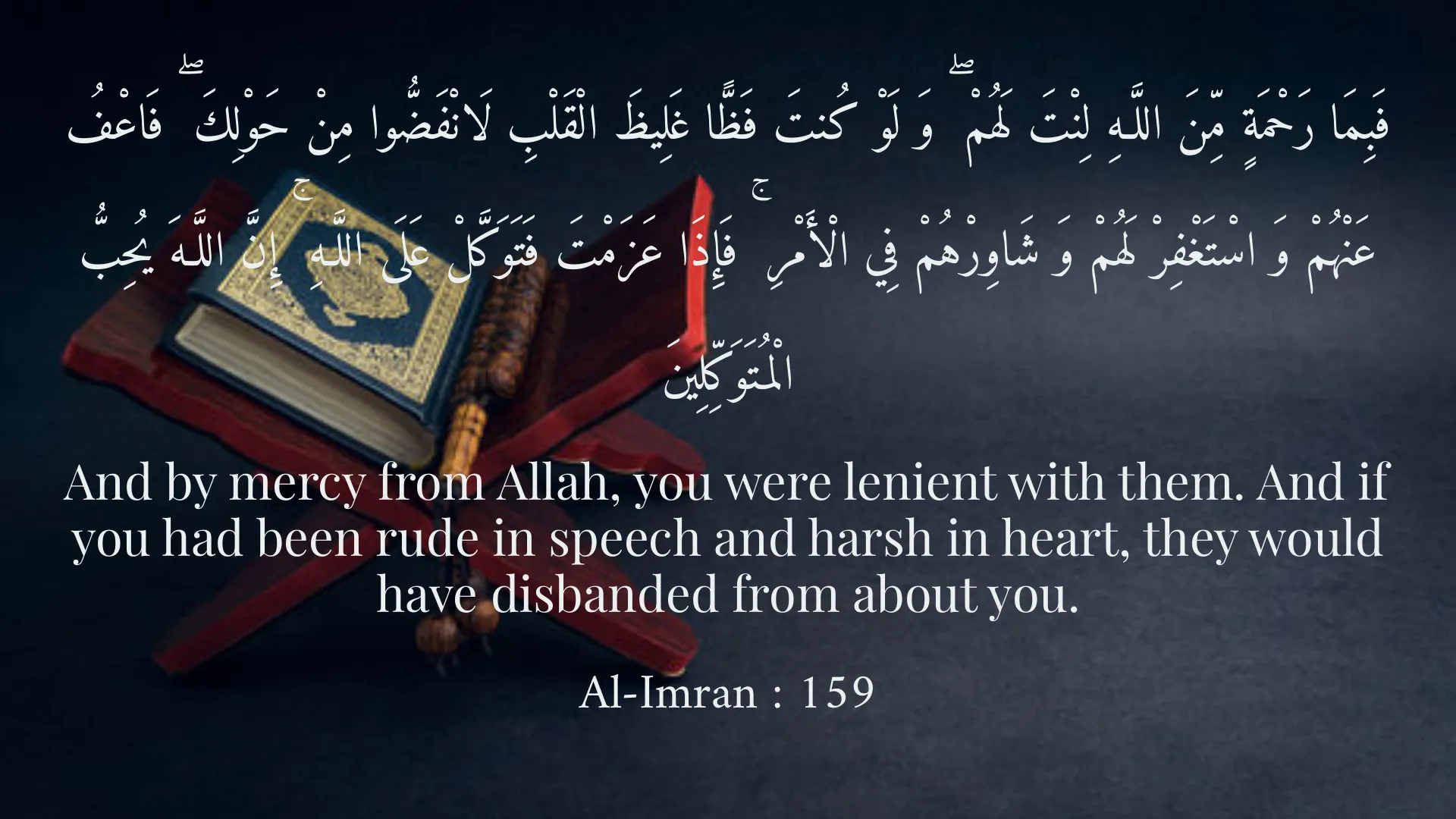
فَبِمَا رَحْمَةٍ مِّنَ اللَّـهِ لِنْتَ لَهُمْ ۖ وَ لَوْ كُنتَ فَظًّا غَلِيظَ الْقَلْبِ لَانْفَضُّوا مِنْ حَوْلِكَ ۖ فَاعْفُ عَنْهُمْ وَ اسْتَغْفِرْ لَهُمْ وَ شَاوِرْهُمْ فِي الْأَمْرِ ۚ فَإِذَا عَزَمْتَ فَتَوَكَّلْ عَلَى اللَّـهِ ۚ إِنَّ اللَّـهَ يُحِبُّ الْمُتَوَكِّلِينَ
And by mercy from Allah, you were lenient with them. And if you had been rude in speech and harsh in heart, they would have disbanded from about you.
Al-Imran : 159
وَلَقَدْ عَلِمَ اللَّـهُ الَّذِينَ آمَنُوا وَ لَقَدْ عَلِمَ الْمُنافِقِينَ
And indeed, Allah knows those who have believed and knows those who are hypocrites.
Al-Anfal : 23
Short Story
On a beautiful spring day, Maryam, a young and vibrant girl, found herself troubled for an unexpected reason. All of a sudden, she realized her life was heavily dependent on a friend she had known for years. She decided to reflect on this and recognized that every person must also care for their own individuality. After some effort, Maryam discovered she needed to trust herself and rely on God. With this decision, she found peace and learned how to eliminate unhealthy dependencies from her life.