Quranic Answer
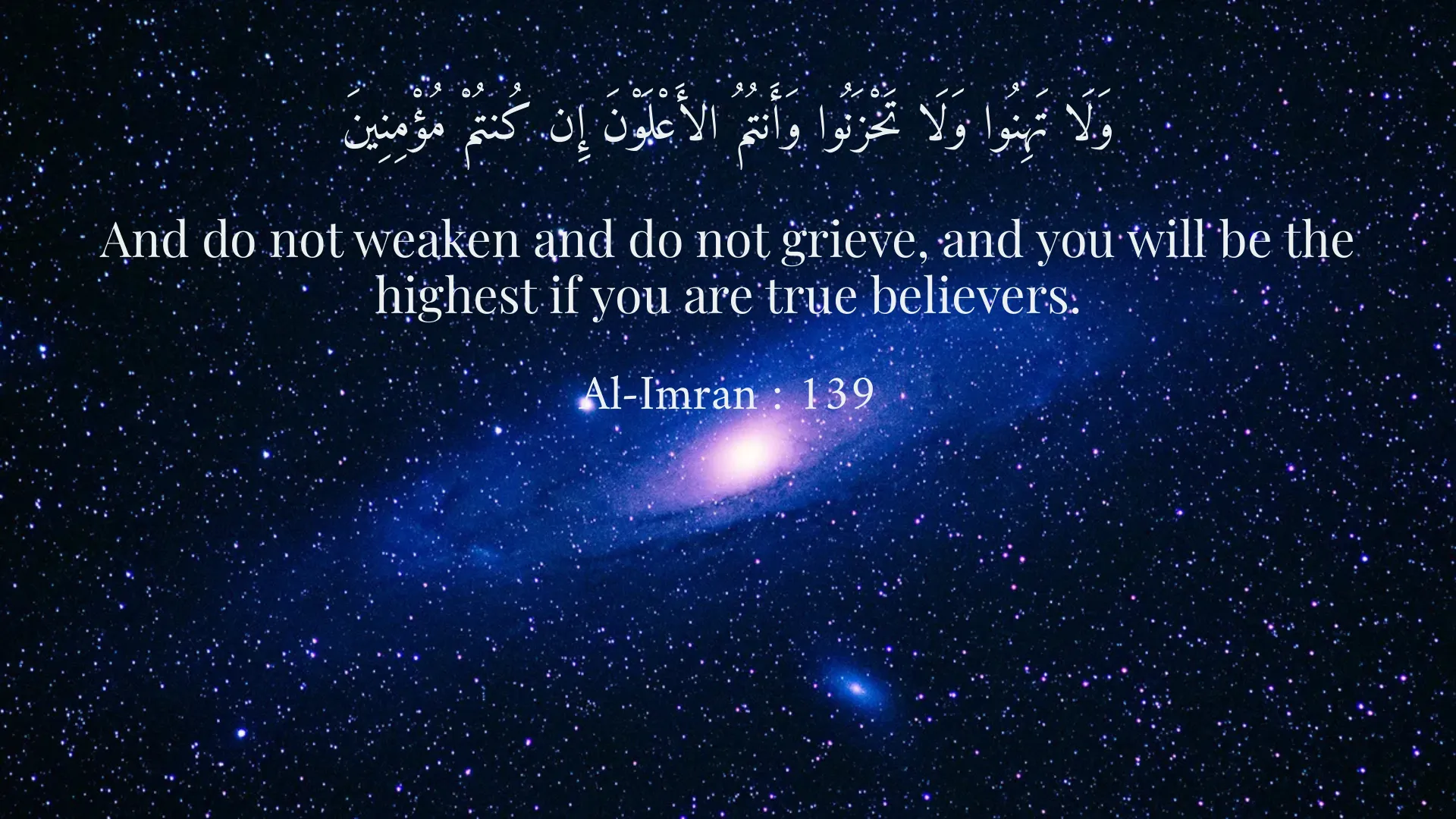
Title: Overcoming Feelings of Worthlessness: Insights from the Quran Feelings of worthlessness are a common human experience, often rooted in various personal, social, and spiritual factors. These feelings can manifest due to negative self-talk, societal pressures, and life’s challenges, leaving individuals struggling to recognize their value and purpose. However, for those looking for a source of guidance and reassurance, the Quran offers profound strategies to enhance one's sense of self-worth and purpose in life. One of the primary approaches emphasized in the Quran is the importance of faith, particularly in nurturing a relationship with Allah. Strengthening one's faith can serve as a powerful antidote to feelings of inadequacy and despair. In Surah Al-Imran, verse 139, it is stated: 'And do not weaken and do not grieve, and you will be the highest if you are true believers.' This verse serves as a poignant reminder that faith in Allah can provide solace during challenging times. It reassures believers that by maintaining steadfastness in their faith, they can rise above feelings of worthlessness, and that their worth is not diminished by life's struggles. Instead, their true value is recognized through their commitment to their beliefs. When grappling with feelings of worthlessness, it is vital to remember the concept of divine tests. Surah Al-Baqarah, verse 286, conveys a powerful message by stating: 'Allah does not burden a soul beyond that it can bear.' This verse highlights that each individual is uniquely tested according to their capabilities, implying that every challenge is an opportunity for growth and understanding. This interpretation of hardship as a tool for personal development can help individuals reassess their perceived limitations. By recognizing that Allah entrusts us with challenges that we are equipped to handle, we can shift our focus from feelings of inadequacy to understanding the strength we possess. Moreover, fostering a sense of value can also be achieved through altruism and charitable acts. Engaging in selfless acts serves multiple purposes: it uplifts others while simultaneously enriching our own spirits. In Surah Al-Mujadila, verse 11, it is stated: 'Allah will raise those who have believed among you and those who were given knowledge by degrees.' This verse emphasizes that there are rewards for those who seek knowledge and nurture their faith. Comparison with others in terms of faith and knowledge diminishes the unique potential of the individual. Every act of kindness, compassion, and support towards others elevates not only those we help but also reinforces our own self-worth. Incorporating charitable acts into daily life can create a positive feedback loop. When individuals help others, it fosters a sense of not only social connection but also self-recognition. Volunteering or performing small acts of kindness can become a powerful coping mechanism, allowing individuals to rediscover their strengths and reaffirm their self-worth. Furthermore, the feeling of community created through mutual support helps combat isolation, a common contributor to feelings of worthlessness. The significance of knowledge in enhancing self-worth cannot be underestimated. The Quran underscores the importance of learning and intellectual growth, emphasizing that knowledge and faith are interconnected. By seeking knowledge, an individual does not only empower themselves but also contributes positively to the wider community. This pursuit of knowledge can lead to personal and spiritual enlightenment, which further reinforces one’s self-worth. In this way, believers are urged to continually indulge in learning, whether through religious texts, educational pursuits, or learning applicable skills. Another aspect that contributes to one’s self-worth is self-reflection and acceptance. The Quran encourages self-awareness and contemplation, suggesting that an individual reflect on their actions, intentions, and aspirations. By engaging in sincere self-reflection, one can identify their strengths and areas for improvement. Instead of focusing solely on perceived failures or feelings of worthlessness, individuals can learn to embrace their imperfections as part of their unique journey. Additionally, the practice of gratitude is an essential component in overcoming feelings of worthlessness. The Quran frequently highlights the importance of gratitude towards Allah for the countless blessings bestowed upon each individual. By cultivating an attitude of thankfulness, individuals can shift their focus from what they lack to recognizing the abundance in their lives. This shift in perspective fosters a greater sense of contentment and self-worth, as gratitude opens the door to positivity and appreciation. Ultimately, the journey to overcoming feelings of worthlessness is multidimensional and deeply personal. It requires us to cultivate a strong spiritual connection, engage in selfless acts of kindness, and continuously seek knowledge. By drawing closer to Allah and embracing the teachings of the Quran, individuals can affirm their self-worth and learn to appreciate their unique value in the world. In conclusion, feelings of worthlessness are not a permanent state. Through the guidance found in the Quran, individuals can find strength in faith, embrace opportunities for growth, engage in charitable actions, and continuously seek knowledge. By recognizing the divine wisdom in our challenges and maintaining a spirit of gratitude, we can elevate our self-worth. The journey may be challenging, but each step taken towards faith and good deeds brings us closer to reclaiming our inner value and purpose. Therefore, let us utilize these Quranic insights to foster a renewed sense of self-worth and fulfillment in our lives.
Related Verses
وَلَا تَهِنُوا وَلَا تَحْزَنُوا وَأَنتُمُ الأَعْلَوْنَ إِن كُنتُمْ مُؤْمِنِينَ
And do not weaken and do not grieve, and you will be the highest if you are true believers.
Al-Imran : 139
لَا يُكَلِّفُ اللَّهُ نَفْسًا إِلَّا وُسْعَهَا
Allah does not burden a soul beyond that it can bear.
Al-Baqarah : 286
يَرْفَعِ اللَّهُ الَّذِينَ آمَنُوا مِنكُمْ وَالَّذِينَ أُوتُوا الْعِلْمَ دَرَجَاتٍ
Allah will raise those who have believed among you and those who were given knowledge by degrees.
Al-Mujadila : 11
Short Story
One day, a young man named Ali visited Saadi with feelings of worthlessness. Saadi told him, 'Search in the words of God and your good actions. Whenever you feel unfortunate, remember that your Creator values you more than you think.' The next day, Ali wandered in his neighborhood and decided to help a child in need. This act made him feel happy and valuable, reminding him of Saadi's words.