Quranic Answer
Properly raising children is one of the greatest responsibilities of parents, and the Holy Quran provides important guidelines in this aspect. Raising children is not just a mere act of providing shelter, food, and education; it is about nurturing their minds, shaping their characters, and preparing them for the complexities of life in a manner that aligns with moral and religious principles. As parents, the task of raising children can often seem overwhelming, yet the guidance found within the Islamic tradition offers a foundation that can make this noble endeavor more fruitful. A profound segment of instruction can be sourced from Surah Luqman, verse 13, in which Luqman the wise addresses his son, advising him against associating partners with Allah. This counsel fundamentally lays the emphasis on the importance of monotheism, known as Tawheed, which is the bedrock of Islamic belief. The message signifies not only the spiritual importance of maintaining a correct relationship with God but also the responsibility that parents hold in conveying this fundamental truth to their children. It encourages parents to instill in their offspring an awareness of the significance of faith, guiding them to respect and worship Allah alone. The essence of such guidance is critical, as an understanding of one's relationship with the divine shapes a child's worldview in every aspect of their life. Furthermore, as depicted in Surah At-Tahrim, verse 6, Allah instructs the believers to protect themselves and their families from the Fire of Hell. This directive highlights a crucial element of parenting — safeguarding one's family from the dangers of sin and moral decay. Parents must recognize that their influence directly impacts their children's choices and spiritual journeys. By remaining vigilant against negative influences, guiding children to cultivate good conduct, and ensuring their engagement in righteous acts, parents actively protect their families from spiritual ruin. The responsibility is immense; thus, there is a need for ongoing moral education that incorporates discussions about the consequences of actions, the importance of community, and the idea of accountability to God. In order to effectively approach these responsibilities, it is vital for parents to create an environment that fosters both intellectual and social growth. A nurturing atmosphere can be achieved through open communication, where children feel comfortable expressing their thoughts, asking questions, and exploring their faith. Parents should take the time to engage in meaningful dialogue with their children, reinforcing the values of curiosity, learning, and inquiry. This not only aids in their intellectual development but also solidifies the parent-child bond, creating a relationship built on trust and respect. Furthermore, cultivating an atmosphere filled with affection and encouragement plays a significant role in the developmental stages of a child. Children thrive when they feel loved and supported. This involves recognizing their successes, no matter how small, and guiding them through their failures with care and patience. Encouraging children to pursue their interests and passions helps reinforce their self-confidence and independence. As they grow into themselves, they will learn the importance of making thoughtful choices, which are imperative for their moral and ethical decision-making. Yet, above all, the role of parents as exemplars cannot be overstated. Children often learn by observing the behavior of those they admire and love the most — their parents. If parents exhibit good behavior, honesty, patience, and empathy, their children are more likely to emulate these traits. For instance, displaying acts of kindness towards others not only benefits those involved but also serves as a live demonstration of the values parents wish to impart. Through their actions, parents can teach their children about responsibility, respect, compassion, and integrity, thereby directly influencing their upbringing process and contributing to the formation of their character. Moreover, it is essential for parents to be mindful of their own spiritual journeys. The more connected parents are to their faith, the more effectively they can impart that knowledge and sense of spirituality unto their children. Engaging in acts of worship, participating in community service, and discussing religious texts create a rich environment where faith is an integral part of family life. Children who are exposed to consistent religious practice are more likely to internalize these beliefs as they grow and develop. Additionally, the significance of community cannot be neglected. Children who grow up in nurturing environments often benefit from positive influences outside of their immediate family. Involving children in community activities, such as attending mosque events, engaging in charitable work, and participating in group studies, creates an awareness of the larger social fabric. These experiences can help shape their understanding of what it means to be part of a community that upholds moral values. They learn the importance of supporting others in their journey while understanding that they too are part of a collective responsibility towards goodness and righteousness. In conclusion, the responsibility of raising children is a multifaceted endeavor, affecting both their current well-being and future prospects. Parents equipped with the teachings of the Holy Quran have a unique roadmap to guide them in instilling faith, morality, and love in their children. By focusing on the foundational principles of monotheism as portrayed in Surah Luqman, the emphasis on protection from sin as mentioned in Surah At-Tahrim, and the critical role of being exemplary figures, parents can foster environments that lead their children towards success and spiritual fulfillment. Through consistent effort, communication, and love, parents will not only secure their children's present but also their spiritual and ethical legacies for future generations.
Related Verses
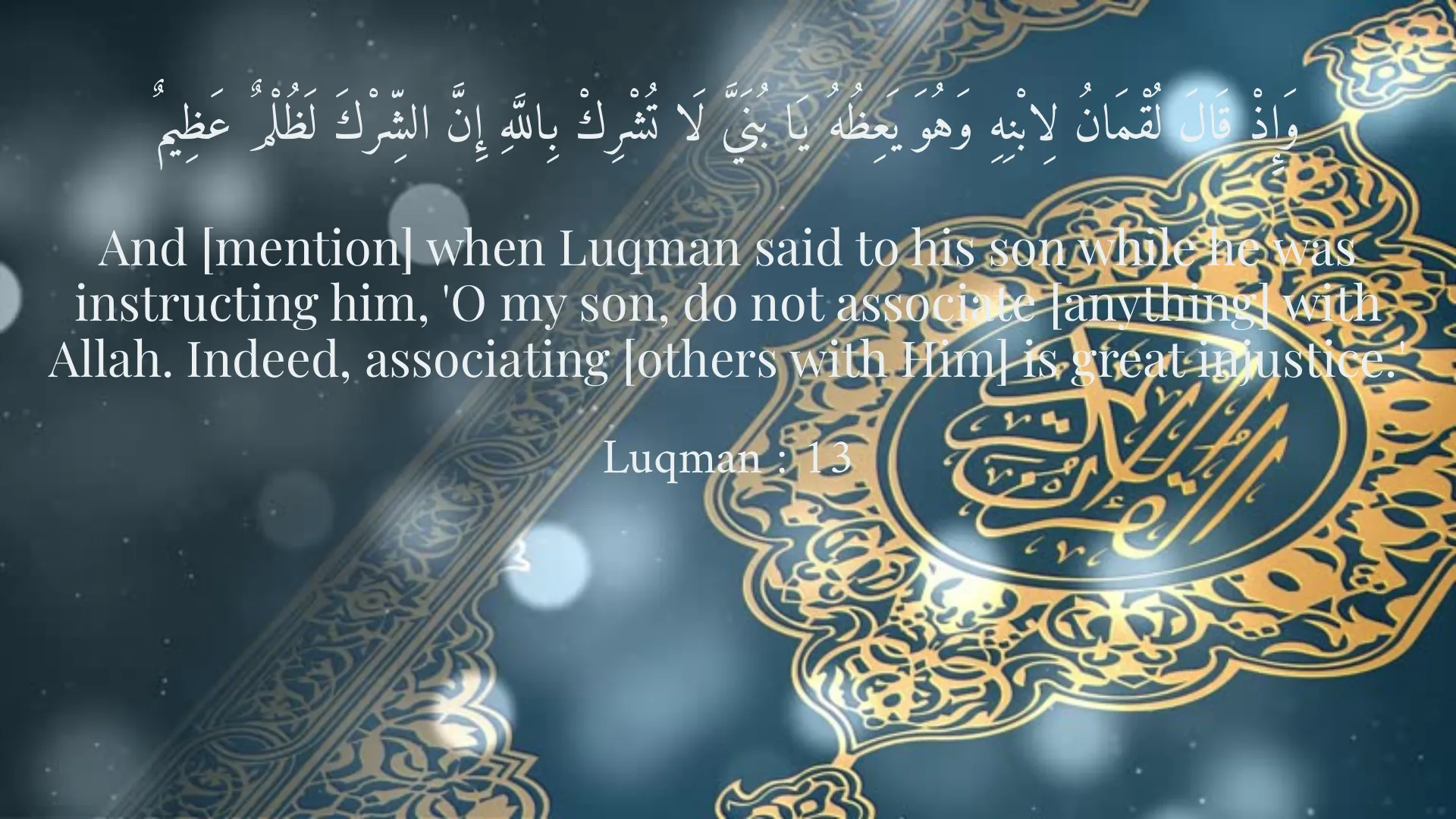
وَإِذْ قَالَ لُقْمَانُ لِابْنِهِ وَهُوَ يَعِظُهُ يَا بُنَيَّ لَا تُشْرِكْ بِاللَّهِ إِنَّ الشِّرْكَ لَظُلْمٌ عَظِيمٌ
And [mention] when Luqman said to his son while he was instructing him, 'O my son, do not associate [anything] with Allah. Indeed, associating [others with Him] is great injustice.'
Luqman : 13
يَا أَيُّهَا الَّذِينَ آمَنُوا قُوا أَنفُسَكُمْ وَأَهْلِيكُمْ نَارًا ۖ قُودُهَا النَّاسُ وَالْحَجَارَةُ عَلَيْهَا مَلَائِكَةٌ غِلَاظٌ شِدَادٌ لَا يَعْصُونَ اللَّهَ مَا أَمَرَهُمْ وَيَفْعَلُونَ مَا يُؤْمَرُونَ
O you who have believed, protect yourselves and your families from a Fire whose fuel is people and stones, over which are [appointed] angels, harsh and severe; they do not disobey Allah in what He commands them but do what they are commanded.
At-Tahrim : 6
Short Story
One day, a father was playing with his child and teaching him how to embody kindness and honesty in his life. He shared a story from his own life and said to his son, 'See, I have always tried to be the best role model for you. Wherever you go, remember that kindness and honesty are among the highest human values.' The child was influenced by his father's mindset and decided to take him as a role model.