Quranic Answer
Respecting oneself is an important concept in the Quran and Islamic teachings. It goes beyond a mere aspect of an individual's character and is regarded as a religious and ethical obligation in the Islamic faith. Self-respect is significant in forging one's identity, ethical stance, and overall well-being, emphasizing one's worth not merely as an individual but as a valiant member of the human race created by Allah. In this article, we will explore the profound significance of self-respect in Islamic teachings, backed by references from the Holy Quran that illuminate this essential principle. The foundations of self-respect in Islam can be traced to various verses in the Quran that shed light on the innate dignity bestowed upon humanity by Allah. One crucial verse in Surah Al-Imran states, ‘You are the best nation brought forth for mankind’ (Quran, 3:110). This divine declaration explicitly communicates that humans have been intricately designed by Allah to embody the highest virtues and morals. As such, it underlines the imperative for individuals to respect themselves, harboring a profound sense of dignity that derives from their unique creation. Self-respect encompasses a deeper understanding that includes recognizing one’s strengths and weaknesses while appreciating one’s intrinsic value as a human being. To cultivate this vital sentiment, it becomes essential to pay attention to the worship of Allah. In Surah Al-An’am, verse 162, it is emphasized: ‘Say, Indeed, my prayer, my rites of sacrifice, my living, and my dying are for Allah, Lord of the worlds.’ Here, Allah commands believers to intertwine every facet of their lives – from worship to daily living – with divine intention. The acknowledgment that every aspect of existence should reflect respect toward the Creator instills in individuals a sense of purpose, dignity, and self-worth. To respect oneself is not limited to an inward feeling alone; it also encompasses outward actions and behaviors. It requires an understanding of one's role in family, society, and the broader community. In the context of familial relationships, for example, respecting oneself means honoring one's parents, nurturing one’s children, and maintaining positive relationships with family members. The positive environment that nurtures self-respect can significantly contribute to one’s overall mental and emotional well-being. Engaging with family, friends, and community fosters a sense of belonging, helping individuals reinforce their self-worth through meaningful relationships. Furthermore, self-respect reflects in one’s social conduct. Muslims are called to create and participate in environments that promote acceptance, kindness, and respect for all human beings. This is deeply rooted in the teachings of Islam, which advocate for compassion, justice, and empathy toward others. By fostering a positive social environment, individuals can cultivate self-respect while simultaneously contributing to the well-being of their communities. The Quran makes a poignant reminder regarding self-respect in Surah Al-Mu’minun when Allah warns humanity: ‘Did you think that We created you in vain and that you would not be brought back to Us?’ (Quran, 23:115). This verse cautions against the neglect of one’s innate dignity and the futility of life without purpose and respect. As believers, Muslims are expected to have a self-image steeped in truth, authenticity, and intrinsic worth, which fosters a connection to a higher calling. Acknowledging one's value in the grand tapestry of existence leads to a positive outlook on life, nurturing resilience and moral strength in the face of challenges. Moreover, Islam teaches that self-respect is linked to self-improvement and personal growth. Engaging in introspection, gaining knowledge, and striving for a more virtuous character reflect an individual's respect for themselves and their potential. The pursuit of knowledge, ethical conduct, and moral fortitude is considered a noble endeavor in Islam. The Prophet Muhammad (peace be upon him) exemplified this principle through his actions, demonstrating the importance of character development. Striving for excellence while upholding the values of respect and integrity ultimately guides individuals toward achieving their potential, resulting in personal growth and mental peace. In light of this, one must recognize that self-respect is intertwined with humility. Understanding one's strengths should not lead to arrogance, nor should recognizing one's weaknesses result in despair. Instead, a balanced perception of oneself allows for growth while concurrently respecting the divine design of humanity. The Quran encourages believers to walk a middle path – to recognize one’s worth while remaining grateful and humble before Allah. In summation, self-respect is an intricate and multifaceted concept deeply rooted in Islamic teachings. It is a religious obligation that involves recognizing one's dignity, cultivating positive self-regard, and aligning one’s life with divine commands. With references from the Quran, we come to appreciate that self-respect encompasses a journey toward understanding oneself, engaging positively in communal relationships, and striving for spiritual and personal growth. Embracing the principle of self-respect leads to profound transformations, enabling individuals to foster mental peace and contribute positively to society. By respecting ourselves, we honor our creation by Allah and embrace our purpose within His grand design.
Related Verses
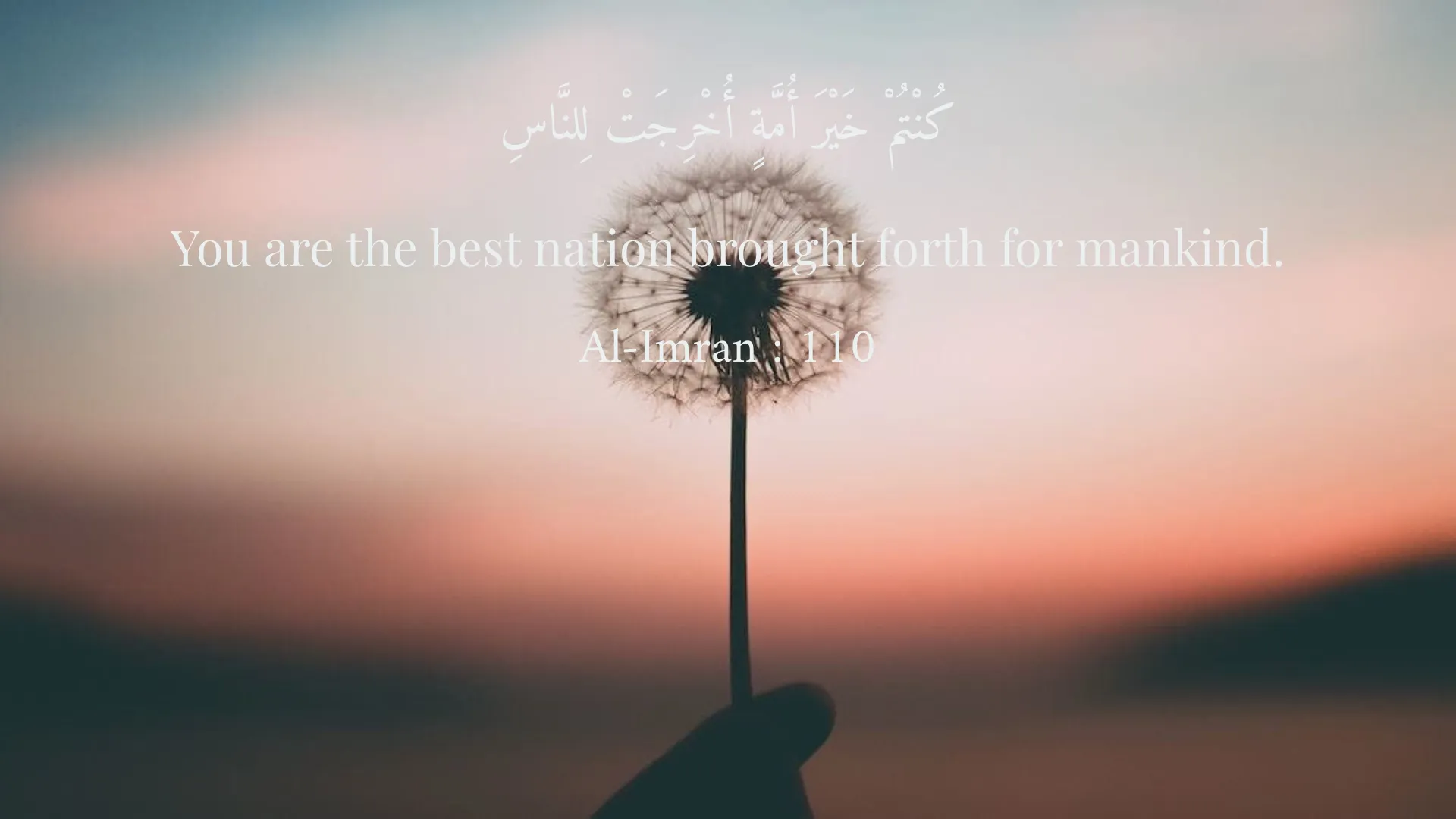
كُنْتُمْ خَيْرَ أُمَّةٍ أُخْرِجَتْ لِلنَّاسِ
You are the best nation brought forth for mankind.
Al-Imran : 110
إِنَّ صَلَاتِي وَنُسُكِي وَمَحْيَايَ وَمَمَاتِي لِلَّهِ رَبِّ الْعَالَمِينَ
Say, Indeed, my prayer, my rites of sacrifice, my living, and my dying are for Allah, Lord of the worlds.
Al-An'am : 162
أَفَحَسِبْتُمْ أَنَّمَا خَلَقْنَاكُمْ عَبَثًا وَأَنَّكُمْ إِلَىٰنَا لَا تُرْجَعُونَ
Did you think that We created you in vain and that you would not be brought back to Us?
Al-Mu'minun : 115
Short Story
One day, a young man named Amir was seeking a way to respect himself. He recalled the Quranic verses that reminded him he is a valuable and noble human being. Amir decided to dedicate time each day for prayer and worship of God and to pay more attention to himself in life. Soon, he felt a greater sense of peace and self-esteem, realizing that respecting oneself is the beginning of a journey toward excellence.