Quranic Answer
In today's fast-paced world, where technology has permeated every aspect of our lives with unprecedented speed, maintaining connection with our true essence and inner soul has become one of the greatest challenges. Smartphones, social media platforms, high-speed internet, and an abundance of information and entertainment are constantly vying for our attention. They can easily distance us from our inner selves and the quiet solitude essential for nurturing the soul. The question arises: how can we, amidst all this clamor, create a space for our soul and stay connected to it? The Holy Quran, despite being revealed fourteen centuries ago, offers timeless principles and profound solutions for this human dilemma, transcending time and place. These principles, in every era, including the age of technology, guide humanity towards inner peace and spiritual connection. The first and most crucial principle is Dhikr, the remembrance of God. The Quran repeatedly emphasizes the importance of Dhikr. Dhikr is not merely the repetition of specific words; it encompasses the constant awareness of God's presence in our lives, consciousness of His oversight, and a continuous reminder of the ultimate purpose of human creation. In Surah Ar-Ra'd, verse 28, Allah says: "Those who have believed and whose hearts are assured by the remembrance of Allah. Unquestionably, by the remembrance of Allah hearts are assured." This pivotal verse demonstrates that true inner peace, which is essential for connecting with the soul, is achieved solely through the remembrance of God. In our technology-driven world, we can use our devices with greater self-awareness. For example, we can set reminders on our phones to prompt us throughout the day to take a deep breath, think of God, or ponder a verse from the Quran. Utilizing Quranic apps, supplication (du'a) apps, and Dhikr counters can transform technology into a tool for remembrance, rather than an agent of heedlessness. Instead of constantly scrolling through social media for fleeting entertainment, we can dedicate moments to spiritual content. Dhikr can be performed in any state, whether while working on a computer, waiting for a message, or even during leisure time. The key is that our hearts should not be heedless of God's remembrance. This continuous state of mindfulness, cultivated through regular remembrance, acts as a spiritual anchor, preventing our souls from being adrift in the turbulent seas of digital distractions. It allows us to process the constant influx of information through a spiritual lens, discerning what truly benefits our inner being. Second, establishing Salat, prayer, and direct communion with the Creator. Prayer is the believer's ascension and the pillar of faith. Five times a day, individuals detach themselves from the clamorous world around them and engage in direct conversation with their Lord. These moments offer an unparalleled opportunity to disconnect from the external world and connect with the source of all existence. In Surah Al-Ankabut, verse 45, we read: "Recite, [O Muhammad], what has been revealed to you of the Book and establish prayer. Indeed, prayer prohibits immorality and wrongdoing, and the remembrance of Allah is greater. And Allah knows that which you do." Prayer not only prevents individuals from committing sins but also provides a sacred space for solitude with God, where the soul finds tranquility and liberation from worldly heedlessness. Even while working with technology, we can arrange our prayer times so that we never neglect them. We can use adhan (call to prayer) alarm applications or even designate a small space in our workplaces for performing prayers. These spiritual pauses act as a "reset" for the mind and soul, helping us to reconnect with our spiritual core. They serve as regular checkpoints to evaluate our spiritual compass, ensuring that our daily actions, including our engagement with technology, remain aligned with our divine purpose. The very act of turning away from the screen and towards the Qibla, of bowing and prostrating, is a physical and spiritual act of submission that reaffirms our connection to the divine. Third, contemplation of the Quran and reflection on creation. The Quran is a book of guidance and light. Reciting the Quran with contemplation (tadabbur) not only brings peace to the individual but also deepens their insight into the reality of existence. In Surah Muhammad, verse 24, it is stated: "Then do they not reflect upon the Quran, or are there locks upon [their] hearts?" Contemplation of the Quran means pondering its meanings, messages, and lessons, and striving to apply them in one's life. This act nourishes the soul and prevents individuals from worldly heedlessness. Similarly, reflecting on God's creation—from stars and galaxies to the smallest particles and the immaculate order of nature—is another path to connecting with the soul. When we contemplate the grandeur of creation, we find ourselves small and connected to an infinite power. This reflection can occur at any moment, even during a break from working with technology, by looking at the sky or contemplating the complexities of our own existence. We can utilize beneficial scientific documentaries and useful internet programs that highlight the grandeur of creation to enhance this contemplation, always with the understanding that these are tools to reach God, not merely entertainment. This intellectual and spiritual exercise helps us to look beyond the superficial layers of digital information and grasp the deeper realities of existence, fostering a sense of awe and humility. Fourth, observing moderation and controlling the self (nafs). Technology itself is neither good nor bad; it is our manner of use that makes it beneficial or harmful. The Quran always emphasizes moderation and avoiding excess or negligence. Overdoing anything, even permissible acts, can divert an individual from the right path. Excessive use of technology can lead to addiction, degrade human relationships, harm physical and mental health, and most importantly, hinder one's spirituality and connection with their soul. Controlling the nafs means recognizing and managing one's desires and impulses so that they do not dominate us. This includes managing the time spent on technology. We need to set boundaries for ourselves: for example, screen-free hours, or dedicating specific times to spiritual activities without any technological devices present. We can use "screen time" features or "focus modes" on our devices to limit the use of specific applications. These practices help us to be the masters of technology, not its slaves. The Quran encourages us to strive against our lower selves (jihad al-nafs), and in the modern context, this often means resisting the constant pull of digital distractions and cultivating self-discipline. Fifth, prioritizing the Hereafter over worldly life. One of the greatest causes of human heedlessness is clinging to this world and forgetting the primary purpose of life. Technology, with its attractions and temptations, can intensify this attachment. The Quran teaches us that worldly life is fleeting and ephemeral, and our main goal is to achieve success in the Hereafter and the satisfaction of our Lord. In Surah Al-Kahf, verse 46, Allah says: "Wealth and children are the adornment of the worldly life; but the enduring good deeds are better with your Lord for reward and better for [one's] hope." When we remember the ultimate purpose of life, all tools and activities, including technology, find their true place. They are merely means to achieve higher goals, not ends in themselves. This perspective helps us to use technology purposefully and directionally; instead of drowning in the virtual world, we utilize it to acquire beneficial knowledge, serve others, or for any action that leads to proximity to the Divine. This approach to life helps us to keep the guiding light of our soul shining amidst the glitter and glamour of the technological world and never lose our true path. Ultimately, the Holy Quran, by presenting these timeless principles, provides a comprehensive guide for a balanced and spiritual life in any era, including the age of technology. By focusing on remembrance of God (Dhikr), prayer (Salat), contemplation of the Quran, self-control, and prioritizing the Hereafter, we can, while still benefiting from technology, maintain our deep connection with our soul and the Creator of existence, thereby achieving true inner peace. This is a conscious choice that every individual must make in their life to avoid drowning in the boundless and turbulent sea of aimless information and connections, and to find the peaceful shore of their own soul.
Related Verses
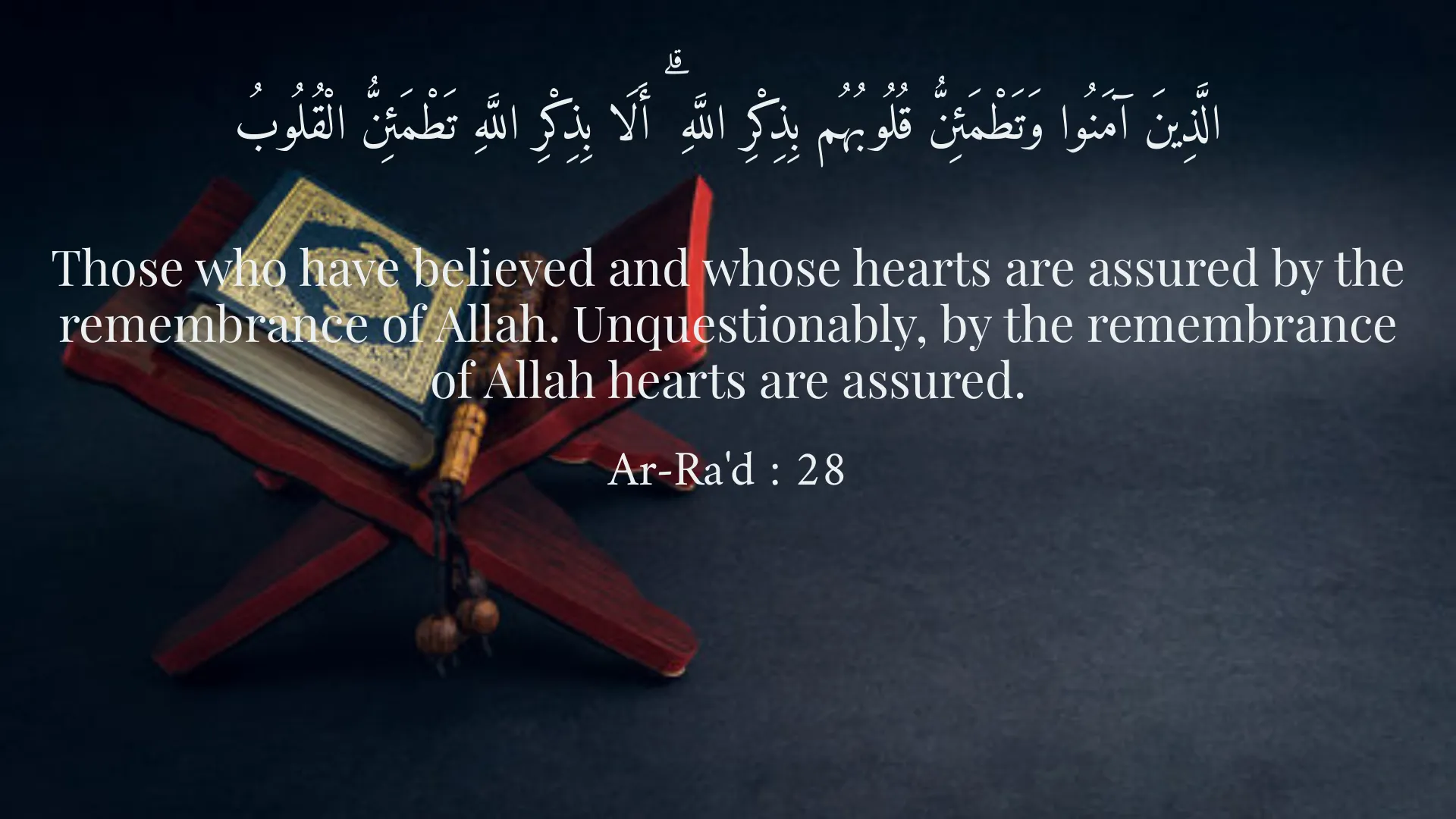
الَّذِينَ آمَنُوا وَتَطْمَئِنُّ قُلُوبُهُم بِذِكْرِ اللَّهِ ۗ أَلَا بِذِكْرِ اللَّهِ تَطْمَئِنُّ الْقُلُوبُ
Those who have believed and whose hearts are assured by the remembrance of Allah. Unquestionably, by the remembrance of Allah hearts are assured.
Ar-Ra'd : 28
اتْلُ مَا أُوحِيَ إِلَيْكَ مِنَ الْكِتَابِ وَأَقِمِ الصَّلَاةَ ۖ إِنَّ الصَّلَاةَ تَنْهَىٰ عَنِ الْفَحْشَاءِ وَالْمُنكَرِ ۗ وَلَذِكْرُ اللَّهِ أَكْبَرُ ۗ وَاللَّهُ يَعْلَمُ مَا تَصْنَعُونَ
Recite, [O Muhammad], what has been revealed to you of the Book and establish prayer. Indeed, prayer prohibits immorality and wrongdoing, and the remembrance of Allah is greater. And Allah knows that which you do.
Al-Ankabut : 45
الْمَالُ وَالْبَنُونَ زِينَةُ الْحَيَاةِ الدُّنْيَا ۖ وَالْبَاقِيَاتُ الصَّالِحَاتُ خَيْرٌ عِندَ رَبِّكَ ثَوَابًا وَخَيْرٌ أَمَلًا
Wealth and children are the adornment of the worldly life; but the enduring good deeds are better with your Lord for reward and better for [one's] hope.
Al-Kahf : 46
Short Story
It is narrated that in a certain era, there were two friends: one, heedless of himself, pursued the fleeting world, and the other possessed a pure heart, always engaged in the remembrance of Truth. The friend engrossed in worldly affairs and trade once asked his companion, who was a recluse and a man of contemplation: "O friend, how is it that I always see you calm and cheerful, while I rush from dawn till dusk in pursuit of worldly possessions and wealth, and the more I strive, the more my anxieties grow?" The dervish smiled and said: "O brother, your heart is given to the marketplace, and your ear to every sound that rises from it; but I have entrusted my heart to the garden of God's remembrance, and my ear listens to nothing but divine melodies. You are busy accumulating, while I am busy emptying my heart of everything save Him. Your world is full of clangor and gold, and my world is full of light and remembrance. If, instead of directing all your senses outwards to what is in the hands of others, you pause for a moment and look within yourself, you will see that the greatest treasure is hidden in your own breast. If you polish your heart with the remembrance of God, neither the clamor of the marketplace nor the glitter of the world will ever make you heedless of your true self." The worldly friend was affected by these words and pondered that perhaps the path to freedom from all his worries lay in turning inwards and remembering the Lord.