Quranic Answer
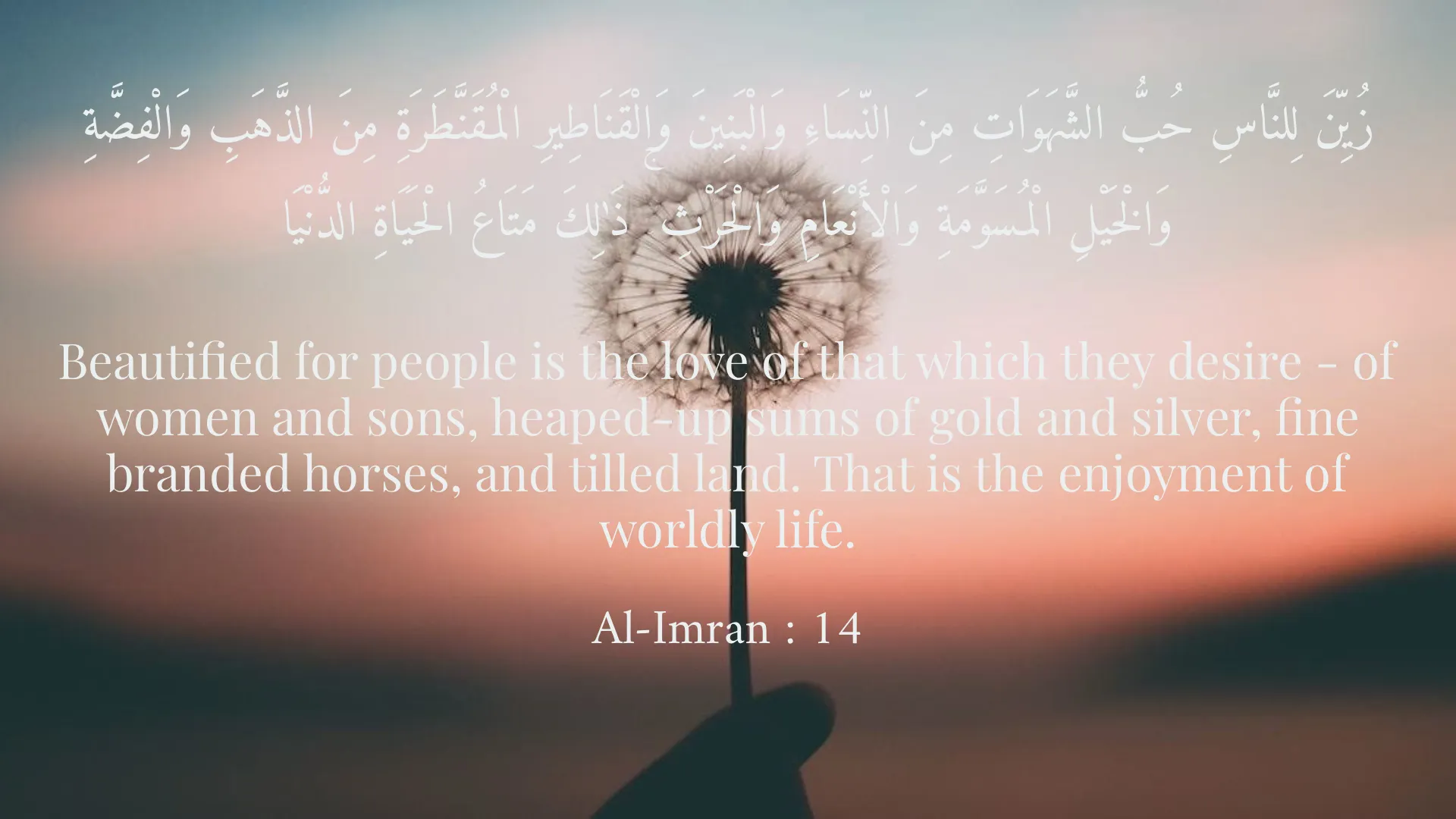
The Holy Quran teaches us that the life of this world is merely a temporary phase, and we should not be deceived by it. This notion is pivotal to understanding the principles of existence according to Islamic teachings. The Quran delineates a clear distinction between the ephemeral pleasures of the earthly life and the enduring bliss of the Hereafter. One of the core verses that elucidates this perspective is found in Surah Al-Imran, verse 14, which states: "Beautified for people is the love of that which they desire - of women and sons, heaped-up sums of gold and silver, fine branded horses, and tilled land. That is the enjoyment of worldly life..." Here, the Quran underscores the allure of worldly possessions and desires. It vividly describes the enticing aspects of life that might seduce an individual into losing sight of their ultimate purpose. However, this verse intricately reminds us that such attractions are merely ephemeral delights, a fleeting enjoyment that should not capture our hearts or distort our priorities. To understand the Quran’s teachings regarding the world, we must recognize that the primary purpose of our existence is to serve as stewards, or khulafa, of the bounties of this world. This stewardship requires us to bear a pure intention and align our actions with the obedience of Allah. In essence, our worldly pursuits should lead us to the Hereafter, and to navigate this journey effectively, it is crucial that we prioritize our faith and spiritual obligations. In Surah Al-Baqarah, verse 177 presents a profound insight into what constitutes righteousness in Islam. It states: "Righteousness is not that you turn your faces toward the east or the west, but [true] righteousness is in one who believes in Allah, the Last Day, the Angels, the Scripture, and the Prophets and gives his wealth, in spite of his love for it, to relatives, orphans, the needy, the traveler, those who ask [for help], and for freeing slaves; [and who] establishes prayer and gives zakah..." This verse delineates the attributes of a truly righteous person, highlighting several essential aspects. Not only must one possess a strong belief in the tenets of faith, including the belief in Allah, the Last Day, Angels, Scripture, and Prophets, but they must also manifest this belief through actions, particularly through giving and supporting those in need. The act of giving is emphasized significantly within this verse, highlighting the importance of generosity, charity, and compassion in our dealings with others. The Quran encourages the believers to direct their wealth toward those who are less fortunate. This charitable giving is seen not only as an expression of kindness but also as a means of purifying one's wealth. In Islam, wealth is understood as a blessing from Allah, and with every blessing comes the responsibility to share it with those in need. This principle teaches that true love for one’s wealth should culminate in a sharing attitude rather than a possessive nature. Furthermore, the Quran places great emphasis on the importance of worship through prayer and zakah (almsgiving). These acts are fundamental pillars of Islamic practice and serve as reminders that our material possessions are temporary, and our ultimate allegiance is to Allah. Establishing prayer is an expression of servitude to Allah, connecting the believer to their Creator while providing spiritual nourishment. Meanwhile, zakah functions as a mechanism for social balance and ensures responsibility among community members, reinforcing the idea of a collective society where wealth circulates to serve everyone's welfare. Reflecting on the aforementioned Quranic teachings, it becomes evident that our life in this world should be directed toward the goals that align with the Hereafter. The dangers of becoming ensnared by worldly delights stand as a constant reminder for believers to maintain a posture of humility and continuous remembrance of Allah. The Quran instructs us not to become preoccupied with the material world but instead to seek sustenance ethically (halal sustenance), provide aid to the needy, and engage in acts of charity. By channeling our energies to function as stewards of the earth, we enhance our ability to contribute positively to society and foster a communal spirit of support and care. In a world where consumerism often dictates our behaviors and ambitions, the Quran serves as a guiding light, admonishing us to use our resources responsibly and to focus on our spiritual obligations. The dichotomy of worldly enjoyment against the backdrop of eternal life pushes believers to strive for balance, urging them to savor life’s pleasures while remaining cognizant of their divine responsibilities. Ultimately, the goal remains clear; we must not forget the remembrance of Allah while utilizing our material life. Life is fleeting, and the tests we encounter serve to define our character and faith. By reminding ourselves constantly of our purpose and striving to live our lives in accordance with Allah’s guidance, we ensure that our activities in this worldly life are not mere distractions but stepping stones toward earning Allah's pleasure and attaining the eternal rewards of the Hereafter. In closing, the teachings of the Quran serve not only as a roadmap for individual behavior but also as a community standard that fosters unity and collective growth among all believers. Through sincere intention and righteous action, we can transform our worldly existence into a means of attaining everlasting success and fulfillment.
Related Verses
زُيِّنَ لِلنَّاسِ حُبُّ الشَّهَوَاتِ مِنَ النِّسَاءِ وَالْبَنِينَ وَالْقَنَاطِيرِ الْمُقَنَّطَرَةِ مِنَ الذَّهَبِ وَالْفِضَّةِ وَالْخَيْلِ الْمُسَوَّمَةِ وَالْأَنْعَامِ وَالْحَرْثِ ۚ ذَٰلِكَ مَتَاعُ الْحَيَاةِ الدُّنْيَا
Beautified for people is the love of that which they desire - of women and sons, heaped-up sums of gold and silver, fine branded horses, and tilled land. That is the enjoyment of worldly life.
Al-Imran : 14
لَيْسَ الْبِرَّ أَنْ تُوَلُّوا وَجُوهَكُمْ قِبَلَ الْمَشْرِقِ وَالْمَغْرِبِ وَلَكِنَّ الْبِرَّ مَن آمَنَ بِاللَّهِ وَالْيَوْمِ الْآخِرِ وَالْمَلَائِكَةِ وَالْكِتَابِ وَالنَّبِيِّينَ وَآتَى الْمَالَ عَلَى حُبِّهِ ذَوِي الْقُرْبَى وَالْيَتَامَى وَالْمَسَاكِينِ وَابْنَ السَّبِيلِ وَالسَّائِلِينَ وَفِي الرِّقَابِ وَأَقَامَ الصَّلَاةَ وَآتَى الزَّكَاةَ
Righteousness is not that you turn your faces toward the east or the west, but [true] righteousness is in one who believes in Allah, the Last Day, the Angels, the Scripture, and the Prophets and gives his wealth, in spite of his love for it, to relatives, orphans, the needy, the traveler, those who ask [for help], and for freeing slaves; [and who] establishes prayer and gives zakah.
Al-Baqarah : 177
Short Story
One day, Adel remembered the verses of the Quran and thought about how he could use the world for his Hereafter. He decided that in his daily actions, he should not forget the remembrance of Allah and with pure intentions and love for his parents and family, he would take steps for his Hereafter. Soon, he realized that his life became more beautiful and meaningful each day.