Quranic Answer
The understanding of 'Zuhd' (asceticism) in Islam, especially from the perspective of the Holy Quran, is remarkably nuanced and often subject to misconceptions. Many mistakenly believe that Zuhd implies a complete abandonment of worldly possessions, a detachment from material opportunities, and isolation from society. However, a careful contemplation of the illuminating verses of the Quran reveals that this perception is far from the true essence of Islamic Zuhd. Genuine Zuhd in Islam does not mean abandoning the world; rather, it signifies an absence of emotional attachment to it and a refusal to be enslaved by its material manifestations. It implies that the world should serve as a means to attain the Hereafter, not as the ultimate goal itself. The Holy Quran consistently establishes a balance and equilibrium between this worldly life (Dunya) and the Afterlife (Akhirah). Allah Almighty, in numerous verses, encourages humanity to benefit from the lawful blessings of this world, provided that this enjoyment does not lead to extravagance or transgression, nor should it distract individuals from remembering God and their fundamental duties. One of the clearest verses in this regard is Surah Al-Qasas, verse 77, which states: "But seek, through that which Allah has given you, the home of the Hereafter; and [yet], do not forget your share of the world. And do good as Allah has done good to you. And desire not corruption in the land. Indeed, Allah does not like corrupters." This verse unequivocally shows that abandoning the world is not recommended; rather, benefiting from it and utilizing its resources correctly to achieve eternal happiness is desirable. In essence, the world is a bridge that must be crossed, not a place to dwell in and become attached to. On the other hand, the Quran strongly prohibits extremism in any domain, including excessive attachment to the world or excessive asceticism and deprivation from lawful pleasures. In Surah Al-A'raf, verses 31 and 32, Allah says: "O children of Adam, take your adornment at every place of prayer, and eat and drink, but be not excessive. Indeed, He likes not those who commit excess. Say, 'Who has forbidden the adornment of Allah which He has produced for His servants and the good things (at-tayyibat) of provision?' Say, 'They are for those who believe during the worldly life [but] exclusively for them on the Day of Resurrection.'" These verses explicitly condemn any prohibition of God's lawful blessings and emphasize that believers have the right to enjoy the beauties and pure things of this world, provided they observe moderation and avoid extravagance. Therefore, Quranic Zuhd is not a negative approach to the world; rather, it is a realistic and responsible one. A Zahid (one who practices Zuhd) is not someone who flees from the world, but someone who lives in the world, engages in activities, produces, and serves society, yet does not allow their heart to become bound by it. They understand that this world is a transit point, and the primary goal is God's pleasure and achieving a good Hereafter. They benefit from wealth and possessions but are not enslaved by them; they spend it in the way of God, help orphans and the needy, and fulfill divine obligations. This type of Zuhd, instead of leading to isolation, results in active and constructive participation in society, because the Zahid sees the world as a 'cultivation field' for the Hereafter, viewing every effort within it as an opportunity to earn divine pleasure. In Surah Al-Hadid, verse 20, the Quran describes the transient nature of the world thus: "Know that the life of this world is but amusement and diversion and adornment and boasting among yourselves and competition in increase of wealth and children - like the example of a rain whose [resulting] plant growth pleases the tillers; then it dries and you see it [become] yellow; then it becomes [scattered] debris. And in the Hereafter is severe punishment and forgiveness from Allah and approval. And what is the worldly life except the enjoyment of delusion." This verse warns that excessive attachment to the world and forgetting the Hereafter lead to nothing but deception and regret. However, this does not mean abandoning the world, but rather understanding its proper place and not being deceived by its alluring appearances. Thus, true Zuhd in the Quran is the heart's indifference to the transient manifestations of the world, not inactivity within it. A Zahid is someone who, despite possessing, is free from its grip; and despite being among people, is detached from its attachments. This kind of Zuhd empowers individuals to act in the world according to divine principles and spread goodness. It is a spiritual and heartfelt state that liberates one from greed and covetousness, allowing them to use God's blessings appropriately and in pursuit of His pleasure, without the world becoming their ultimate goal and diverting them from the path of true servitude. This concept of Zuhd guides humanity towards balance, contentment, generosity, and social responsibility, rather than towards withdrawal and unproductive voluntary poverty.
Related Verses
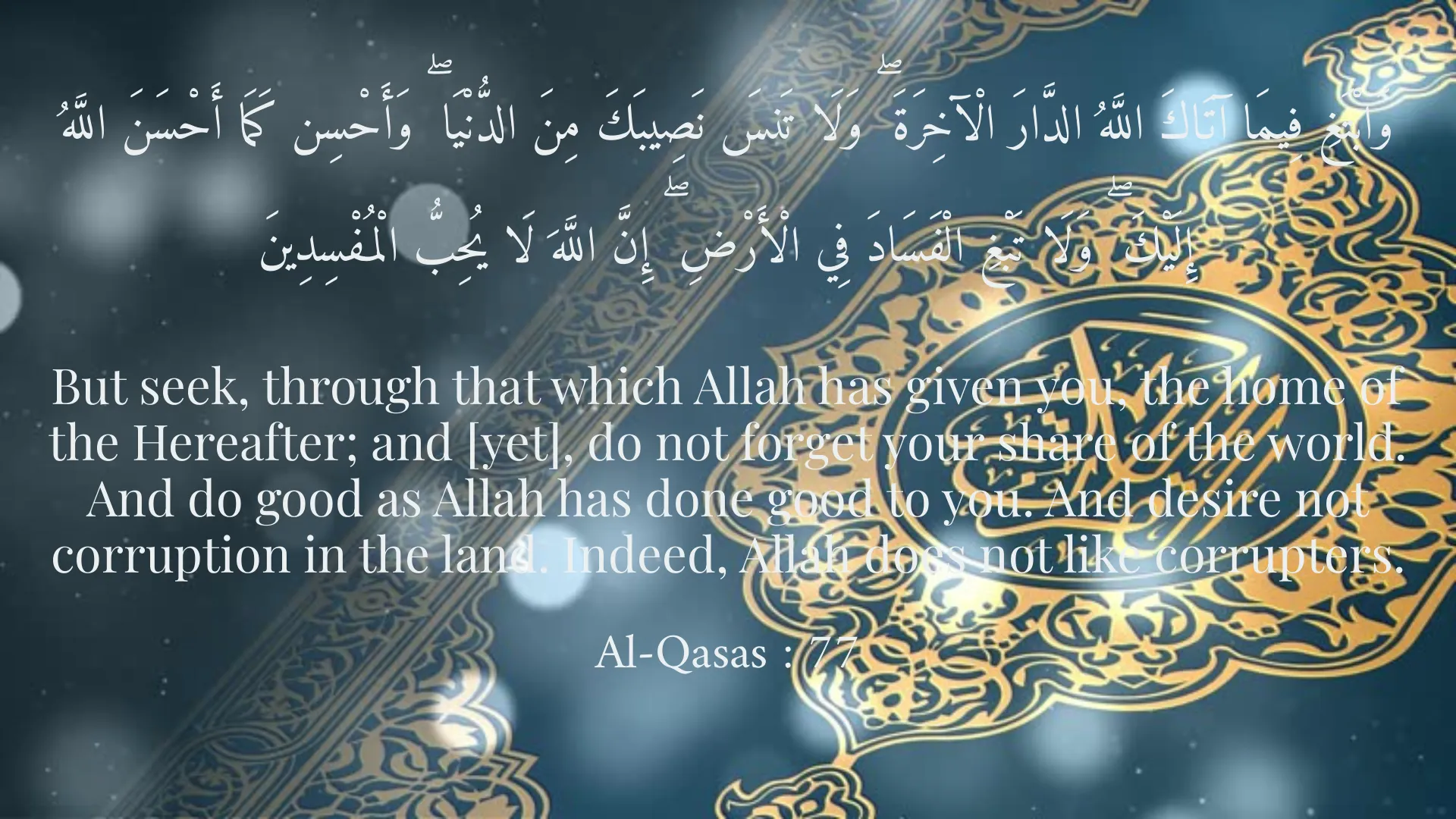
وَابْتَغِ فِيمَا آتَاكَ اللَّهُ الدَّارَ الْآخِرَةَ ۖ وَلَا تَنسَ نَصِيبَكَ مِنَ الدُّنْيَا ۖ وَأَحْسِن كَمَا أَحْسَنَ اللَّهُ إِلَيْكَ ۖ وَلَا تَبْغِ الْفَسَادَ فِي الْأَرْضِ ۖ إِنَّ اللَّهَ لَا يُحِبُّ الْمُفْسِدِينَ
But seek, through that which Allah has given you, the home of the Hereafter; and [yet], do not forget your share of the world. And do good as Allah has done good to you. And desire not corruption in the land. Indeed, Allah does not like corrupters.
Al-Qasas : 77
قُلْ مَنْ حَرَّمَ زِينَةَ اللَّهِ الَّتِي أَخْرَجَ لِعِبَادِهِ وَالطَّيِّبَاتِ مِنَ الرِّزْقِ ۚ قُلْ هِيَ لِلَّذِينَ آمَنُوا فِي الْحَيَاةِ الدُّنْيَا خَالِصَةً يَوْمَ الْقِيَامَةِ ۗ كَذَٰلِكَ نُفَصِّلُ الْآيَاتِ لِقَوْمٍ يَعْلَمُونَ
Say, 'Who has forbidden the adornment of Allah which He has produced for His servants and the good things (at-tayyibat) of provision?' Say, 'They are for those who believe during the worldly life [but] exclusively for them on the Day of Resurrection.' Thus do We detail the verses for a people who know.
Al-A'raf : 32
اعْلَمُوا أَنَّمَا الْحَيَاةُ الدُّنْيَا لَعِبٌ وَلَهْوٌ وَزِينَةٌ وَتَفَاخُرٌ بَيْنَكُمْ وَتَكَاثُرٌ فِي الْأَمْوَالِ وَالْأَوْلَادِ ۖ كَمَثَلِ غَيْثٍ أَعْجَبَ الْكُفَّارَ نَبَاتُهُ ثُمَّ يَهِيجُ فَتَرَاهُ مُصْفَرًّا ثُمَّ يَكُونُ حُطَامًا ۖ وَفِي الْآخِرَةِ عَذَابٌ شَدِيدٌ وَمَغْفِرَةٌ مِّنَ اللَّهِ وَرِضْوَانٌ ۚ وَمَا الْحَيَاةُ الدُّنْيَا إِلَّا مَتَاعُ الْغُرُورِ
Know that the life of this world is but amusement and diversion and adornment and boasting among yourselves and competition in increase of wealth and children - like the example of a rain whose [resulting] plant growth pleases the tillers; then it dries and you see it [become] yellow; then it becomes [scattered] debris. And in the Hereafter is severe punishment and forgiveness from Allah and approval. And what is the worldly life except the enjoyment of delusion.
Al-Hadid : 20
Short Story
One day, a king visited a dervish and found him cheerful and content, despite his apparent poverty. The king, who lived in complete luxury, asked with surprise: "O Dervish, how is it that with so little, you are so tranquil and free from sorrow?" The dervish smiled and replied: "O King, contentment lies neither in possessing the world nor in completely abandoning it and isolating oneself from people. Rather, it lies in not letting your heart be enslaved by the world, and in considering all you have as a trust from God, viewing the world as a field for the Hereafter. I live with what I have, am grateful, and have freed my heart from attachments; not by turning away from it such that others receive no benefit and I forget my responsibilities, nor by drowning in it such that I forget God." The king took heed of this wise saying and understood that true Zuhd is in the heart's detachment and proper use of blessings, not in emptying one's hands of the world or isolating oneself.