Quranic Answer
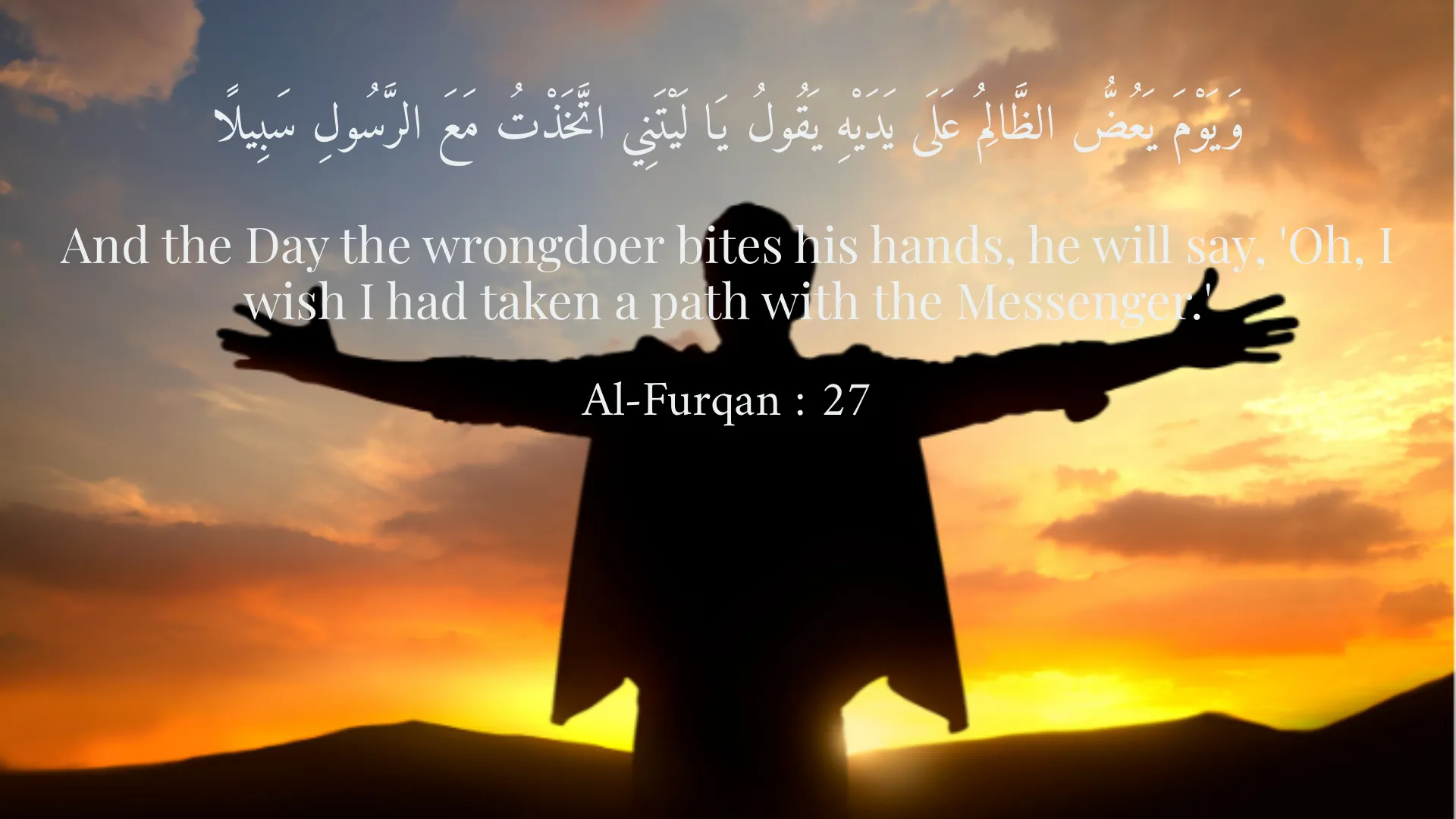
The Holy Quran, regarded as the divine book of guidance for Muslims, emphasizes various themes central to human existence, among them the importance of friendship and companionship. The bonds we forge with others shape our experiences, beliefs, and eventually our destiny in both this world and the Hereafter. One poignant reminder of this in the Quran can be found in Surah Al-Furqan, verse 27, where Allah states: "And the Day the wrongdoer bites his hands, he will say, 'Oh, I wish I had taken a path with the Messenger.'" This verse serves as a powerful illustration of the profound regrets that individuals will feel on the Day of Judgment about their choices in relationships, particularly regarding those they chose not to befriend. Here, the Messenger of God represents the epitome of righteousness and divine guidance, suggesting that companionship with such figures is crucial for leading a path of virtue. The concept of friendship transcends mere social interaction within the Quran. It signifies a deeper connection rooted in shared beliefs, moral support, and guidance towards fulfilling spiritual obligations. The relationship with the Messenger of God enhances one’s spiritual compass – forming friendships with those who are close to Allah can significantly benefit individuals in their journey through this earthly existence. Companionship with the righteous doesn't only provide emotional and social support; it acts as a catalyst for personal and communal growth in faith. These friendships foster an environment where mutual encouragement towards good deeds can flourish, vital for one’s spiritual well-being. Conversely, the Quran provides cautions against various types of companionship that may lead one astray. In Surah Al-Ma'idah, verse 51, Allah instructs: "O you who have believed, do not take the Jews and the Christians as allies. They are, in fact, allies of one another." This guidance is often interpreted as a warning against forming allegiances with those whose values and beliefs do not align with Islamic teachings. The emphasis here reflects a collective understanding that relationships with non-believers can potentially dilute one's faith or lead to moral compromise. This does not mean Muslims should harbor animosity towards individuals of different faiths, but rather that one should proceed with caution when seeking close alliances that may influence one’s direction in life. The Quran delineates a clear distinction between friendships that elevate towards righteousness and those that detract towards wrongdoings. It is crucial to reflect upon the effects of our associations and what influence they bear on our beliefs and actions. Companionship can either serve as a source of strength in our faith or a distraction that diverts us from the path destined for us. "Bad company corrupts good character" is a saying that parallels the themes presented in the Quran, underpinning the value of spiritual and moral integrity in our friendships. It is important to underscore that friendship in the Quran is not simply about socializing; it embodies a spiritual responsibility. Individuals must engage in relationship-building that nurtures their connection to God and reinforces their commitment to do good. If an association leads an individual away from God and encourages actions that are unfavorable, it would be prudent to reassess that friendship. In Islam, solitude may sometimes be a preferable alternative over disheartening influences that induce deviation from the faith. Allah's guidance on the nature of companionship urges believers to seek friendships with the righteous. By doing so, they not only enhance their understanding of faith but also cultivate a network of support that pushes them towards virtuous living. True friends uplift one another in their spiritual journeys, promoting an atmosphere where good deeds are normalized, and the pursuit of righteousness is mutual. Moreover, creating bonds with morally upright individuals can have rewarding influences beyond personal spirituality. A community grounded in righteousness fosters social cohesion, inspires collective efforts towards the betterment of society, and encourages progress rooted in ethical paradigms. This sense of togetherness reinforces collective responsibilities – friends are encouraged to actively support each other, especially during hardship or moments of spiritual doubt. In considering the role of companionship in the Quran, we can draw several practical implications for our lives today. Firstly, individuals should strive to surround themselves with those who promote goodness and righteousness. Engaging in community activities that meet wholesome objectives can help forge such vital connections. Secondly, it is essential to evaluate existing relationships critically; if they detract from one’s moral or spiritual well-being, it may be time to reconsider such friendships, even if it means enduring some loneliness initially. Finally, Allah offers comfort to those who seek to do right. In maintaining virtuous friendships, believers can find solace in knowing they are alongside those who aspire to a higher purpose in life, ultimately enriching both their present and their destiny in the Hereafter. Thus, the themes of friendship and companionship in the Quran not only convey essential moral teachings but also practical guidance for leading a fulfilling life in alignment with divine expectations. In conclusion, the Quran's teachings underscore that the manner in which we choose our friends is instrumental in determining the quality of our life experiences. It is imperative to cultivate friendships that elevate us closer to God, enriching our lives with goodness and guiding us towards success in both this world and the Hereafter. When faced with choices about companionship, believers are reminded that the bonds we have with the Messenger of God and with righteous individuals hold significant weight on the Day of Judgment. The critical message is to seek the company of the virtuous while distancing oneself from those who could lead to moral decay, finally urging us to establish and maintain a community that strives together towards righteousness.
Related Verses
وَيَوْمَ يَعُضُّ الظَّالِمُ عَلَى يَدَيْهِ يَقُولُ يَا لَيْتَنِي اتَّخَذْتُ مَعَ الرَّسُولِ سَبِيلًا
And the Day the wrongdoer bites his hands, he will say, 'Oh, I wish I had taken a path with the Messenger.'
Al-Furqan : 27
يَا أَيُّهَا الَّذِينَ آمَنُوا لَا تَتَّخِذُوا الْيَهُودَ وَالنَّصَارَى أَوْلِيَاءَ بَعْضُهُمْ أَوْلِيَاءُ بَعْضٍ ۚ وَمَن يَتَوَلَّهُمْ مِنكُمْ فَإِنَّهُ مِنْهُمْ ۚ إِنَّ اللَّهَ لَا يَهْدِي الْقَوْمَ الظَّالِمِينَ
O you who have believed, do not take the Jews and the Christians as allies. They are, in fact, allies of one another. And whoever of you takes them as allies - then indeed, he is one of them. Indeed, Allah does not guide the wrongdoing people.
Al-Ma'idah : 51
Short Story
Once upon a time, there was a young man named Amir who was struggling with doubts about his friendships. He had friends who never guided him well and always pushed him towards wrong actions. One rainy night, Amir decided to turn to the Quran and discovered through its enlightening verses that it was better to distance himself from bad friendships. He began searching for new friends who would guide him properly and lead him towards God. Gradually, his life changed, and he found happiness and peace.