Quranic Answer
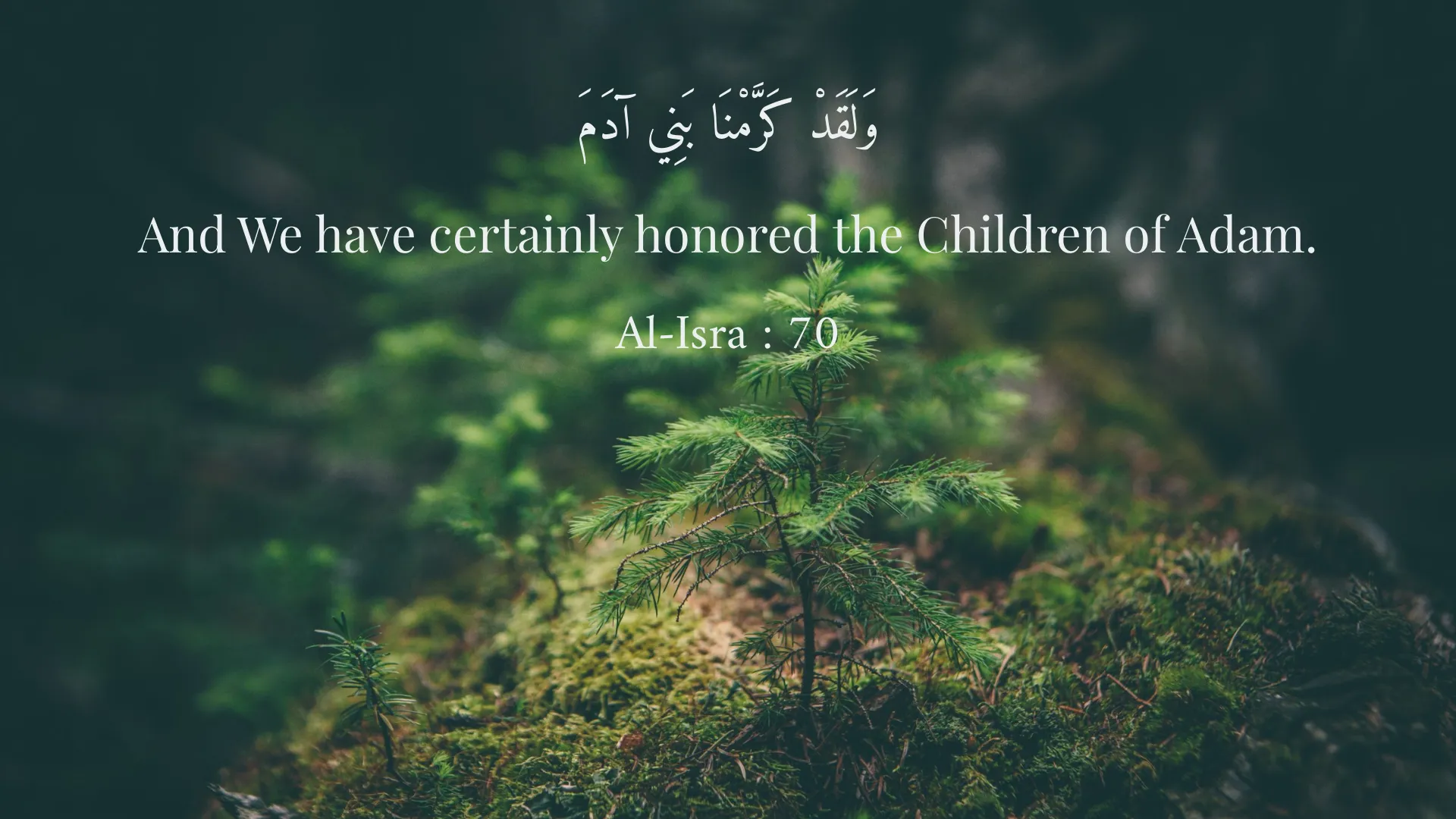
In the Holy Quran, the importance of self-compassion and caring for oneself is presented as a positive and necessary theme. Self-compassion means loving and respecting oneself. Allah reminds us to recognize our worth and not cause harm to ourselves. Specifically, the Quran mentions the value of human beings. For example, in Surah Al-Isra, verse 70, it states, 'And We have certainly honored the Children of Adam,' which clearly shows that God values and respects humanity, and every individual should be aware of this intrinsic worth. The concept of self-compassion, as drawn from Islamic teachings, not only highlights the importance of recognizing one's worth but also underscores the need for self-care as a fundamental aspect of a healthy and balanced life. Self-compassion is often understood through three main components: self-kindness, common humanity, and mindfulness. In the context of Islamic teachings, these elements seamlessly align with the principles found in the Quran and Hadith. First and foremost, self-kindness refers to treating oneself with care and understanding in times of struggle, rather than engaging in harsh self-criticism. The Quran encourages believers to maintain a positive self-image and offers guidance to foster a loving relationship with oneself. Consider the verse in Surah Al-Baqarah, which emphasizes Allah's mercy: 'And My Mercy encompasses all things' (Quran 7:156). This verse serves as a reminder of the importance of acknowledging one’s own flaws and humanity, and therefore promoting a kinder approach toward oneself. The act of self-kindness is essential as it cultivates emotional resilience; individuals who practice self-compassion are more likely to rebound from failures and engage in healthier coping mechanisms. Common humanity, the second component of self-compassion, involves recognizing that suffering and personal inadequacy is part of the shared experience of being human. The Quran reinforces this idea through various narratives and teachings, illustrating the trials and tribulations faced by many of its prophets. Such stories teach us that every individual faces obstacles, and feeling connected to others in their struggles can enhance our self-compassion. By understanding that we are not alone in our hardships, we can ease the burden of self-judgment and foster a more compassionate relationship with ourselves. Mindfulness, the third element, encourages individuals to be aware of their thoughts and feelings without becoming overwhelmed by them. The Quran frequently encourages reflection and self-awareness. In Surah Al-Mulk, verse 15, Allah calls upon mankind to observe the creation around them, inviting introspection and contemplation. This practice of mindfulness offers us the opportunity to observe our thoughts and feelings without judgement, making space for self-compassion to flourish. When we are mindful, we can pause, acknowledge our pain or criticism, and respond to ourselves with kindness rather than frustration. Moreover, nurturing self-compassion is linked to mental and spiritual well-being, which is an important theme in the Quran. Those who engage in self-love and self-care often find themselves better equipped to handle life's various challenges. This proactive stance fosters a sense of empowerment and self-efficacy, enabling individuals to approach their problems with clarity and strength. By fostering self-compassion, we not only enhance our own well-being but also increase our capacity for empathy and understanding toward others. When we have cultivated a positive self-image and attended to our own needs, we become more compassionate and supportive towards those around us. Another significant aspect touched upon by the Quran is the delicate balance between self-compassion and humility. In Islam, arrogance and pride are often cautioned against, as human beings are reminded of their dependence on Allah's grace. However, self-compassion does not contradict humility; rather, it complements it. Recognizing our worth as beloved creations of Allah allows us to embrace our individuality and unique contribution to the world without descending into arrogance. Being self-compassionate means acknowledging our strengths and embracing our flaws as important parts of our humanity, further promoting a humble yet confident identity. Additionally, the Quran teaches us to embrace God's mercy towards ourselves and allow ourselves to experience positive feelings. Surah Al-Furqan, verse 70, speaks of the potential for forgiveness, stating, 'Except for those who repent, believe, and do righteous work. For them, Allah will replace their evil deeds with good.' This verse illustrates that no matter our past or our missteps, we are capable of redemption and should treat ourselves with compassion as we move forward. The recognition of this transformative journey encourages individuals to be gentle with themselves, promoting growth rather than self-condemnation. Ultimately, it is essential to conclude that self-compassion is not a sign of weakness; on the contrary, it is a hallmark of strong character. The ability to love oneself and recognize one’s worth fosters resilience, empathy, and a greater capacity to navigate life’s inevitable challenges. In a world often characterized by competition and pressures to conform, nurturing self-compassion can contribute to a healthier mental state and emotional balance. Embracing self-compassion as illuminated by the teachings of the Quran encourages believers to foster a loving relationship with themselves while simultaneously enhancing their connection with others. Such an approach not only leads to personal well-being but also aids in the promotion of kindness, compassion, and empathy within the community. As we learn to be gentle with ourselves, we create a ripple effect that inspires others to cherish their own worth and practice self-care. It is indeed a divine blessing to understand that embracing oneself is a pathway to fulfilling the purpose in life that Allah has adorned us with, ultimately leading to a harmonious existence filled with love and compassion for ourselves and others.
Related Verses
وَلَقَدْ كَرَّمْنَا بَنِي آدَمَ
And We have certainly honored the Children of Adam.
Al-Isra : 70
Short Story
One day, a man was searching for happiness within himself. He always showed kindness to others, but never paid attention to himself. One day, he met an elderly man in his neighborhood who asked him, 'Do you love yourself too?' This question made him reflect on his thoughts. He decided to dedicate some time for himself and take care of himself. Every day he would set aside a little time for self-care, and after a while, he felt a greater sense of rejuvenation and vitality.