Quranic Answer
In the rich teachings of the Holy Quran, the concept of 'contentment with what we have,' or 'Qana'a' (satisfaction/sufficiency), holds a special place. It can be seen not merely as a moral virtue but as a profound and sustainable form of progress. Progress, from the Quranic perspective, is not solely about accumulating wealth, attaining worldly positions, or achieving technological advancements; rather, it encompasses the spiritual, psychological, ethical, and social dimensions of human beings, guiding them towards true perfection, which is closeness to the Divine. Contentment with what we have, within this Quranic framework, is a key to unlocking inner peace and liberation from the shackles of greed, avarice, and endless comparisons with others. The Holy Quran repeatedly emphasizes the concept of gratitude (Shukr). In Surah Ibrahim, verse 7, Allah states: 'And [remember] when your Lord proclaimed, 'If you are grateful, I will surely increase you [in favor]; but if you deny, indeed, My punishment is severe.'' This verse clearly indicates that gratitude, which is the essential prerequisite for contentment with one's possessions, not only helps preserve blessings but also leads to their increase. This increase is itself a form of progress; a progress that can be both material (increase in life's blessings) and spiritual (increase in insight, tranquility, and inner satisfaction). One who is content with what they have and is grateful sees the circle of divine blessings expand around them, and thus, steps onto the path of true progress. One of the most important dimensions of progress is mental well-being and inner peace. In today's world, where anxiety, stress, and concern over what one lacks afflict many individuals, contentment with what we have provides a safe and powerful refuge. The Holy Quran, in Surah Ar-Ra'd, verse 28, states: 'Those who have believed and whose hearts are assured by the remembrance of Allah. Unquestionably, by the remembrance of Allah hearts are assured.' The remembrance of Allah and trust in Divine decree are the foundations of contentment and satisfaction. When a person knows that their sustenance is in the hands of Allah and that there is wisdom in whatever has been granted to them, their heart becomes secure and free from futile worries. This inner assurance and peace are undoubtedly the pinnacle of progress in individual mental health, as it saves the person from the trap of greed and unhealthy competition, enabling them to move towards higher goals with a healthier mind and spirit. True progress necessitates liberation from the slavery of materialism and worldly attachments. Contentment with what one possesses does not mean abandoning effort or neglecting the betterment of the world; rather, it means adopting a realistic view of the world and not becoming completely engrossed in it. The Holy Quran, in Surah Al-Qasas, verse 77, states: 'But seek, through that which Allah has given you, the home of the Hereafter; and [yet], do not forget your share of the world. And do good as Allah has done good to you. And desire not corruption in the land. Indeed, Allah does not like corrupters.' This verse establishes a beautiful balance between striving for the Hereafter and legitimate enjoyment of this world. Contentment with what we have ensures that a person remains far from greed and excessive desires, which are the root cause of many corruptions and injustices. When an individual lives contentedly and gratefully, they are less inclined towards oppression and violation of others' rights. This itself is a great moral and social progress that contributes to building a more just and compassionate society. Furthermore, contentment and Qana'a prepare a person to accept divine decree and to be patient in the face of difficulties. Patience (Sabr), like gratitude, is a highly significant Quranic virtue, the result of which is immense divine rewards and spiritual growth. When a person accepts that certain matters are beyond their control and submits with contentment to Allah's will, they become more resilient in the face of hardships. This resilience transforms them into a stronger and more faithful individual. This inner fortitude and strength are undoubtedly a form of progress in one's character and soul. In conclusion, from the Quranic perspective, contentment with what we have is a crucially important step on the path of true progress. This progress not only leads to individual tranquility and mental well-being but also results in an increase of material and spiritual blessings, the strengthening of ethical and social foundations, and ultimately, drawing closer to the desired human perfection, which is the pleasure of Allah Almighty. Therefore, yes, contentment with what we have is not only a form of progress but perhaps the deepest and most sustainable form of progress, whose roots are firmly established in the heart of faith and divine gratitude.
Related Verses
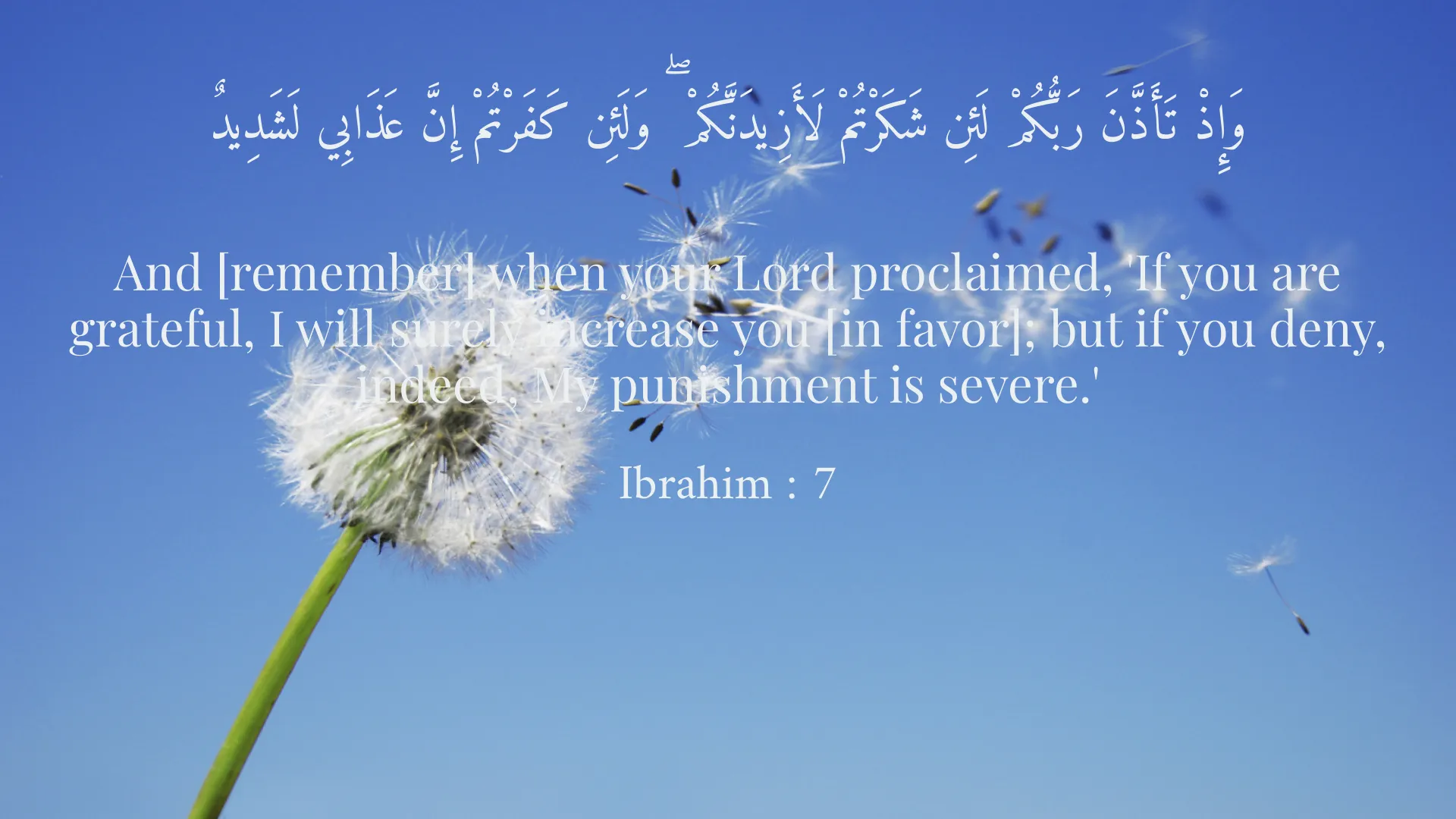
وَإِذْ تَأَذَّنَ رَبُّكُمْ لَئِن شَكَرْتُمْ لَأَزِيدَنَّكُمْ ۖ وَلَئِن كَفَرْتُمْ إِنَّ عَذَابِي لَشَدِيدٌ
And [remember] when your Lord proclaimed, 'If you are grateful, I will surely increase you [in favor]; but if you deny, indeed, My punishment is severe.'
Ibrahim : 7
الَّذِينَ آمَنُوا وَتَطْمَئِنُّ قُلُوبُهُم بِذِكْرِ اللَّهِ ۗ أَلَا بِذِكْرِ اللَّهِ تَطْمَئِنُّ الْقُلُوبُ
Those who have believed and whose hearts are assured by the remembrance of Allah. Unquestionably, by the remembrance of Allah hearts are assured.
Ar-Ra'd : 28
وَابْتَغِ فِيمَا آتَاكَ اللَّهُ الدَّارَ الْآخِرَةَ ۖ وَلَا تَنسَ نَصِيبَكَ مِنَ الدُّنْيَا ۖ وَأَحْسِن كَمَا أَحْسَنَ اللَّهُ إِلَيْكَ ۖ وَلَا تَبْغِ الْفَسَادَ فِي الْأَرْضِ ۖ إِنَّ اللَّهَ لَا يُحِبُّ الْمُفْسِدِينَ
But seek, through that which Allah has given you, the home of the Hereafter; and [yet], do not forget your share of the world. And do good as Allah has done good to you. And desire not corruption in the land. Indeed, Allah does not like corrupters.
Al-Qasas : 77
Short Story
One day, the great Sheikh Sa'di Shirazi recounted that during his pilgrimage to Mecca, he saw a man who had lost his feet and was walking on his hands. Sa'di thought to himself, 'Alas for this poor soul! What a calamity has befallen him.' But shortly after, he entered a mosque and saw a man who not only had no feet but was also blind. At that moment, Sa'di immediately prostrated in gratitude and felt ashamed of his previous thought, saying, 'O Lord! Thank You for granting me the blessings of sight and healthy feet.' And thus, he learned a profound lesson in contentment and satisfaction with what we possess. This beautiful tale teaches us that we should always look at what we have and be grateful, rather than gazing at what we lack. This very contentment and gratitude open a door to inner peace and true progress in life, reminding us that happiness is not found in comparing ourselves to others, but in recognizing the value of our own blessings.