Quranic Answer
In response to the question, "Is doubt in faith natural?" from the perspective of the Holy Quran, it must be stated that while the Quran strongly emphasizes the importance of certainty (Yaqin) and considers it the ultimate goal for a believer, it implicitly acknowledges the reality that humans, on their journey of spiritual growth, may encounter ups and downs that sometimes manifest as questions or fleeting doubts. These doubts are not necessarily indicative of disbelief or weakness of faith; rather, they can be part of the process of deepening one's conviction, provided they are managed correctly and addressed with persistence and a sincere quest for truth. The Quran describes human nature as having the innate capacity to accept truth, yet simultaneously, it places humanity in situations of trials and tribulations. Verses such as Surah Al-Ankabut, verses 2 and 3, explicitly state: "Do people think that they will be left to say, 'We believe' and they will not be tried? But We have certainly tried those before them, and Allah will surely make evident those who are truthful and will surely make evident the liars." These trials can manifest as fear, hunger, loss of wealth, lives, and fruits (Al-Baqarah: 155). Encountering such hardships can naturally raise questions in the human mind about why these things happen, or what God's wisdom is behind these events. If these questions are driven by a sincere intention to find truth and attain inner peace and reassurance, they can be considered a natural stage in the spiritual journey. Furthermore, the Quran refers to the role of "waswas" (whispers). Surah An-Nas teaches us to seek refuge in God from the evil of the "whispering deceiver," who whispers into the hearts of people, whether from jinn or mankind. These whispers can include instilling doubt in the principles of religion, the existence of God, His justice, or even the prophethood of messengers. This Quranic reference indicates that the instillation of doubt is one of the methods employed by enemies of faith to weaken beliefs. That a person is exposed to such whispers is part of the inherent struggle between truth and falsehood, both within and outside them. The crucial aspect is for the believer to resist these whispers by seeking refuge in God and strengthening their faith. A prominent example of this quest for inner tranquility can be seen in the story of Prophet Abraham (peace be upon him) in Surah Al-Baqarah, verse 260. There, Prophet Abraham asks Allah to show him how He brings the dead to life. Allah asks, "Have you not believed?" Abraham replies, "Yes, but [I ask] only that my heart may be satisfied." This verse demonstrates that even divine prophets sought to reach the highest level of certainty and "tranquility of the heart" (طمأنینة قلبی); a level that transcends initial faith and intellectual understanding, reaching an inner assurance and seeing with the eye of the heart. Abraham's request was not due to doubt in God's power, but rather a desire to elevate his certainty and attain greater spiritual peace. This situation can serve as a model for believers who, on their path of faith, seek to deepen and experience their convictions. The Holy Quran provides several solutions to dispel doubts and strengthen faith: 1. Reflection and Contemplation on Divine Signs: The Quran repeatedly invites humanity to ponder the creation of the heavens and the earth, the order of the universe, and the signs of God's power and wisdom. Observing these signs, contemplating them, and finding rational answers eliminates doubt and leads to certainty (e.g., verses that refer to contemplation of the Quran and creation). 2. Seeking Refuge in God and Prayer (Dua): When faced with whispers and doubts, reliance on God, remembrance (dhikr), and supplication for guidance and steadfastness bring peace to hearts. 3. Steadfastness and Patience (Sabr): In the face of trials and whispers, patience and persistence in faith not only eliminate weakness but also help deepen and root one's belief. 4. Seeking Knowledge and Wisdom: The Quran encourages the acquisition of knowledge. Many doubts stem from ignorance. By increasing one's understanding and gaining deeper insight into religion and the world, many unanswered questions find their solutions. 5. Companionship with the Righteous: Associating with true believers and scholars of religion can help resolve ambiguities and provide spiritual support. Therefore, it can be concluded that doubt, in an absolute sense and as a permanent or desirable state in faith, is not "natural" according to the Quran and is condemned. True faith is based on certainty. However, its "naturalness" in the sense of its "possibility" and its "occurrence over time for humans" is acceptable. Humans, in the course of life and facing challenges and whispers, may experience moments of doubt. These moments are opportunities for growth and movement towards deeper certainty, not points for stagnation or deviation. The Quran provides the necessary guidance and tools to overcome this stage and attain "tranquility of heart."
Related Verses
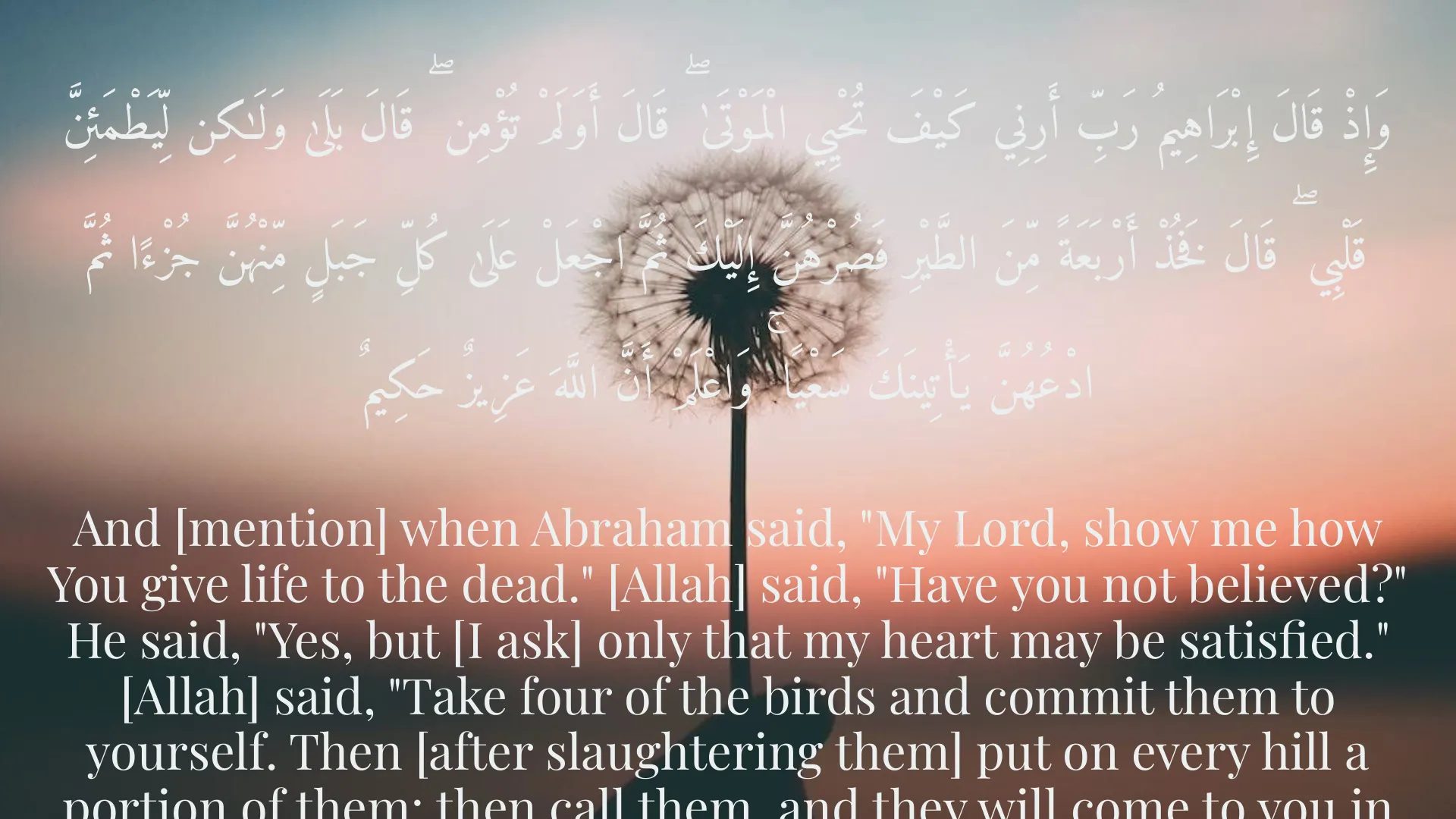
وَإِذْ قَالَ إِبْرَاهِيمُ رَبِّ أَرِنِي كَيْفَ تُحْيِي الْمَوْتَىٰ ۖ قَالَ أَوَلَمْ تُؤْمِن ۖ قَالَ بَلَىٰ وَلَٰكِن لِّيَطْمَئِنَّ قَلْبِي ۖ قَالَ فَخُذْ أَرْبَعَةً مِّنَ الطَّيْرِ فَصُرْهُنَّ إِلَيْكَ ثُمَّ اجْعَلْ عَلَىٰ كُلِّ جَبَلٍ مِّنْهُنَّ جُزْءًا ثُمَّ ادْعُهُنَّ يَأْتِينَكَ سَعْيًا ۚ وَاعْلَمْ أَنَّ اللَّهَ عَزِيزٌ حَكِيمٌ
And [mention] when Abraham said, "My Lord, show me how You give life to the dead." [Allah] said, "Have you not believed?" He said, "Yes, but [I ask] only that my heart may be satisfied." [Allah] said, "Take four of the birds and commit them to yourself. Then [after slaughtering them] put on every hill a portion of them; then call them, and they will come to you in haste. And know that Allah is Exalted in Might and Wise."
Al-Baqarah : 260
أَحَسِبَ النَّاسُ أَن يُتْرَكُوا أَن يَقُولُوا آمَنَّا وَهُمْ لَا يُفْتَنُونَ
Do people think that they will be left to say, "We believe" and they will not be tried?
Al-Ankabut : 2
وَلَقَدْ فَتَنَّا الَّذِينَ مِن قَبْلِهِمْ ۖ فَلَيَعْلَمَنَّ اللَّهُ الَّذِينَ صَدَقُوا وَلَيَعْلَمَنَّ الْكَاذِبِينَ
But We have certainly tried those before them, and Allah will surely make evident those who are truthful and will surely make evident the liars.
Al-Ankabut : 3
الَّذِي يُوَسْوِسُ فِي صُدُورِ النَّاسِ
Who whispers into the breasts of mankind -
An-Nas : 5
Short Story
It is said that a man was wandering in the desert, tormented by thirst. He despaired of life, saying to himself, "How can there be any hope of salvation in this barren desert?" While he was doubting his very existence, he suddenly saw a small bird dipping its beak into the ground and drinking a drop of water from the mud. The man was astonished by this sight and thought to himself, "If God provides sustenance for this helpless bird in the heart of a dry desert, how could He forget me?" This incident uprooted doubt and despair from his heart and rekindled certainty and hope within him. He rose and searched with firm resolve until he finally found a spring, quenched his thirst, and gave thanks to God.