Quranic Answer
In the intricate journey of life and spiritual progression, moments of questioning, and even doubt and uncertainty, may arise within the human heart. This phenomenon is not uncommon, especially when encountering life's challenges, intellectual ambiguities, or external temptations. However, while the Holy Quran does not directly use the term 'naturalness of doubt' in a modern psychological sense, it clearly addresses various human spiritual and faith states, including the existence of doubt and the need for certainty. The Quran considers humans as free-willed beings constantly subjected to tests and choices, a path that sometimes involves wavering and a need for greater insight. Therefore, it can be said that the Quran acknowledges the existence of doubt in humans as a challenge and a stage to be overcome, offering numerous solutions for attaining certainty and peace of mind. Islam, as presented in the Quran, does not base faith on blind imitation but invites profound contemplation, reason, and reflection on divine verses and the signs of creation. This invitation to ponder inherently creates a space for raising questions and seeking deeper answers. Indeed, sometimes this initial questioning can lead to a fundamental strengthening of faith, as an individual who arrives at truth through inquiry and research will possess a stronger and more resilient belief. However, the issue becomes critical when this questioning deviates from its course and transforms into destructive doubt that distances a person from the path of truth. The Holy Quran explicitly refers to those in whose hearts there is a 'sickness,' and doubt within them intensifies. This illness of the heart stems from the rejection of truth, arrogance, and following personal whims. In contrast, true believers are those who have believed in Allah and His Messenger and have never wavered in their faith. This indicates that while doubt in faith may occur for some individuals, the goal of religion is to achieve a state of certainty and tranquility where no room for doubt remains. To overcome doubt and achieve certainty, the Quran provides practical and profound strategies. The first and most fundamental method is 'reflection and contemplation on the universal and internal signs of God' (Ayat al-Afaqiya wal Anfusiya). A look at the grandeur of creation, the order of the cosmos, the wonders of nature, and even the complex structure of human existence itself, are all signs of the Almighty God's power, wisdom, and existence. The Quran repeatedly calls on humanity to observe and ponder these signs so that they may grasp the truth of existence through them and deepen their faith. Verses 190 and 191 of Surah Al-Imran clearly illustrate this path for 'Ulul-Albab' (people of understanding) – how by reflecting on the creation of the heavens and the earth, they come to realize the greatness of their Lord and declare: 'Our Lord, You did not create this in vain.' This type of reflection opens the doors of certainty for humans. A second crucial remedy is 'attending to the Quran and divine revelation.' The Quran itself is guidance and light for those who wish to be freed from the darkness of doubt and ignorance. Reciting, pondering, and understanding the meanings of the Quran grant insight and hold answers to many ambiguities. The verses of the Quran are clear proofs and evidence for the truth of the divine message and the existence of a wise and capable Creator. The more a person becomes familiar with the divine word and reflects upon it, the fewer their mental ambiguities will be, and their heart will be illuminated with the light of certainty. 'Dhikr (remembrance of God)' and 'Salah (prayer)' are also fundamental pillars for strengthening faith and dispelling doubt. The remembrance of God brings peace to hearts and keeps a person away from the onslaught of Satanic whispers and disturbing thoughts. Prayer, as the spiritual ascent of the believer and a bridge to God, is a vast source of spiritual energy that nourishes the soul and strengthens the sense of divine presence in life. When a person connects with God wholeheartedly in prayer and supplication, weakness and doubt depart from their being, replaced by inner confidence and assurance. Furthermore, 'patience and steadfastness' in the path of religiosity, especially in the face of difficulties and trials, play a key role in eliminating doubt. True faith is refined through trials, and every challenge overcome with patience and reliance on God strengthens faith. Finally, 'seeking help from God' and 'associating with the righteous' are also instrumental. A person should always ask God to keep them steadfast on the path of truth and protect their heart from any deviation, doubt, or uncertainty. Sincere prayer and seeking insight from the Lord can resolve many spiritual dilemmas. Additionally, associating with faithful, pious, and knowledgeable individuals can help resolve ambiguities and provide valuable guidance. Exchange of views with those who are firm in their religiosity and possess sufficient experience and knowledge can clarify doubts and offer valuable advice. Therefore, while moments of questioning and ambiguity may arise in the human mind, the Holy Quran views these moments not as an end, but as an opportunity to deepen faith and move towards absolute certainty, providing practical and spiritual solutions to guide individuals through these stages to attain peace and inner assurance. This process itself is part of human spiritual growth and perfection, making them more steadfast in their servitude to the Almighty God.
Related Verses
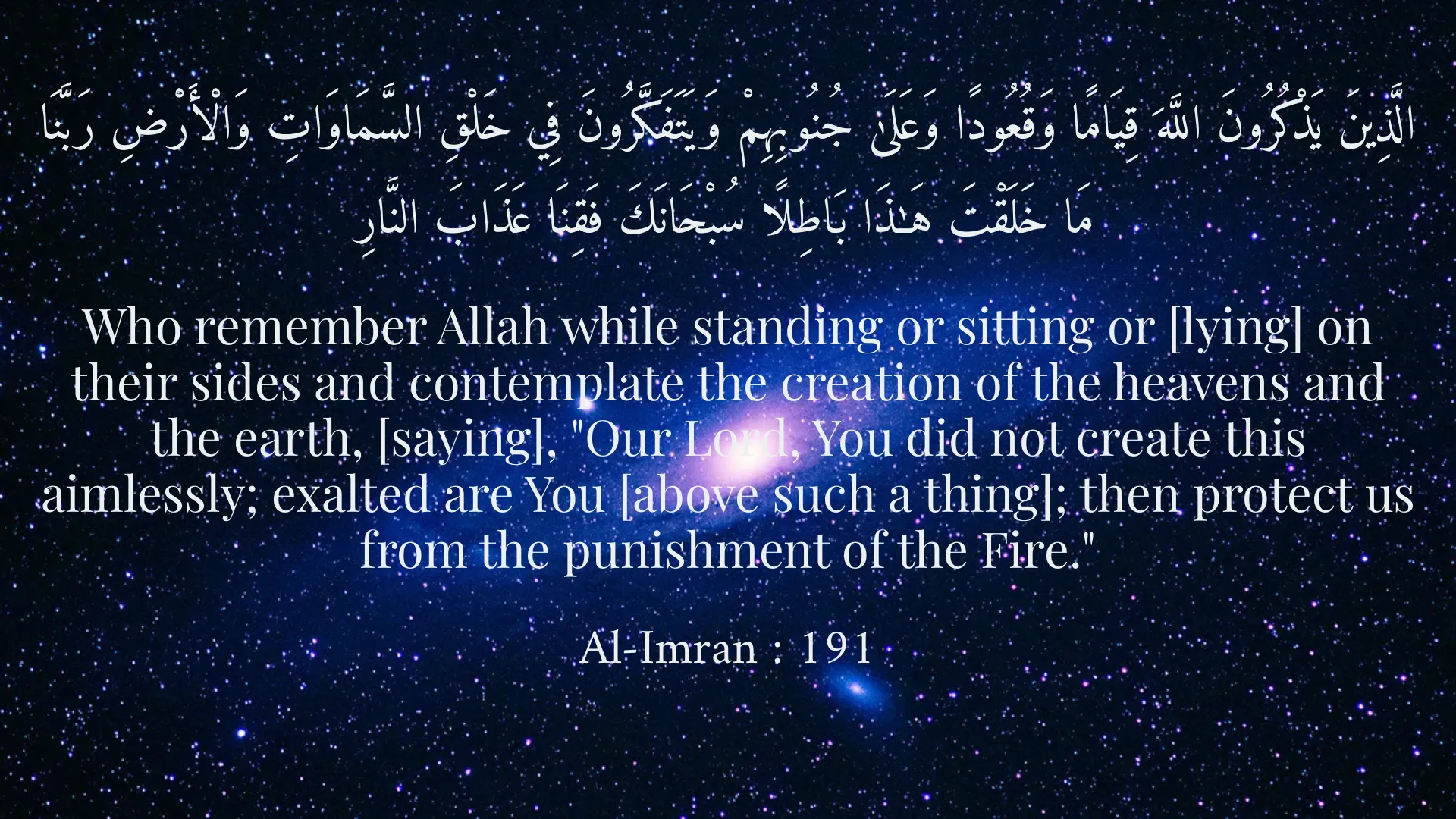
الَّذِينَ يَذْكُرُونَ اللَّهَ قِيَامًا وَقُعُودًا وَعَلَىٰ جُنُوبِهِمْ وَيَتَفَكَّرُونَ فِي خَلْقِ السَّمَاوَاتِ وَالْأَرْضِ رَبَّنَا مَا خَلَقْتَ هَٰذَا بَاطِلًا سُبْحَانَكَ فَقِنَا عَذَابَ النَّارِ
Who remember Allah while standing or sitting or [lying] on their sides and contemplate the creation of the heavens and the earth, [saying], "Our Lord, You did not create this aimlessly; exalted are You [above such a thing]; then protect us from the punishment of the Fire."
Al-Imran : 191
وَإِذْ قَالَ إِبْرَاهِيمُ رَبِّ أَرِنِي كَيْفَ تُحْيِي الْمَوْتَىٰ ۖ قَالَ أَوَلَمْ تُؤْمِن ۖ قَالَ بَلَىٰ وَلَٰكِن لِّيَطْمَئِنَّ قَلْبِي ۖ قَالَ فَخُذْ أَرْبَعَةً مِّنَ الطَّيْرِ فَصُرْهُنَّ إِلَيْكَ ثُمَّ اجْعَلْ عَلَىٰ كُلِّ جَبَلٍ مِّنْهُنَّ جُزْءًا ثُمَّ ادْعُهُنَّ يَأْتِينَكَ سَعْيًا ۚ وَاعْلَمْ أَنَّ اللَّهَ عَزِيزٌ حَكِيمٌ
And [mention] when Abraham said, "My Lord, show me how You give life to the dead." [Allah] said, "Have you not believed?" He said, "Yes, but [I ask] only that my heart may be satisfied." [Allah] said, "Take four birds and incline them to you. Then [after slaughtering them] put on each hill a portion of them; then call them – they will come to you in haste. And know that Allah is Exalted in Might and Wise."
Al-Baqarah : 260
إِنَّمَا الْمُؤْمِنُونَ الَّذِينَ آمَنُوا بِاللَّهِ وَرَسُولِهِ ثُمَّ لَمْ يَرْتَابُوا وَجَاهَدُوا بِأَمْوَالِهِمْ وَأَنفُسِهِمْ فِي سَبِيلِ اللَّهِ ۚ أُولَٰئِكَ هُمُ الصَّادِقُونَ
The believers are only those who have believed in Allah and His Messenger and then doubt not but strive with their properties and their lives in the cause of Allah. It is those who are the truthful.
Al-Hujurat : 15
Short Story
It is narrated that a man, with a heart full of questions and a troubled mind, went to a wise sage and said, "O Master, sometimes doubts creep into my heart and rob me of my peace. What should I do?" The sage smiled and said, "My friend, it is as if you are in a garden where occasionally the wind blows and shakes the leaves. If the tree's roots are firm, it fears no shaking of its leaves; rather, the leaves themselves are proof of the tree's vitality and its resilience against the wind. Strengthen the roots of your faith with contemplation on God's signs and His remembrance. Then you will see that every doubt that arises will lead you to greater certainty, not to wavering." Upon hearing this, the man found peace and understood that seeking and pondering, if directed towards the truth, is a wing for flight, not a snare.