Quranic Answer
Love is one of the most profound human emotions, shaping the very fabric of our existence, and it holds a special place in spiritual texts like the Holy Quran. In exploring the nuances of love as depicted in Islamic teachings, one cannot ignore the potential pitfalls that accompany excessive love, as well as the dangers of misplaced affections. Within the Quran, Allah speaks expressly on the relationships and feelings that should prevail in our lives, guiding believers toward a loving disposition that aligns with divine expectations. Thus, the interplay of love, devotion, and divine obligation becomes a powerful theme that warrants deep examination. The Quran emphasizes the concept of love in various relationships, most prominently in our connection with God. In Surah Al-Imran, verse 31, Allah articulates the essence of this profound love: 'Say, If you love Allah, then follow me so Allah will love you and forgive your sins.' This verse encapsulates the idea that love for God and His Messenger is paramount—far surpassing any earthly attachments. It elucidates the belief that true love for Allah necessitates adherence to His commandments and teachings. The main takeaway from this verse is the hierarchical structure of love emphasized in Islam: the love for God must reign supreme, directing the nature and intensity of our affections towards others. This hierarchy plays a fundamental role in maintaining balance in our lives, ensuring that every love we harbor draws from the fundamental wellspring of love for the divine. The Quran does not dismiss the significance of love for family, friends, and community, but it urges caution in how these relations can sometimes overshadow one’s responsibilities to God. In Surah At-Tawbah, verse 24, Allah provides a clarion call against misplaced affections: 'Say, If your fathers, your sons, your brothers, your wives, your kin, the wealth which you have obtained, the commerce wherein you fear decline, and the dwellings wherein you delight—are dearer to you than Allah and His Messenger and striving in His cause, then wait until Allah executes His command.' Here, Allah poignantly warns believers about the potential danger of excessive love that may distract them from their spiritual obligations. This calls us to reflect deeply on the dynamics of our relationships. While love can provide strength and motivation, when it slips into excess or becomes prioritized over divine responsibilities, it can lead to spiritual disarray. For instance, if one's love for a spouse or children means neglecting daily prayers or failing to contribute to the welfare of others, such misplaced affection becomes counterproductive. It can lead to a disconnect from one's spiritual and moral compass, ultimately steering a person away from righteousness. Excessive love can manifest in various ways, including possessiveness, overwhelming attachment, or prioritizing personal relationships over communal and spiritual well-being. These manifestations are not merely trivial concerns for believers; they represent serious obstacles in the journey toward spiritual fulfillment. The Quran reminds us that every bond must be navigated with care, always reflecting on how they contribute to our love and obedience to Allah. To illustrate this further, consider how love can propel both positive and negative outcomes. On the positive end, a deep love for family can encourage acts of charity, cooperation, and emotional support, fostering stronger community bonds, aligning with the teachings of compassion and support found in Islam. Such love enhances our connections and encourages acts of service, leading to a greater understanding of our duties towards one another as prescribed by the Quran. On the contrary, the negative consequences of unchecked love can lead to strife and discord. An individual obsessed with a personal relationship may compromise their values, engage in harmful behaviors, or isolate themselves from their broader community. This sets the stage for inner turmoil and conflict between the dictates of the heart and the expectations of faith, as love becomes misaligned with divine principles. Thus, it becomes crucial to find balance, recognizing that love without boundaries can veer into an undesirable territory. A balanced perspective on love compels us to structure our relationships around the foundations provided by Allah’s commandments. For every moment spent nurturing affections derived from worldly desires, believers ought to return to the essence of their faith, ensuring that their love mirrors the mercy, kindness, and guidance prescribed by God. The practice of regularly engaging in prayer, reflection, and the remembrance of Allah can help maintain focus on divine love, keeping earthly attachments from overwhelming one's spiritual responsibilities. In grander terms, the nature of love also extends to the community and societal relationships we build. As followers of Islam, the love we express should aim at fostering unity, compassion, and a sense of shared purpose. The act of loving others—be it through kindness, charity, or standing for justice—should ultimately reflect our commitment to God and the teachings exemplified by His Messenger. Acts of love, kindness, and support toward others should spring from the reservoir of love for Allah, anchoring our intentions and actions in a manner that honors both divine commandments and communal integrity. In conclusion, while love is an integral part of human existence, it requires careful navigation, particularly when it comes to aligning it with divine principles. The love articulated in the Quran emphasizes a hierarchy of affection, placing love for Allah above all else to foster an unwavering commitment to faith and integrity. Excessive or misplaced love can easily debilitate our spiritual journey, causing distractions and distortions that divert us from true purpose. Thus, with the reminder that love must be balanced and rooted in devotion to Allah, believers are encouraged to approach love in all its forms—be it familial, platonic, or romantic—with the depth of understanding that it must be tethered to divine guidance. Ultimately, by embracing this balanced approach, we can ensure that love enriches our lives without compromising the essence of our faith.
Related Verses
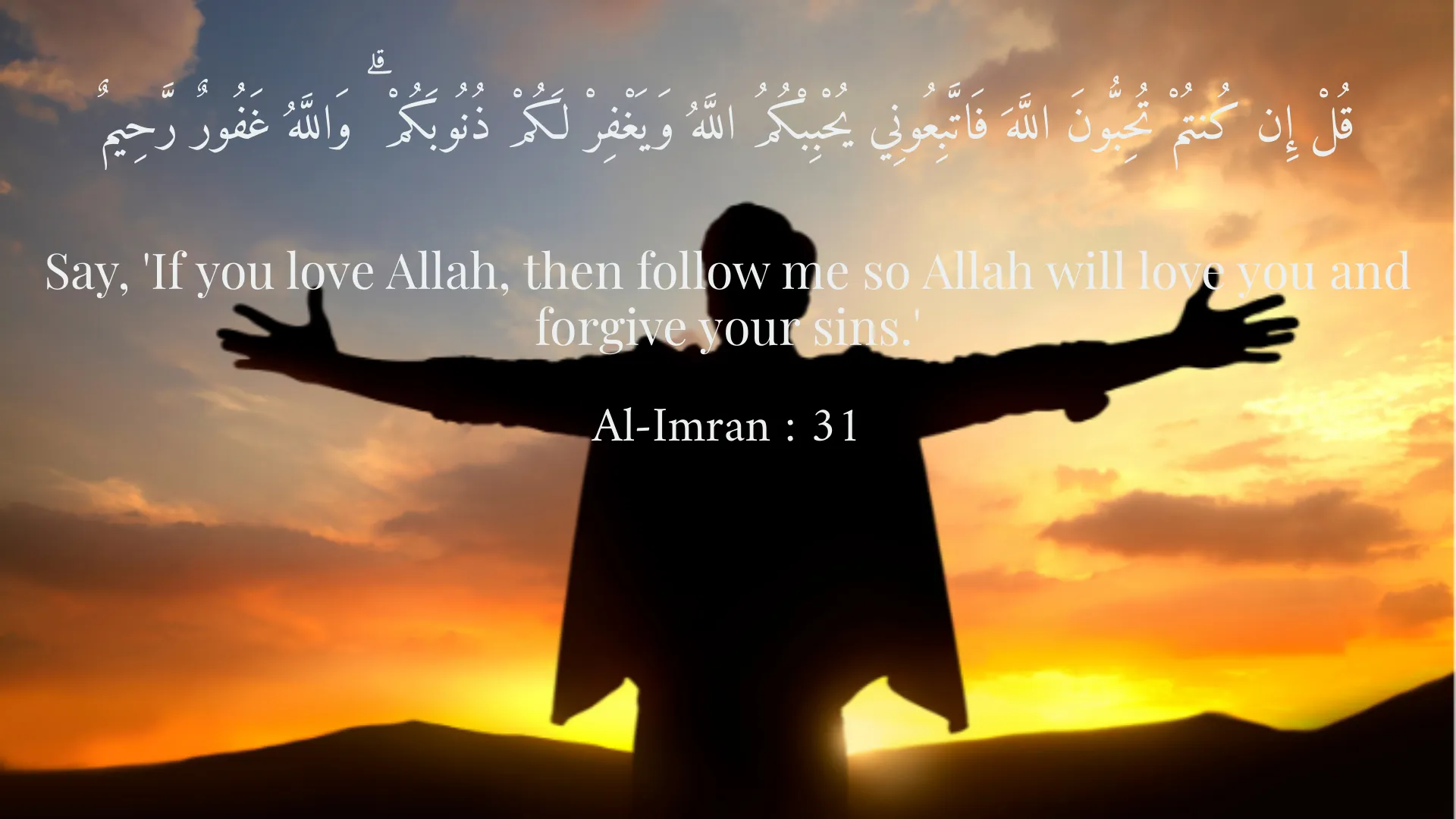
قُلْ إِن كُنتُمْ تُحِبُّونَ اللَّهَ فَاتَّبِعُونِي يُحْبِبْكُمُ اللَّهُ وَيَغْفِرْ لَكُمْ ذُنُوبَكُمْ ۗ وَاللَّهُ غَفُورٌ رَّحِيمٌ
Say, 'If you love Allah, then follow me so Allah will love you and forgive your sins.'
Al-Imran : 31
قُلْ إِن كَانَ آبَاؤُكُمْ وَأَبْنَاؤُكُمْ وَإِخْوَانُكُمْ وَأَزْوَاجُكُمْ وَعَشِيرَتُكُمْ وَأَمْوَالٌ اقْتَرَفْتُمُوهَا وَتِجَارَةٌ تَخْشَوْنَ كَسَادَهَا وَمَسَاكِنُ تَرْضَوْنَهَا أَحَبَّ إِلَيْكُمْ مِّنَ اللَّهِ وَرَسُولِهِ وَجِهَادٍ فِي سَبِيلِهِ فَتَرَبَّصُوا حَتَّى يَأْتِيَ اللَّهُ بِأَمْرِهِ ۚ وَاللَّهُ لَا يَهْدِي الْقَوْمَ الْفَاسِقِينَ
Say, 'If your fathers, your sons, your brothers, your wives, your relatives, the wealth which you have obtained, and the commerce in which you fear decline, and the dwellings in which you delight are more beloved to you than Allah and His Messenger and jihad in His cause, then wait until Allah executes His command. And Allah does not guide the defiantly disobedient people.'
At-Tawbah : 24
Short Story
Saeed always took pride in his love for his wife and children. However, over time, he realized that his excessive attention to his family was diverting him from his religious obligations. One day, he decided to dedicate some time for worship and prayer to restore balance in his life. With this small change, he felt that not only he was loving himself and his family more, but also his relationship with Allah improved.