Quranic Answer
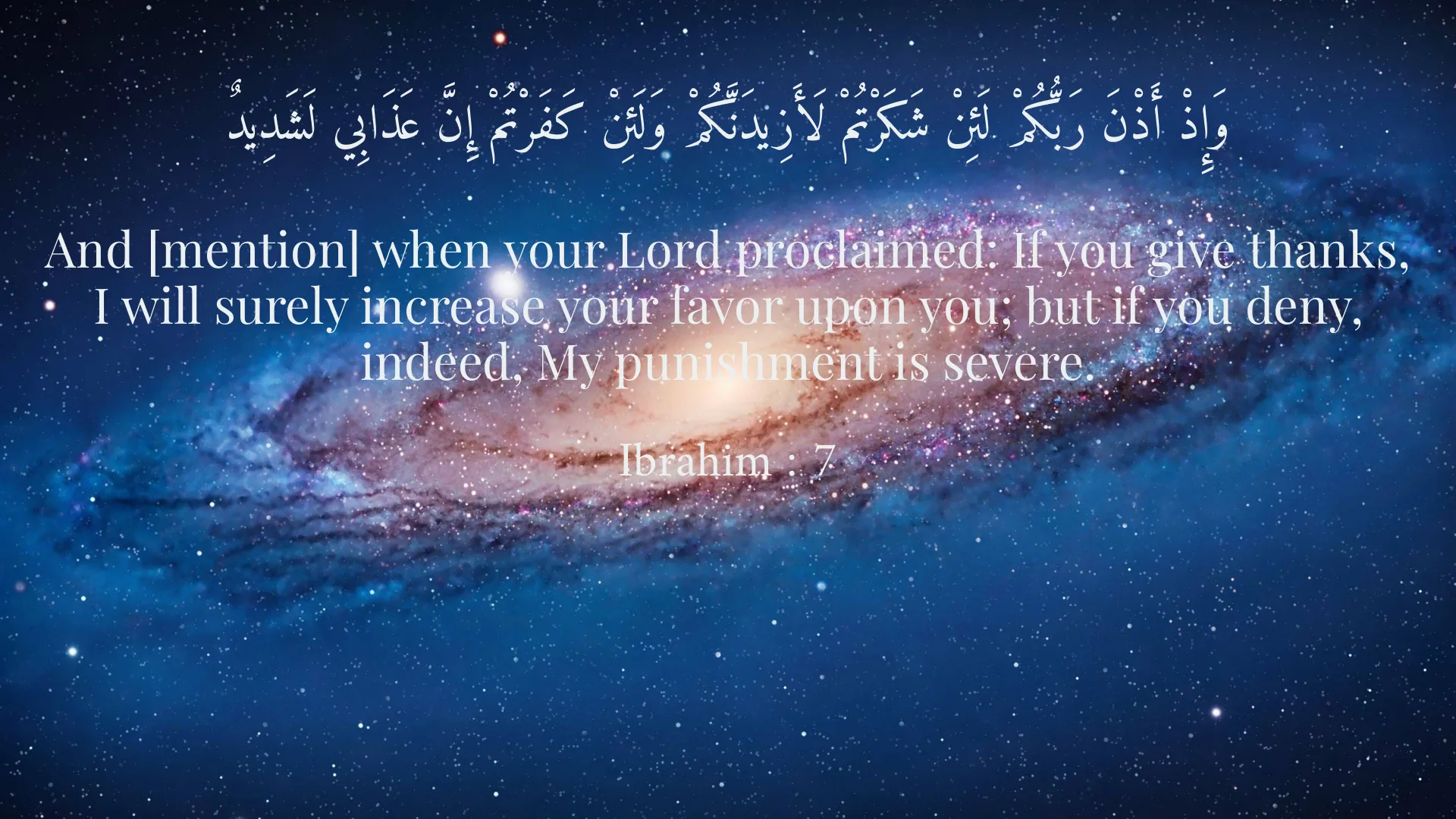
Gratitude is a notable and essential characteristic among believers, serving as a core element of their faith and spirituality. The concept of gratitude, as presented in the Holy Quran, transcends mere verbal expressions such as saying 'thank you.' Instead, it encompasses a profound sense of acknowledgement and appreciation that must be complemented by corresponding actions and behaviors. This holistic understanding of gratitude is vital for anyone aspiring to lead a life aligned with Islamic principles. In this article, we will delve into the various dimensions of gratitude as highlighted in the Quran, its significance in the lives of believers, and how it influences both personal development and community well-being. The Divine acknowledgment of gratitude is eloquently conveyed in Surah Ibrahim, verse 7, where Allah states: "And [mention] when your Lord proclaimed: If you give thanks, I will surely increase your favor upon you; but if you deny, indeed, My punishment is severe." This profound verse emphasizes the reciprocal relationship between gratitude and the divine favor one garners. The implication here is striking: gratitude is not merely a passive state of appreciation; rather it is an action-oriented approach to life. The consequences of thankfulness extend beyond the immediate fulfillment of human desires; they lead to abundant blessings that Allah promises to bestow upon those who express sincere gratitude. Conversely, the warning about the severe repercussions of ingratitude serves as a reminder to individuals of their moral and spiritual obligations. To further understand the multidimensional aspect of gratitude, it is essential to analyze examples of how gratitude manifests in the lives of believers. A grateful person utilizes blessings in the best possible way, ensuring that these advantages are beneficial not only to themselves but also to others. This responsibility is highlighted through the act of sharing one's blessings—be it knowledge, wealth, time, or effort—within community contexts. The Quran encourages believers to mobilize their resources for the greater good, thus reinforcing the notion that gratitude must translate into actionable kindness and generosity. In addition, in Surah Az-Zumar, verse 66, Allah invites humanity to embrace thankfulness and engage in virtuous deeds, thus linking gratitude with righteous actions. The significance of this verse lies in its affirmation that true sincerity and faith are demonstrated through both words and deeds. A believer's gratitude should not feel isolated as an expression of thanks; it needs to inspire individuals to cultivate positive behaviors that echo their appreciation for the blessings received. Engaging in acts of gratitude also nurtures a positive mindset and a more profound connection with the Divine. When individuals consciously embark on a journey of thankfulness, they find themselves more aware of the positive aspects of their lives, shifting focus from grievances to blessings. This cognitive shift can lead to improved psychological well-being, a reduction in stress levels, and an enhancement of overall life satisfaction. Moreover, gratitude encourages a communal spirit, where individuals recognize their interconnectedness with others, leading to greater social cohesion and harmony. It is also essential to understand that gratitude plays a pivotal role in personal development. By acknowledging the kindness and support one receives from others, believers can cultivate humility and empathy. This humility engenders a sense of responsibility towards uplifting others, fostering a caring environment. It encourages introspection and contemplation, enabling individuals to appreciate the journey they have taken and the people who have played a significant role in their lives. This reflexivity is often a catalyst for growth and personal evolution. Believers are encouraged to express gratitude in various forms, including prayer, supplication, and acts of worship. Implementing gratitude in daily practices can lead to profound changes in mindset and behavior. For example, during prayers, expressing appreciation for specific blessings can deepen the spiritual connection with Allah. Additionally, keeping a gratitude journal can serve as a powerful tool for reflection and acknowledgment of everyday blessings, no matter how small. These rituals not only enhance the joy of living but also remind believers of their duties toward others and the world around them. The concept of gratitude goes beyond individual practices; it extends into the fabric of society. When gratitude is embraced comprehensively, it fosters a culture of appreciation and mutual respect within communities. Individuals who practice gratitude often inspire others to do the same, creating a ripple effect that enriches societal bonds. A community marked by gratitude sees less discord and conflict, as individuals focus on supporting and uplifting each other rather than fostering envy or resentment. In conclusion, gratitude, as delineated in the Holy Quran, is a vital trait among believers that embodies acknowledgment, appreciation, and actionable kindness. Its foundations are deeply rooted in the verses of the Quran—specifically in Surah Ibrahim and Surah Az-Zumar—where Allah emphasizes the importance of both verbal appreciation and active altruism. As we navigate through our lives, we must strive to embody gratitude not only through words but also in our actions and intentions. By doing so, we can harness the power of gratitude to transform our lives, communities, and ultimately, our spiritual connection with Allah. Thus, let us embrace gratitude as a way of life, one that leads us closer to righteousness, fulfillment, and divine mercy.
Related Verses
وَإِذْ أَذْنَ رَبُّكُمْ لَئِنْ شَكَرْتُمْ لَأَزِيدَنَّكُمْ وَلَئِنْ كَفَرْتُمْ إِنَّ عَذَابِي لَشَدِيدٌ
And [mention] when your Lord proclaimed: If you give thanks, I will surely increase your favor upon you; but if you deny, indeed, My punishment is severe.
Ibrahim : 7
أَلَا لِلَّهِ الدِّينُ الْخَالِصُ ۗ وَالَّذِينَ اتَّخَذُوا مِن دُونِهِ أَوْلِيَاءَ قَالُوا مَا نَعْبُدُهُمْ إِلَّا لِيُقَرِّبُنَا إِلَى اللَّهِ زُلْفَىٰ
Indeed, the religion is for Allah alone. And those who take protectors besides Him say, 'We only worship them so they bring us closer to Allah.'
Az-Zumar : 66
Short Story
One day, a man named Hasan was reflecting on his life. He always thanked God in his mind, but suddenly realized that merely saying thanks wasn’t enough. He decided to show real gratitude by helping others and using his blessings wisely. With this change, his life became filled with peace and health.