Quranic Answer
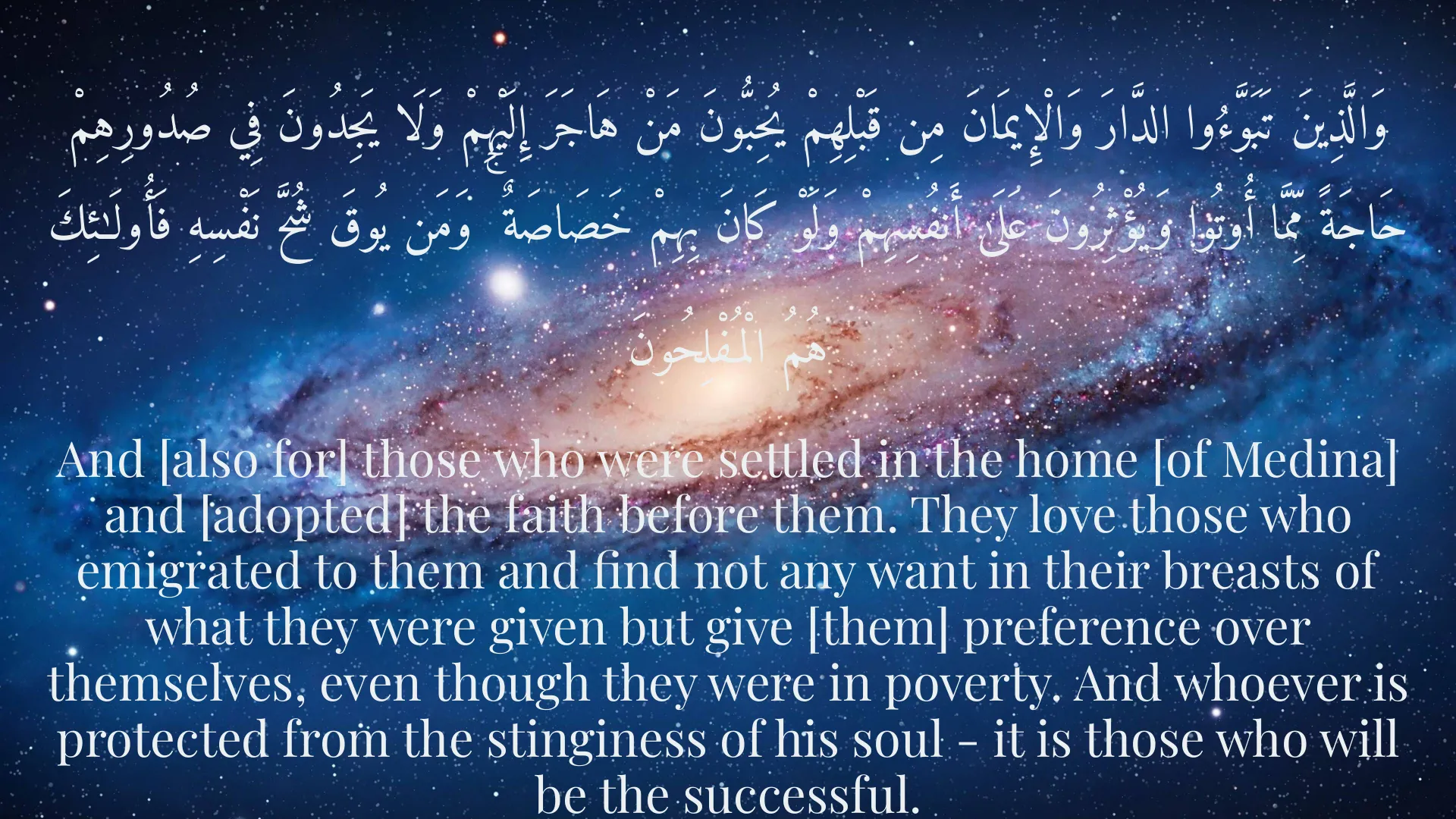
Understanding the concept of selfishness and the possibility of being free from it is one of the profound human challenges that the Holy Quran addresses with special attention. Selfishness, or what the Quran refers to as 'hawa al-nafs' (desires of the soul) or 'shuhh al-nafs' (stinginess of the soul), is an inherent tendency that inclines individuals to prioritize their own interests, desires, and pleasures, even if it comes at the expense of others or in defiance of ethical principles. The Quran acknowledges the existence of this inclination within human nature but simultaneously provides pathways for its control, purification, and ultimately, liberation from its negative and destructive aspects. Freedom from selfishness does not imply the complete annihilation of the 'self' (which is impossible, as humans possess a self), but rather its purification and refinement. This process involves elevating the 'nafs' (soul) from the state of 'nafs al-ammarah bi al-su'' (the soul that incites evil) to 'nafs al-lawwamah' (the self-reproaching soul), and finally to 'nafs al-mutmainnah' (the tranquil soul). This is a continuous process and an internal greater jihad (struggle). The Holy Quran repeatedly encourages individuals to give, be generous, and practice 'ithar' (altruism), prioritizing others over oneself. These concepts directly contradict selfishness. For instance, in Surah Al-Hashr, verse 9, Allah states: "They give [them] preference over themselves, even though they were in poverty. And whoever is protected from the stinginess of his soul - it is those who will be the successful." This verse clearly demonstrates that altruism and generosity are ways to overcome the stinginess and selfishness of the soul, and success is contingent upon being safeguarded from this undesirable trait. This is not merely an ethical recommendation but a path to achieving true prosperity and eternal felicity. By practicing altruism and generosity, individuals gradually free themselves from the shackles of materialism and worldly attachments, stepping towards human perfection. The purification of the soul (tazkiyat al-nafs) and the refinement of character are key Quranic teachings for overcoming selfishness. In Surah Ash-Shams, verses 9 and 10, we read: "He has succeeded who purifies it. And he has failed who corrupts it." These verses emphasize the critical importance of self-purification. Tazkiyat al-nafs means cleansing the heart from moral vices such as arrogance, envy, pride, greed, and, of course, selfishness. By eradicating these vices and replacing them with virtues like humility, contentment, generosity, and love for fellow human beings, individuals gradually liberate themselves from the bonds of selfishness. This process is not achieved by denying the existence of the 'ego' but by directing the 'ego' towards divine purpose. When a person shifts their goals from fleeting pleasures and personal gains to seeking divine pleasure and serving creation, selfishness gradually fades away. The Quran also offers practical ways to combat selfishness. One of the most important is the remembrance of Allah (dhikr). Neglecting God and the ultimate purpose of creation provides fertile ground for the growth of selfishness. When an individual constantly remembers Allah and understands that everything originates from Him and returns to Him, worldly attachments and self-centeredness diminish. Prayer (salat), fasting (sawm), charity (sadaqah), and striving in the way of Allah (jihad – both external struggle and the greater internal struggle against the self) are all tools that help individuals overcome their base desires and selfishness. Prayer instills humility before God's majesty and distances one from self-aggrandizement. Fasting is an exercise in controlling desires and worldly appetites. Charity and spending in Allah's cause strengthen the spirit of generosity and altruism, reducing attachment to wealth and possessions. Jihad, whether on the battlefield or in the struggle against one's own self, requires sacrifice and self-denial. Therefore, freedom from selfishness means transforming the 'self-serving ego' into a 'divine self' and a 'serving self.' This process is not achieved in an instant but over a lifetime through continuous effort, introspection, self-accountability, and adherence to Quranic teachings. By consistently practicing altruism, humility, gratitude, and self-sacrifice, individuals can attain a degree of freedom from the constraints of their lower selves, leading them to true success in this world and the hereafter. The Quran promises that whoever is protected from the stinginess and selfishness of their soul will be successful, which in itself is a testament to the possibility of this liberation.
Related Verses
وَالَّذِينَ تَبَوَّءُوا الدَّارَ وَالْإِيمَانَ مِن قَبْلِهِمْ يُحِبُّونَ مَنْ هَاجَرَ إِلَيْهِمْ وَلَا يَجِدُونَ فِي صُدُورِهِمْ حَاجَةً مِّمَّا أُوتُوا وَيُؤْثِرُونَ عَلَىٰ أَنفُسِهِمْ وَلَوْ كَانَ بِهِمْ خَصَاصَةٌ ۚ وَمَن يُوقَ شُحَّ نَفْسِهِ فَأُولَٰئِكَ هُمُ الْمُفْلِحُونَ
And [also for] those who were settled in the home [of Medina] and [adopted] the faith before them. They love those who emigrated to them and find not any want in their breasts of what they were given but give [them] preference over themselves, even though they were in poverty. And whoever is protected from the stinginess of his soul - it is those who will be the successful.
Al-Hashr : 9
قَدْ أَفْلَحَ مَن زَكَّاهَا
He has succeeded who purifies it,
Ash-Shams : 9
وَقَدْ خَابَ مَن دَسَّاهَا
And he has failed who corrupts it.
Ash-Shams : 10
فَاتَّقُوا اللَّهَ مَا اسْتَطَعْتُمْ وَاسْمَعُوا وَأَطِيعُوا وَأَنفِقُوا خَيْرًا لِّأَنفُسِكُمْ ۗ وَمَن يُوقَ شُحَّ نَفْسِهِ فَأُولَٰئِكَ هُمُ الْمُفْلِحُونَ
So fear Allah as much as you are able and listen and obey and spend [in His cause]; it is better for your souls. And whoever is protected from the stinginess of his soul - it is those who will be the successful.
At-Taghabun : 16
Short Story
It is related that a powerful Sultan, despite all his conquests and countless treasures, found no inner peace. He built magnificent palaces and amassed vast wealth, yet a spiritual emptiness persisted within him. One day, he sought out a wise dervish who lived in a humble abode outside the city. The Sultan, puffing with pride and self-importance, asked: “O wise one, I possess everything a man could desire, yet peace eludes me. What is the cure for this inner destitution?” The dervish, without a word, took a handful of dust from the ground and tried to clench his fist tightly around it. The dust slipped through his fingers. Then, he opened his palm, and the dust remained settled on his open hand. He looked at the Sultan and said: “O King, the human self is like this dust. The more tightly one grasps it for oneself, the more it slips away, leaving only emptiness. But if you open your hand, sharing what you have freely, without expectation, then the dust remains, settled and useful. True peace and liberation come not from accumulating for the self, but from releasing the grip of self-interest and giving to others.” The Sultan, pondering the dervish’s words, understood that his relentless pursuit of personal gain had enslaved him to his own desires. From that day forward, he began to distribute his wealth among the needy, built hospitals and schools, and found a joy far greater than any conquest, realizing that freedom from the demands of the self brought true contentment.