Quranic Answer
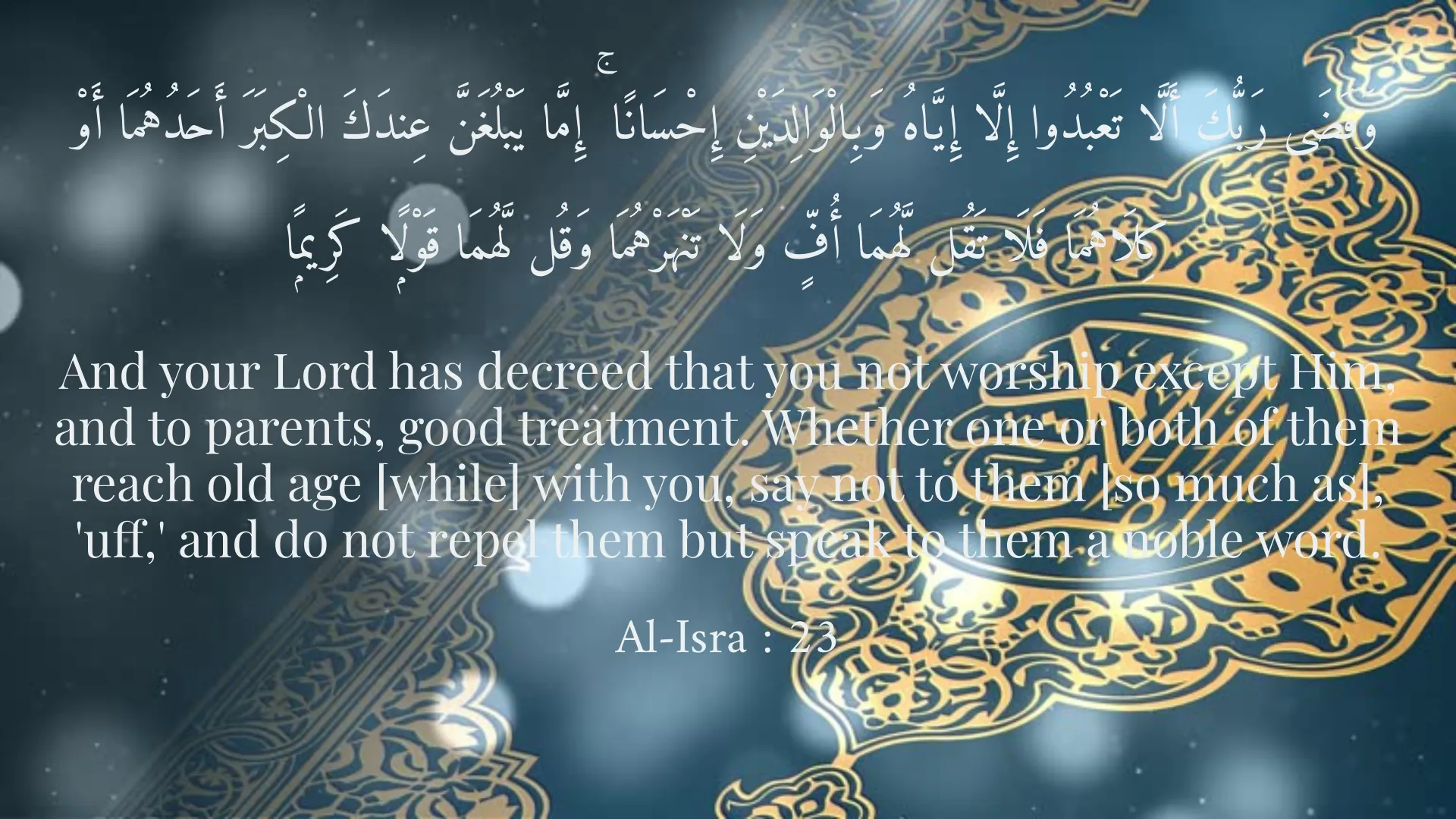
In the Holy Quran, the concept of honoring and respecting one's parents is emphasized with profound significance. A central verse that captivates this fundamental principle is found in Surah Al-Isra, verse 23, which asserts, "And your Lord has decreed that you not worship except Him, and to parents, good treatment. Whether one or both of them reach old age while with you, say not to them [so much as], 'uff,' and do not repel them but speak to them a noble word." This verse encapsulates the essence of parental respect and positions it as an essential aspect of spiritual life, intertwining the respect for parents with the worship of Allah. To fully appreciate the weight of such guidance, we must delved deeper into the implications of this verse and the broader teachings of Islam regarding the treatment of parents. The phrase "good treatment" denotes not just the avoidance of blatant disrespect but encourages a heartful acknowledgment of the sacrifices and efforts parents make throughout their lives. Parents are pivotal figures who provide love, care, and guidance from the moment of a child's birth. They are the ones who nurture, teach, and safeguard their children, molding them into the individuals they become. Thus, cultivating a respectful and loving relationship with one’s parents is not merely an obligation; it is a deeply-rooted virtue celebrated in many cultures, especially within the Islamic faith. Moreover, the Quran does not just call for good treatment; it establishes a clear boundary for how one should speak to their parents. The directive "say not to them [so much as], 'uff'" illustrates that even the slightest sign of annoyance or irritability in verbal communication is discouraged. What may seem like a trivial utterance can lead to hurt feelings or misunderstandings. Parents often endure the trials of life, and by ensuring our words are infused with kindness and gratitude, we uphold their dignity and honor their role in our lives. Islam takes this a step further by highlighting the need for patience and tolerance while caring for one's parents, particularly as they age. The Quran recognizes that with age, parents may face challenges such as declining health or diminished capabilities. An often-taught lesson in many Islamic families is that children should aim to reciprocate the care they received in their formative years. In this light, patience becomes a crucial virtue, for caring for elderly parents can often require additional emotional, physical, and mental stamina. The call for patience aligns with the broader Islamic ethos of perseverance in the face of difficulty and maintaining one's duty towards family. On the other hand, while humor can be a wonderful bridge between parents and children, it is imperative to navigate this space with caution. The idea presented in the original text concerning jokes highlights an essential distinction: the nature of the joke must be respectful and rooted in affection. Light-hearted banter can enhance familial bonds, provided it is devoid of any elements that may be perceived as ridicule or disrespect. Each family has its unique dynamics, which dictates the type of humor that can be shared without crossing a line. For example, while a playful joke about a shared experience may solidify a bond, a jest that belittles or undermines their wisdom or efforts could severely harm the relationship. Recognizing these boundaries is crucial in ensuring that humor facilitates connection rather than breeds discord. Beyond mere communication, the overarching principle within Islam is to embody kindness towards parents. In many authentic hadiths, the Prophet Muhammad (peace be upon him) underscored the significance of being dutiful to one’s parents, stating that their pleasure is tied to Allah's pleasure. This intertwines one's relationship with their parents directly with one's relationship with God, signifying the weight of this responsibility. The Prophet himself demonstrated the utmost respect and care towards his mother, Amina, and later towards his caregivers, displaying the model behavior that Muslims are encouraged to emulate. In a practical sense, one can reflect this concept by being proactive in caring for parents, whether through physical assistance, emotional support, or simply spending quality time together. Making it a point to acknowledge their contributions and express gratitude can significantly bolster their spirits, enhancing their sense of fulfillment and appreciation. In many cases, listening becomes a powerful tool—allowing parents to express their thoughts, feelings, and stories can fortify familial ties, as it fosters an atmosphere of mutual respect and understanding. Moreover, as the world becomes increasingly fast-paced and often indifferent to familial ties, pouring effort into sustaining healthy communication channels with parents assumes even greater importance. The traditional values of respect and care may clash with modern societal norms, and as children navigate through their own lives, it is easy to overlook the foundational relationships that influence their growth. Therefore, reinforcing the principles laid out in the Quran can serve as a guiding light in ensuring that young adults do not lose touch with the moral imperatives taught to them in their formative years. Consequently, the potential repercussions of failing to honor one’s parents cannot be ignored. Islamic teachings remind us that neglect could reflect on one's spiritual condition, stunting personal growth and development. It can also sow discord, creating fissures within family dynamics that could take generations to heal. Hence, a conscious effort should be made to always seek their approval, involve them in decisions whenever appropriate, and exhibit respect in all forms of interaction. In conclusion, the teachings of the Quran resonate deeply with the timeless truths about familial respect and duty. Emphasizing good treatment, patience, and kindness towards parents exemplifies the high regard that Islam places upon these foundational relationships. Children must recognize that every word they speak and every action they take towards their parents is imbued with the potential to uplift or diminish spirits. Humor, when approached with thoughtfulness, can indeed enrich the parent-child relationship, but it is with the utmost respect and love that one must always tread. Ultimately, the broader principle of kindness in parenting calls for a renewal of commitment—one that remains unwavering and continues to honor parents for their lifelong dedication and sacrifices. As the Quran beautifully encapsulates, let our actions and words reflect the divine connection we share with these pivotal figures in our lives. Let us ensure that respect for our parents is not just a duty but a way of life, reflecting our faith and our appreciation for the blessings they embody.
Related Verses
وَقَضَى رَبُّكَ أَلَّا تَعْبُدُوا إِلَّا إِيَّاهُ وَبِالْوَالِدَيْنِ إِحْسَانًا ۚ إِمَّا يَبْلُغَنَّ عِندَكَ الْكِبَرَ أَحَدُهُمَا أَوْ كِلَاهُمَا فَلَا تَقُل لَّهُمَا أُفٍّ وَلَا تَنْهَرْهُمَا وَقُل لَّهُمَا قَوْلًۭا كَرِيمًۭا
And your Lord has decreed that you not worship except Him, and to parents, good treatment. Whether one or both of them reach old age [while] with you, say not to them [so much as], 'uff,' and do not repel them but speak to them a noble word.
Al-Isra : 23
وَإِذْ أَخَذْنَا مِيثَاقَ بَنِي إِسْرَائِيلَ لَا تَعْبُدُونَ إِلَّا اللَّهَ وَبِالْوَالِدَيْنِ إِحْسَانًا
And [mention] when We took the covenant from the Children of Israel, [enjoining upon them], 'Do not worship except Allah; and to parents, do good.'
Al-Baqarah : 83
Short Story
One day, a boy named Amir was having a conversation with his parents. He remembered the Quranic verses and realized that he should respect his parents. He decided to be cautious with his jokes and to avoid serious topics in their conversations. From that day on, he showed more love towards his parents, and every time he wanted to joke, he kept the teachings of the Quran in mind.