Quranic Answer
From the perspective of the Holy Quran, the notion that 'not speaking to God' implies a cessation of connection or a preference for complete silence over supplication and prayer is not supported anywhere in the divine verses. On the contrary, the Quran consistently encourages believers to establish a continuous and profound relationship with their Lord. This communication can take various forms: supplication (dua), remembrance (dhikr), glorification (tasbih), seeking forgiveness (istighfar), and even contemplation and reflection on divine signs and His power. The Quran portrays God as ever-present, all-hearing, and responsive, always ready to listen to the pleas of His servants. In Surah Al-Baqarah, verse 186, it states: "And when My servants ask you, [O Muhammad], concerning Me - indeed I am near. I respond to the invocation of the supplicant when he calls upon Me. So let them respond to Me [by obedience] and believe in Me that they may be [rightly] guided." This verse clearly emphasizes the importance and acceptance of supplication by God, making no exception for silence being superior to speaking. Sometimes, in moments of overwhelming sorrow, grief, shame, or profound reverence, a person might find themselves unable to utter a single word, resorting only to tears or silence. However, even this silence, from a Quranic standpoint, is not a silence of disconnectedness; rather, it is a form of heartfelt, wordless communication that God is fully aware of. The Quran teaches us that the quality of communication is more important than its quantity. This means that God desires sincerity, presence of heart, and humility in our supplications, not merely words. In Surah Al-A'raf, verse 55, it is stated: "Call upon your Lord in humility and privately; indeed, He does not like transgressors." This verse emphasizes the importance of discretion and humility in prayer, not the abandonment of prayer altogether. Even a meditative silence in the face of God's grandeur is itself a form of communication, where the servant, through their silence, acknowledges the Lord's greatness and majesty, humbling themselves before Him. This does not mean an absence of words or heartfelt desires, but rather an immersion in His presence. In addition to prayer, dhikr (remembrance of God) is one of the most central Quranic teachings that brings peace to the believer's heart. In Surah Ar-Ra'd, verse 28, we read: "Those who have believed and whose hearts are assured by the remembrance of Allah. Unquestionably, by the remembrance of Allah hearts are assured." This remembrance can be both verbal and in the heart and mind. Therefore, even in moments when a person does not utter words, their heart can be engaged in the remembrance of God, which is a form of communication. Thus, from a Quranic perspective, there is no state in which not speaking to God is preferable to speaking to Him. Communication with God is an innate need and a source of peace, strength, and guidance. God is always ready to listen and respond, inviting us to draw near and ask of Him. Every form of heartfelt or verbal communication with Him, as long as it is sincere and respectful, is desirable and leads to closeness. Even pious silence, at its core, is full of remembrance and presence, never implying a disconnection, but rather another dimension of it. God is more hearing and knowing than to require words to understand His servant's state; He is aware of what passes through hearts. So, the door of communication is always open, and speaking (in any form of language and heart) is always better than cutting off the connection. Ultimately, the beauty of the relationship with God lies in its diversity and depth. Sometimes it is expressed with words, sometimes with tears, sometimes with silence accompanied by contemplation and reverence. But in all these states, the thread of connection with the Lord is not broken, and God is always awaiting the call of His servants to grant them peace and guidance.
Related Verses
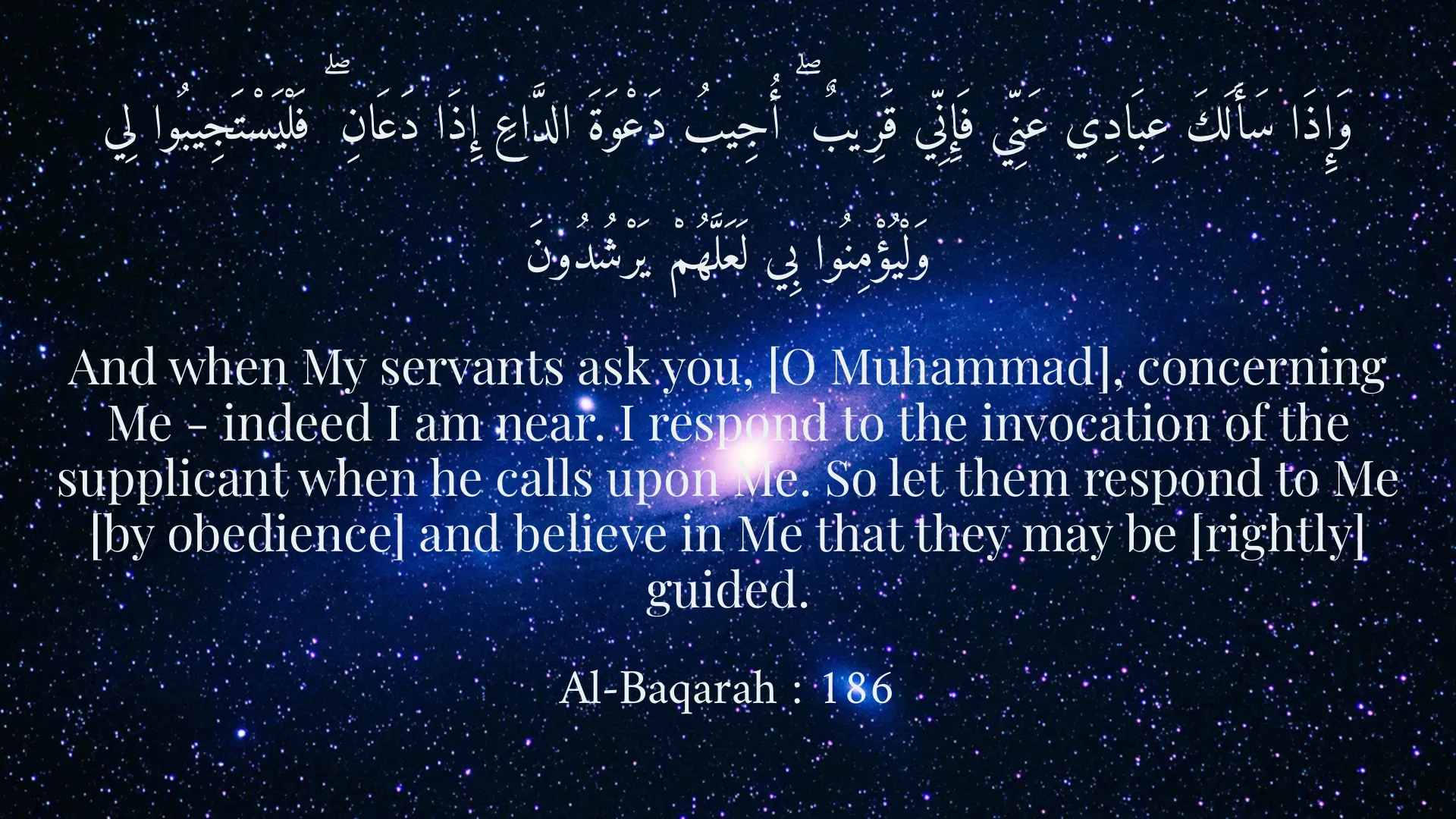
وَإِذَا سَأَلَكَ عِبَادِي عَنِّي فَإِنِّي قَرِيبٌ ۖ أُجِيبُ دَعْوَةَ الدَّاعِ إِذَا دَعَانِ ۖ فَلْيَسْتَجِيبُوا لِي وَلْيُؤْمِنُوا بِي لَعَلَّهُمْ يَرْشُدُونَ
And when My servants ask you, [O Muhammad], concerning Me - indeed I am near. I respond to the invocation of the supplicant when he calls upon Me. So let them respond to Me [by obedience] and believe in Me that they may be [rightly] guided.
Al-Baqarah : 186
ادْعُوا رَبَّكُمْ تَضَرُّعًا وَخُفْيَةً ۚ إِنَّهُ لَا يُحِبُّ الْمُعْتَدِينَ
Call upon your Lord in humility and privately; indeed, He does not like transgressors.
Al-A'raf : 55
الَّذِينَ آمَنُوا وَتَطْمَئِنُّ قُلُوبُهُم بِذِكْرِ اللَّهِ ۗ أَلَا بِذِكْرِ اللَّهِ تَطْمَئِنُّ الْقُلُوبُ
Those who have believed and whose hearts are assured by the remembrance of Allah. Unquestionably, by the remembrance of Allah hearts are assured.
Ar-Ra'd : 28
Short Story
It is narrated that there was an old worshipper who, for many years, was immersed in devotion and supplication to God. One day, overwhelmed by divine awe and majesty, his tongue became tied, and he could not utter a single word. His friends asked him, "O worshipper, why have you become silent? Have you neglected the remembrance of God?" The worshipper sighed and said, "What is in my heart is too profound to be expressed in words. Sometimes, the Beloved's grandeur so overwhelms me that any word pales in comparison and falls short. But this silence is not born of heedlessness; rather, it is the peak of presence and heartfelt supplication. In my silence, I speak words that require the ear of the soul, not the ear of the head. So know that whenever the heart inclines towards God, whether with words or with silence, the connection is established, and He is the All-Hearing. From then on, people understood that the language of the heart is sometimes more eloquent than the spoken word, provided that the heart is truly with God.