Quranic Answer
### The Dynamics of Remarriage in Islam: A Look at Justice and Consent In Islam, the question of remarriage, particularly for men, is a complex interplay of law, ethics, and personal relationships. While it is permissible under certain conditions, there are fundamental principles of justice and equity that govern the practice. The Islamic tradition emphasizes the need to maintain justice among spouses, a theme that is woven throughout the teachings of the Quran. This article delves into the nuances of remarriage in Islam, exploring the significance of justice, the necessity of consent from the first wife, and the potential implications of disregarding these principles. #### The Islamic Perspective on Marital Relationships Marriage is often viewed as a sacred contract in Islam, one that is built on mutual respect, love, and understanding. The Quran lays down guidelines not only for the conduct of husbands and wives but also for the broader social context of marriage, including remarriage. In Surah An-Nisa (Chapter 4), verse 3, Allah explicitly states the conditions under which a man may remarry: "And if you fear that you will not be just to the orphans, then marry those that please you of [other] women, two or three or four. But if you fear that you will not be just, then [marry only] one." This particular verse underscores a vital principle in the Islamic approach to marriage—justice. The notion of justice is paramount, especially in polygamous arrangements, and one must carefully consider whether they can treat multiple spouses equitably. The emphasis on justice serves as both a guideline and a warning; it cautions men against entering into multiple marriages if they cannot fulfill the obligations of fairness and equitable treatment. #### The Importance of Consent Consent plays an equally critical role in the remarriage process within an Islamic framework. The first wife's feelings and rights must be considered, and her consent is not merely a courtesy but a moral and ethical requirement. Engaging in remarriage without the consent of the first wife can be construed as an act of injustice towards her feelings, showcasing a disregard for her emotional well-being. Such actions can lead to feelings of betrayal and resentment, which can jeopardize not only the marital relationship but also familial harmony. Islamic scholars have repeatedly highlighted the importance of discussing intentions with the first wife prior to contemplating remarriage. Having open dialogues promotes transparency and strengthens the trust that forms the foundation of the marital relationship. Furthermore, it reflects the Islamic values of compassion and sensitivity towards a partner's emotional state. #### The Consequences of Ignoring Justice and Consent Ignoring the principles of justice and the requirement for consent can lead to dire consequences, both at a personal level and a community level. At the personal level, a husband who chooses to remarry without discussing it with his first wife risks creating a deep rift in the relationship that could lead to emotional distress and breakdown of trust. This breakdown can manifest in numerous ways, including increased conflict, diminished communication, and potentially the end of the marriage. From a broader perspective, the failure to promote justice and consideration for consent in marital relationships can contribute to societal issues regarding gender equality and women's rights. It perpetuates a cycle of emotional harm and instability, which can transcend familial boundaries, affecting extended family dynamics and community relationships. Therefore, it is crucial for Muslim men to reflect seriously on the implications of their choices within the context of remarriage, considering both their duties as husbands and their responsibilities to their families and communities. #### Surah An-Nisa and the Nature of Justice Another significant verse that addresses the challenges of justice in marriage is found in Surah An-Nisa, verse 129, where Allah states: "You will never be able to be equal between wives, even if you should strive to do so. But do not incline [to one] entirely and leave another hanging." This verse acknowledges the inherent difficulties in providing equal treatment to multiple spouses. It recognizes human emotions and the unpredictability of love and affection, reminding believers of their limitations in achieving complete fairness. Thus, while Islam permits remarriage, it simultaneously warns against the potential pitfalls of attempting to fulfill this allowance without rigorous self-reflection and moral consideration. The implications of this guidance are vital; they teach that one should tread thoughtfully and reflect on whether they can genuinely uphold the rights of their spouses. #### Community Dialogue and Support In light of these considerations, community dialogue becomes essential. Families and local communities are encouraged to foster healthy discussions about marital dynamics, including remarriage. Educational programs that highlight the principles of justice, consent, and emotional intelligence can help create a supportive environment for couples navigating the complexities of marriage. Additionally, religious leaders and scholars have a pivotal role in guiding discussions around remarriage. They can provide valuable insights that encourage respectful dialogue between spouses and promote fairness in interpersonal relationships. By doing so, communities can collectively work towards fostering healthier familial relationships and addressing personal conflicts arising from remarriage. #### Conclusion In conclusion, remarriage for men in Islam is permissible but must be navigated with a keen understanding of the necessary principles of justice and consent. Islamic teachings compel men to reflect on their ability to treat spouses equitably and to engage in open conversations with their first wives before making significant relational choices. The emphasis on justice is not just a religious obligation but a pathway to sustaining familial relationships and a harmonious society. By adhering to these principles, individuals uphold the virtues of Islam and contribute to a more compassionate and understanding community.
Related Verses
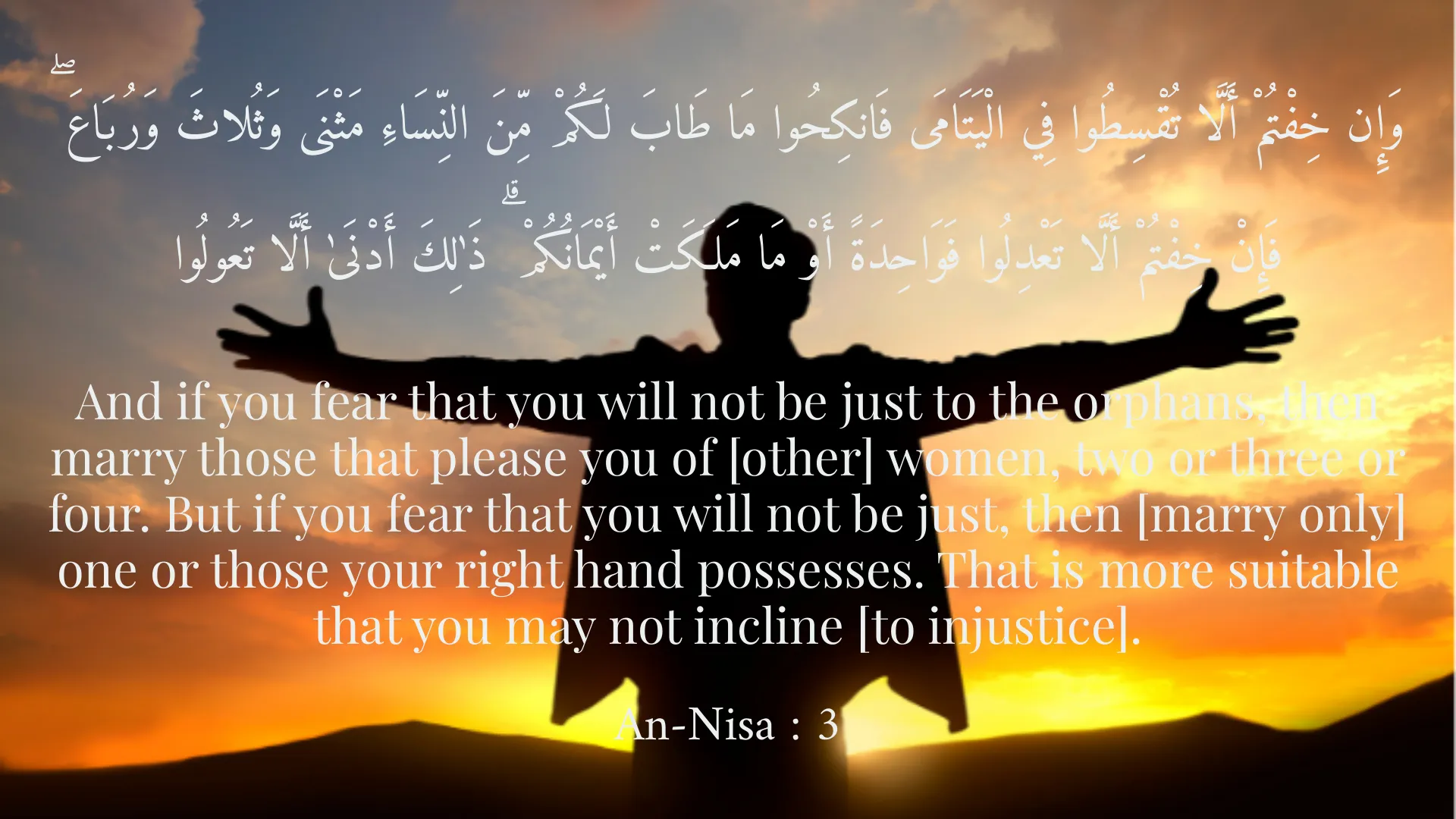
وَإِن خِفْتُمْ أَلَّا تُقْسِطُوا فِي الْيَتَامَى فَانكِحُوا مَا طَابَ لَكُمْ مِّنَ النِّسَاءِ مَثْنَى وَثُلاثَ وَرُبَاعَ ۖ فَإِنْ خِفْتُمْ أَلَّا تَعْدِلُوا فَوَاحِدَةً أَوْ مَا مَلَكَتْ أَيْمَانُكُمْ ۗ ذَٰلِكَ أَدْنَىٰ أَلَّا تَعُولُوا
And if you fear that you will not be just to the orphans, then marry those that please you of [other] women, two or three or four. But if you fear that you will not be just, then [marry only] one or those your right hand possesses. That is more suitable that you may not incline [to injustice].
An-Nisa : 3
وَلَن تَسْتَطِيعُوا أَنْ تَعْدِلُوا بَيْنَ النِّسَاءِ وَلَوْ حَرَصْتُمْ ۚ فَلَا تَمِيلُوا كُلَّ الميل فَتَذْهَبُوا بِـَٔاحَدٍ مِّنْهُنَّ رَاحَةً ۖ وَإِن تُصْلِحُوا وَتَتَّقُوا فَإِنَّ اللَّهَ كَانَ غَفُورًا رَّحِيمًا
And you will never be able to be just between the women, even if you strive to do so. So do not inclines wholly to one and leave another hanging. And if you amend and fear Allah - indeed, Allah is Ever Forgiving and Merciful.
An-Nisa : 129
Short Story
One day, a man decided to remarry without the consent of his first wife. He thought he could continue his life without fairness and justice. However, when he spoke to his first wife, he realized how much hurt and upset she was. This conversation gave him a chance to reflect on justice and his wife's feelings, leading him to make a wise decision.