Quranic Answer
Worship and Respect for Parents in Islam In the Holy Quran, the importance of worship and service to parents is clearly articulated. The intricate relationship between the worship of God and the respect for parents is a recurring theme that highlights the foundational principles of Islam. One of the poignant verses that reference this subject is verse 23 of Surah Al-Isra, which states: 'And your Lord has decreed that you not worship except Him, and to parents, good treatment...' This verse serves as a significant reminder of the two integral concepts of faith: the worship of Allah and the honorable treatment of one's parents. At first glance, one might perceive worship and parental treatment as distinct entities; however, the Quran indicates a profound connection between the two. The structure of the verse is notably intentional. God first commands worship, the core of Islamic belief, and then follows with the instruction to treat parents with kindness. This sequence is crucial because it highlights the priority of divine worship, immediately followed by the essential nature of parental respect and care. It thereby suggests that serving parents is not just an option but a responsibility that accompanies one’s faith. This indicates the elevated rank that honoring one's parents holds within the broader spectrum of Islamic ethics. Moreover, the cultural setting of the Quranic revelation is also important in understanding the emphasis placed on parents. In Arabian society during the time of the Prophet Muhammad, parental roles were valued and revered. The Quran did not merely conform to these cultural norms but sought to elevate them to a divine standard. Respect and love for parents in Islam are not simply viewed as social values; they are seen as integral components of faith and justice. Consequently, the teachings of Islam encourage individuals to showcase their commitment to worship through tangible acts of kindness and service towards their parents. In addition to Surah Al-Isra, another verse that underscores the importance of parental respect is found in Surah Luqman, verse 14. This verse states, 'And We have enjoined upon man regarding his parents...' This is more than just an urging; it is a divine commandment. The emphasis on enjoining suggests that caring for parents should be an active, continuous effort, a duty owed by every child to their parents. The phrase 'We have enjoined' reinforces that this is a significant obligation, not to be taken lightly or neglected. By placing such a strong emphasis on this directive from Allah, the Quran highlights parental respect as a pivotal aspect of a faithful Muslim's life. Understanding the depth of these teachings requires recognizing that good deeds and acts of kindness towards parents should never be overlooked. In Islam, worship is not limited to the acts performed at mosques or during Ramadan. Every type of kindness extended towards one’s family, especially one’s parents, is considered a form of worship. This holistic view of worship reinforces the idea that day-to-day actions rooted in compassion and respect contribute to a person's spiritual connection with Allah. The small, simple acts of kindness towards parents can be as significant as the grand rituals of prayer and fasting. For instance, providing for them, taking care of their needs, listening to their advice, and simply spending time with them are ways in which children can embody the spirit of worship in their everyday lives. Additionally, it is important for believers to reflect on the underlying principles of justice and mercy when interacting with their parents. Islam teaches that parental figures are often a reflection of divine grace and mercy. When worshiping Allah, followers must remember to manifest these divine characteristics in their relationships with their parents. Hence, effusing love, patience, and understanding when caring for them becomes a mirror of one's faith. Islamic teachings convey that one’s treatment of parents is often a reflection of one’s relationship with God. This perspective is crucial in today's fast-paced world, where the values of family and respect for elders can sometimes be overshadowed by societal changes and modern distractions. The Quran provides enduring wisdom that transcends time, encouraging individuals to uphold familial bonds as a form of worship. No matter how society evolves, the moral importance of nurturing and respecting parents remains a steadfast principle within Islam. The notion that serving parents complements worship rather than contradicts it is essential. Serving parents requires intention and commitment, which also aligns with the overarching purpose of every Muslim’s life: submission to Allah. As believers fulfill their duties toward their parents, they weave an intricate tapestry of devotion that encapsulates their faith in action. This understanding leads to a deeper appreciation that worship in Islam extends beyond formal practices; it includes the heartfelt dealings with those who have given us life and guided us. In conclusion, serving parents is not positioned as more important than worship but rather as a complement and continuation of it. Respecting and caring for parents provides a tangible expression of one's commitment to Allah. This belief underscores the importance of intertwining acts of worship with daily life, embracing the holistic approach that Islam advocates. Ultimately, worship is about embodying faith through actions, and there is no more profound manifestation of one's faith than in the kindness shown to parents. By understanding and implementing these divine guidelines, one can truly embody the essence of worship that not only shines in the eyes of Allah but also nurtures the rich fabric of family, community, and faith.
Related Verses
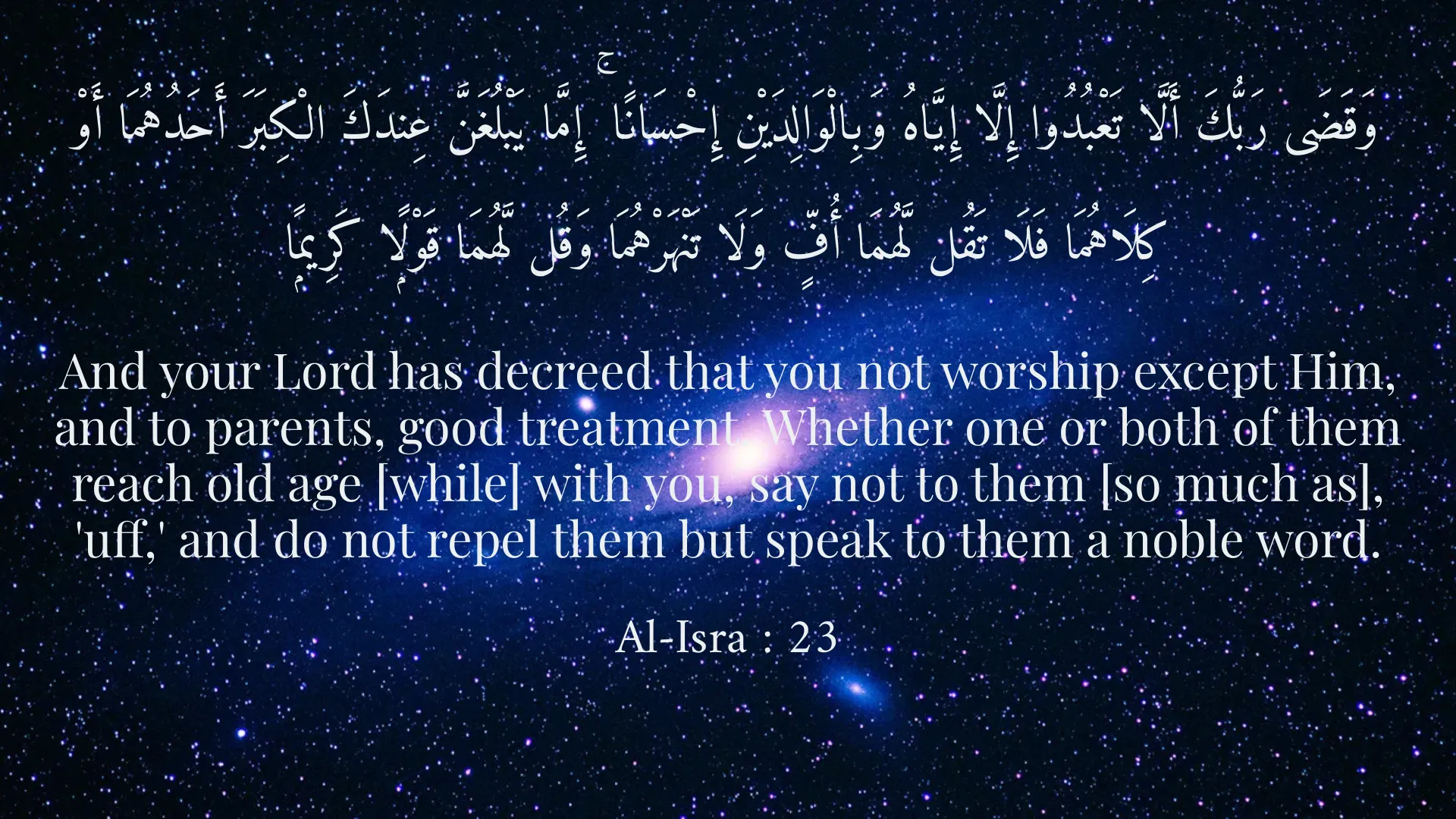
وَقَضَى رَبُّكَ أَلَّا تَعْبُدُوا إِلَّا إِيَّاهُ وَبِالْوَالِدَيْنِ إِحْسَانًا ۚ إِمَّا يَبْلُغَنَّ عِندَكَ الْكِبَرَ أَحَدُهُمَا أَوْ كِلَاهُمَا فَلَا تَقُل لَّهُمَا أُفٍّ وَلَا تَنْهَرْهُمَا وَقُل لَّهُمَا قَوْلًۭا كَرِيمًۭا
And your Lord has decreed that you not worship except Him, and to parents, good treatment. Whether one or both of them reach old age [while] with you, say not to them [so much as], 'uff,' and do not repel them but speak to them a noble word.
Al-Isra : 23
وَوَصَّيْنَا الْإِنْسَانَ بِوَالِدَيْهِ ۚ أَنِ اشْكُرْ لِي وَلِوَالِدَيْكَ إِلَيَّ الْمَصِيرُ
And We have enjoined upon man regarding his parents. Be grateful to Me and to your parents; to Me is the [final] destination.
Luqman : 14
Short Story
Once upon a time, a young man named Sajjad was walking through the streets when he remembered the verses of the Quran that always brought him peace. He recalled all the efforts his parents had made to raise him and felt the need to show them more love. Sajjad decided to make it a habit to speak with his parents every day when he got home and help them out. Surprisingly, he found that through this effort, he experienced greater joy and tranquility in his life.