Quranic Answer
In today's tumultuous world, where we might encounter waves of unpleasant and sometimes heartbreaking news at any moment, the human mind and soul are exposed to serious harm. The Holy Quran, this book of guidance and light, offers profound and wise recommendations for confronting such situations. These recommendations not only help us remain safe from emotional turmoil but also provide an opportunity for spiritual growth and drawing closer to God. These teachings are built upon pillars such as patience, reliance on God, verification, and a purposeful reminder of creation. The first and perhaps most crucial recommendation of the Quran when facing bad news is to seek refuge in 'patience' (Sabr) and 'prayer' (Salat). In Surah Al-Baqarah, verse 153, we read: "O you who have believed, seek help through patience and prayer. Indeed, Allah is with the patient." Patience here does not merely mean passive endurance; rather, it encompasses perseverance in the face of difficulties, self-restraint against hasty reactions, and maintaining inner peace. When bad news reaches us, it is natural for anxiety to engulf our being, but the Quran teaches us that these moments are the best opportunity to turn to the absolute divine power. Prayer, the pillar of faith and the ascension of the believer, is a means of direct connection with the Creator of the universe, seeking peace and strength from its inexhaustible source. Through prayer, one frees their soul from disturbances and attains a tranquility under divine mercy that no storm can disrupt. The Quran also reminds us that all events, good or bad, are part of a divine test. In Surah Al-Baqarah, verse 155, it states: "And We will surely test you with something of fear and hunger and a loss of wealth and lives and fruits, but give good tidings to the patient." This verse teaches us that bad news, shortages, and fears are part of this path of divine trial. The purpose of these tests is to assess faith, strengthen reliance on God and patience, and elevate one's spiritual ranks. Understanding this truth—that every affliction is a test from God—gives a person a different perspective; one in which hardships are seen not as the end of the road, but as a launching pad towards perfection and closeness to God. Those who show patience in the face of these trials are praised in the subsequent verses (Al-Baqarah 156-157), and Allah sends His blessings and mercy upon them, considering them rightly guided. The phrase "Indeed we belong to Allah, and indeed to Him we will return," which we utter during affliction, is not merely a verbal affirmation but a deep reminder of the truth that we and everything we possess belong to Him, and our return is also to Him. Another key recommendation of the Quran is not to lose hope and faith. In Surah Al-Imran, verse 139, we read: "So do not weaken and do not grieve, and you will be superior if you are [true] believers." This verse is a beacon of hope in the darkness of despair. When bad news surrounds us, the temptation of despair and weakness comes upon us. But the Quran gives believers courage, asserting that by relying on their faith, they can overcome any sorrow and maintain their superior position. This does not mean denying reality, but rather accepting reality with a divine perspective and a deep belief in the power and wisdom of Allah. Furthermore, the Quran emphasizes the importance of 'verification' and 'investigation' when encountering news. In Surah Al-Hujurat, verse 6, it says: "O you who have believed, if there comes to you a disobedient one with information, investigate, lest you harm a people out of ignorance and then regret what you have done." This verse specifically refers to news that might originate from unreliable or malicious sources. In today's information age, where misinformation spreads rapidly, this Quranic advice becomes doubly important. Before any reaction or dissemination of news, we must verify its authenticity. This not only prevents social harm but also helps us maintain our composure and rationality when facing news, safeguarding us from unnecessary anxieties stemming from rumors and false information. Finally, the Quran teaches us to always 'rely' on God (Tawakkul). Tawakkul, beyond mere hope, signifies complete trust in divine planning. When we hear bad news, this reliance gives us peace, knowing that nothing is hidden from God's sight, and He knows what is best for us better than anyone, even if the event appears bitter on the surface. In Surah At-Talaq, verse 3, we read: "And whoever relies upon Allah – then He is sufficient for him." This luminous word is a divine insurance policy for anxious hearts. In summary, the Quran provides a comprehensive guide for dealing with bad news, inviting us to patience, prayer, reliance on God, avoiding despair, and verification. These teachings are not merely tools for managing emotional crises, but also a path for spiritual growth and achieving lasting tranquility in the light of divine wisdom and mercy. By applying these recommendations, we can have calm hearts and assured souls in a world full of challenges.
Related Verses
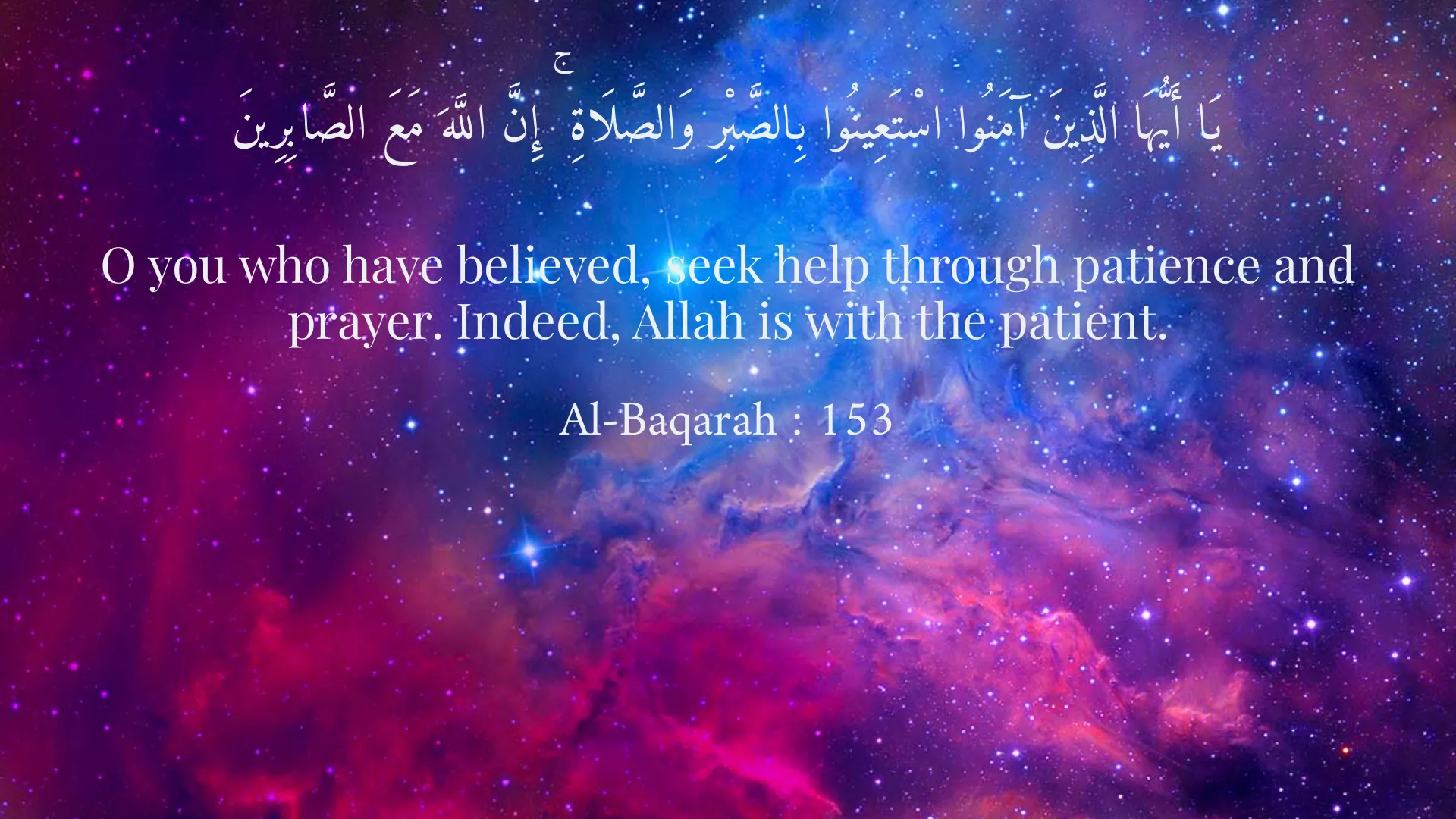
يَا أَيُّهَا الَّذِينَ آمَنُوا اسْتَعِينُوا بِالصَّبْرِ وَالصَّلَاةِ ۚ إِنَّ اللَّهَ مَعَ الصَّابِرِينَ
O you who have believed, seek help through patience and prayer. Indeed, Allah is with the patient.
Al-Baqarah : 153
وَلَنَبْلُوَنَّكُم بِشَيْءٍ مِّنَ الْخَوْفِ وَالْجُوعِ وَنَقْصٍ مِّنَ الْأَمْوَالِ وَالْأَنفُسِ وَالثَّمَرَاتِ ۗ وَبَشِّرِ الصَّابِرِينَ
And We will surely test you with something of fear and hunger and a loss of wealth and lives and fruits, but give good tidings to the patient,
Al-Baqarah : 155
يَا أَيُّهَا الَّذِينَ آمَنُوا إِن جَاءَكُمْ فَاسِقٌ بِنَبَإٍ فَتَبَيَّنُوا أَن تُصِيبُوا قَوْمًا بِجَهَالَةٍ فَتُصْبِحُوا عَلَىٰ مَا فَعَلْتُمْ نَادِمِينَ
O you who have believed, if there comes to you a disobedient one with information, investigate, lest you harm a people out of ignorance and then regret what you have done.
Al-Hujurat : 6
Short Story
It is narrated that a man was passing through a desert, writhing in thirst and exhaustion. Suddenly, news came that there was a well nearby, but its water was salty and bitter. The man grew sad, but instead of despairing, he thought to himself: "Perhaps this well, with its bitterness, will teach me the value of sweet water and save me from perishing." Relying on God, he went towards the well. There, he saw a group who had perished from lack of water. The man drank from that salty water and was revived. This bitter news led him to a well that saved his life and made him aware of hidden divine wisdom. He realized that every piece of news, even if it seems bad, might contain a hidden grace and a great lesson that reveals itself through patience and reliance on God.