Quranic Answer
In the Holy Quran, the duties of a person towards their parents are clearly outlined. One of the most significant aspects emphasized is the necessity of kindness to parents. The relationship between parents and their children is fundamental and is considered sacred in the Islamic faith. This article delves into the various teachings of the Quran regarding parental respect and care and explores the implications of these teachings in the daily lives of Muslims. The Holy Quran serves as a guiding principle for Muslims in various matters of life, including family dynamics. Among the most crucial guidance provided is the emphasis on one's duty towards their parents. This emphasis is particularly highlighted in Surah Al-Isra, verse 23, where Allah states: "And your Lord has decreed that you not worship except Him, and to parents, good treatment. Whether one or both of them reach old age [while] with you, say not to them [so much as], 'uff,' and do not repel them but speak to them a noble word." This verse presents a profound understanding of the weight of parental respect in Islam, particularly when parents reach old age. The message conveyed through this verse is explicit: the importance of treating parents with respect and dignity is second only to worshiping Allah. Showing kindness to parents is not just a transactional responsibility but rather a moral and ethical obligation grounded in the Islamic faith. When addressing the elderly parents who might require additional support and care, the verse admonishes the children to refrain from expressing even the slightest sign of irritation or frustration, as indicated by the term "uff." This term represents a dislike or disdainful remark that should be avoided at all costs. Instead, children are encouraged to engage with their parents using noble and respectful language, which emphasizes the importance of kindness and compassion as foundational attributes of a good relationship with one's parents. Moreover, the teachings in Surah Luqman, verse 14, further reinforce this message of kindness, as it states: "And We have enjoined upon man [care] for his parents. But if they endeavor to make you associate with Me that of which you have no knowledge, do not obey them." This verse provides a nuanced perspective on the respect children owe their parents. The first part of the verse underscores the obligation to care for one’s parents, while the latter part introduces a critical balance: the necessity of maintaining allegiance to one's faith and convictions, even in the face of parental pressure. This indicates that while respect and care for one’s parents are paramount, there is a boundary that should not be crossed if the demands of the parents contradict Islamic teachings. However, even in such scenarios, the manner of dialogue should remain gentle and respectful, reflecting the profound nature of parental relationships as taught in Islam. The Quran’s emphasis on the duty to care for parents extends beyond mere obedience. It embodies the principles of love, compassion, and responsibility. Thus, fulfilling this duty requires more than just compliance with their wishes; it involves actively seeking their well-being, ensuring their comfort, and showing gratitude for their sacrifices. The act of caring for one’s parents is seen as an honorable undertaking that reflects the moral character of an individual. This process often includes providing emotional support, financial assistance when needed, and offering companionship and understanding during challenging times, especially as parents grow older and may require more help. Caring for parents is not merely an ethical consideration in Islam but is profoundly intertwined with the broader themes of compassion and mercy that are recurrent throughout the Quran. The relationship between parents and children is a platform through which individuals can cultivate these virtues. One of the most significant lessons Muslims draw from the Quran is that caring for parents is not just a familial duty but also an integral part of one's spiritual journey. By nurturing this relationship, individuals can attain greater levels of God-consciousness and improve their relationship with Allah. Thus, the Quran explicitly places the respect and care for parents alongside the worship of Allah. This illustrates the enormity of the responsibility children bear in honoring their parents. It signifies an understanding of the essential role that parents play in the development of their children, and the need for reciprocal respect and care as children mature. The teachings in the Quran are steadfast in stressing that kindness, respect, and a caring demeanor unify not just families but communities as well. In contemporary society, it is easy to overlook the responsibilities that come with parenthood. The pace of modern life often leaves individuals overwhelmed and rushed, sometimes resulting in a neglect of relationships that matter most. However, traditional Islamic teachings encourage Muslims to prioritize their family ties and to actively seek and forge meaningful connections with their parents. This requires conscious effort and regular reflection on one's duties as a child. For many, it can be a transformative experience, as it leads to personal growth and enhanced emotional resilience. The act of caring for one’s parents can often be a source of immense personal fulfillment, providing a sense of purpose and direction in life. To illustrate, when a child engages in the act of caring for their parents, it is not only about meeting their physical needs, such as providing meals or assistance with daily tasks but also about mentally and emotionally supporting them. Engaging in conversations that honor their experiences, listening to their stories, and often sharing joyous moments can strengthen this sacred bond. This sensitivity to the emotional landscape of one’s parents brings forth a unique dynamic in the relationship, promoting mutual respect and deep familial love. In conclusion, fulfilling one's duties towards parents is an essential aspect of the Islamic faith. The Quran emphasizes respect, kindness, and care for parents as fundamental responsibilities. The messages conveyed through verses in Surah Al-Isra and Surah Luqman create a roadmap for Muslims on how to navigate their relationships with their parents. This responsibility not only reflects a child’s character but has far-reaching implications for their spiritual journey. In honoring their parents, children cultivate compassion, respect, and understanding—the hallmarks of a strong and cohesive society. As Muslims strive to fulfill these ethical responsibilities, they contribute to a culture that values familial bonds and nurtures a reflective and spiritual existence.
Related Verses
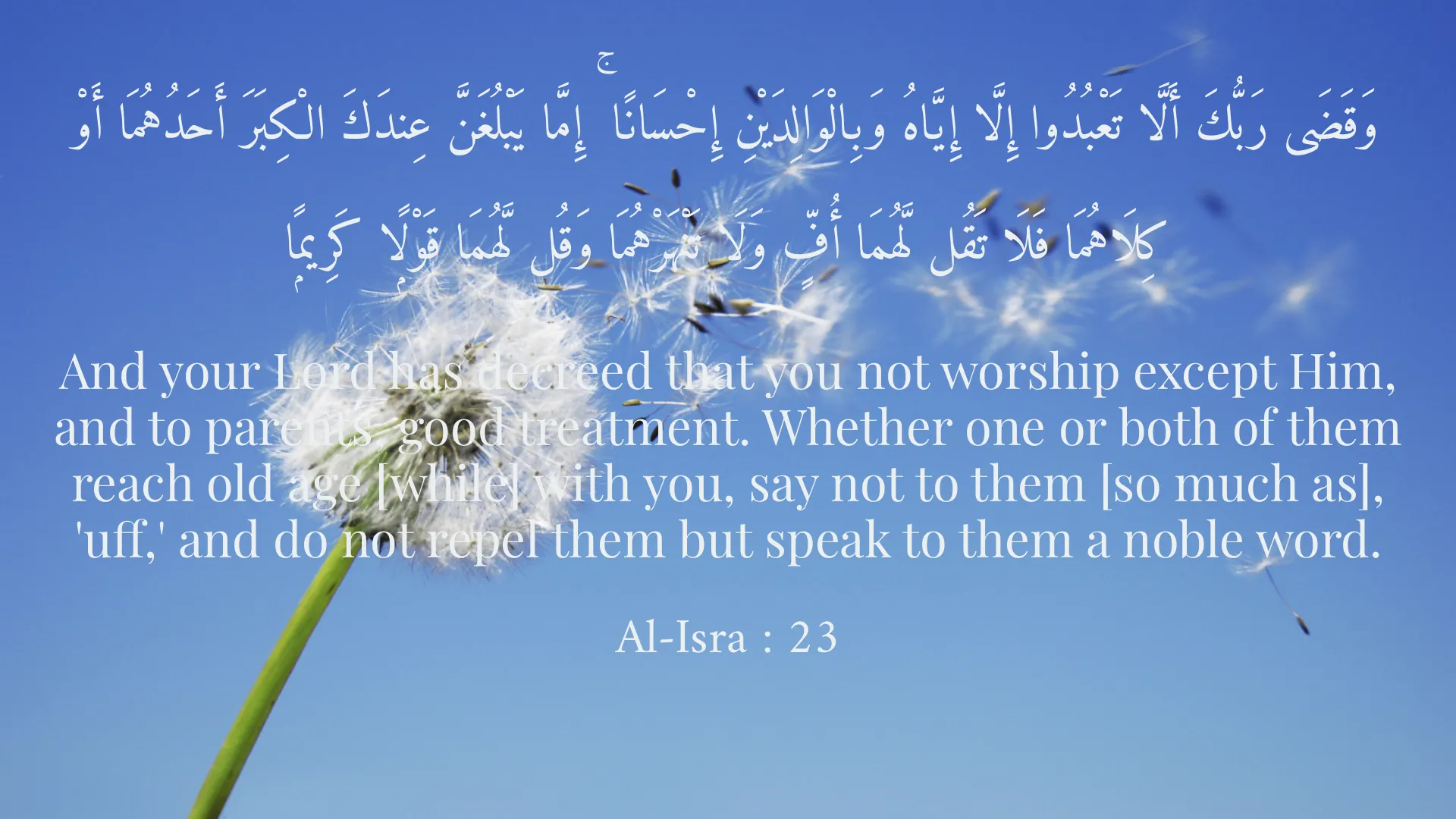
وَقَضَى رَبُّكَ أَلَّا تَعْبُدُوا إِلَّا إِيَّاهُ وَبِالْوَالِدَيْنِ إِحْسَانًا ۚ إِمَّا يَبْلُغَنَّ عِندَكَ الْكِبَرَ أَحَدُهُمَا أَوْ كِلَاهُمَا فَلَا تَقُل لَّهُمَا أُفٍّ وَلَا تَنْهَرْهُمَا وَقُل لَّهُمَا قَوْلًۭا كَرِيمًۭا
And your Lord has decreed that you not worship except Him, and to parents, good treatment. Whether one or both of them reach old age [while] with you, say not to them [so much as], 'uff,' and do not repel them but speak to them a noble word.
Al-Isra : 23
وَوَصَّيْنَا الْإِنْسَانَ بِوَالِدَيْهِ ۚ إِن شَكَرْتَ لِي وَلِوَالِدَيْكَ فَأَنَّ مَصِيرُكَ إِلَيَّ.
And We have enjoined upon man [care] for his parents. But if they endeavor to make you associate with Me that of which you have no knowledge, do not obey them.
Luqman : 14
Short Story
One day, Adel learned about how to respect his parents better. He read a book on Islamic principles of life and was inspired by its topics. He recalled the Quranic words that say: "And be good to parents" and decided to pray for them every day after his prayer and show them affection. Over time, Adel noticed that this practice not only strengthened his relationship with his parents but also brought blessings and peace into his life.