Quranic Answer
Raising children is one of the most significant responsibilities of families and societies, and it is a fundamental issue that holds profound implications for individual growth and societal development. This aspect of life is greatly emphasized in the Holy Quran, where the welfare of children is depicted not just as a familial duty, but as a moral obligation that influences communities and future generations profoundly. Proper upbringing and education of children serve as the building blocks for a morally upright society. The Quran provides extensive guidance on how to raise children with integrity, respect, and moral values that align with divine principles. To begin with, the Quran explicitly highlights the necessity of good upbringing. In Surah At-Tahrim, verse 6, Allah commands, "O you who have believed, protect yourselves and your families from a Fire…" This verse emphasizes the need for believers to safeguard both themselves and their families from spiritual and ethical harm. Protecting one’s family is not limited to physical safety; it encompasses nurturing their spiritual well-being and moral development. This guidance suggests that parents should not only focus on the material well-being of their children but should also prioritize their spiritual upbringing. The concept of upbringing in Islam is multi-dimensional, focusing on love, respect, and the instillation of moral and religious values. Parents are tasked with teaching their children about the core tenets of Islam, including the belief in one God, the importance of prayer, and the essence of humanity. The responsibility of shaping a child’s character is viewed not only as a parental duty but as an act of worship in itself, aiming to cultivate future generations that embody the virtues taught in Islam. An excellent example of this ideal upbringing is found in the story of Luqman the Wise as narrated in Surah Luqman, verses 13 to 19. In these verses, Luqman imparts crucial life lessons to his son, covering fundamental aspects of human existence. He begins by instructing his son on the significance of monotheism, reminding him of the importance of worshiping Allah alone. "O my son, do not associate [anything] with Allah, indeed, association is great injustice." This admonition illustrates the importance of faith and devotion as foundational principles of a child’s upbringing. Such teachings form the core of a child’s identity and help cement their moral framework. Moreover, Luqman underscores the importance of respect for parents and elders, stating: "And We have enjoined upon man [care] for his parents…" The emphasis on filial piety is significant in Islamic teachings, as it promotes family values and helps create a loving environment in which children can thrive. Respect for parents not only strengthens family bonds but also encourages mutual support, as individuals who respect their parents are likely to foster a compassionate society in which everyone looks out for each other. In addition to nurturing respect towards authority figures, Luqman emphasizes kindness towards others. The Quran states that Luqman advised his son to treat people well, prompting the qualities of compassion and empathy towards others. He encourages his son to practice humility and gait without pride, advising, "And do not turn your cheek [in contempt] toward people and do not walk through the earth exultantly. Indeed, Allah does not like everyone self-deluded and boastful." Here, the call for humility coupled with kindness offers a wonderful model for children, suggesting that true strength lies in gentleness and patience rather than arrogance. Luqman’s wise counsel also touches upon the importance of prayer and reliance on God. He advises his son to establish prayer and enjoin good while forbidding wrong. The preaching of righteousness and the prohibition of vice forms the essence of moral upbringing, instilling in children a sense of accountability and ethical behavior. This guidance provides a framework through which children can navigate the complexities of life while making God-conscious choices. Translating these Quranic teachings into actionable strategies requires dedication and intention from parents. A parenting approach rooted in love, respect, and religious education fosters an atmosphere conducive to growth, safety, and happiness. Creating an environment where open communication is encouraged can significantly enhance the parent-child relationship, allowing children to express their thoughts and feelings without fear of judgment. Additionally, education should extend beyond the confines of conventional learning. Incorporating lessons from the Quran in daily discussions and instilling religious values through practical examples can lead to a deeper understanding of their faith. Engaging in community activities and acts of charity teaches children the spirit of generosity and community service, reinforcing their moral compass. Integrating religious education with daily life prepares children to face challenges with confidence while exhibiting compassion towards others. When children witness their parents embodying these ethical teachings, they are likely to emulate these behaviors and attitudes in their lives. This organic learning process lays the groundwork for cultivating morally responsible individuals who contribute positively to society. In conclusion, raising children holds monumental importance in shaping both individual lives and societal structures. The Holy Quran provides a rich reservoir of teachings that emphasize the significance of love, respect, and the establishment of moral and religious values in child upbringing. Through the example of Luqman the Wise and other Quranic stories, we understand that effective parenting involves not just love and care but also a commitment to convey ethical teachings that will guide children throughout their lives. By prioritizing moral and religious education, we can ensure that future generations are nurtured within the principles of compassion, humility, and deep-rooted ethics, ultimately resulting in a harmonious society.
Related Verses
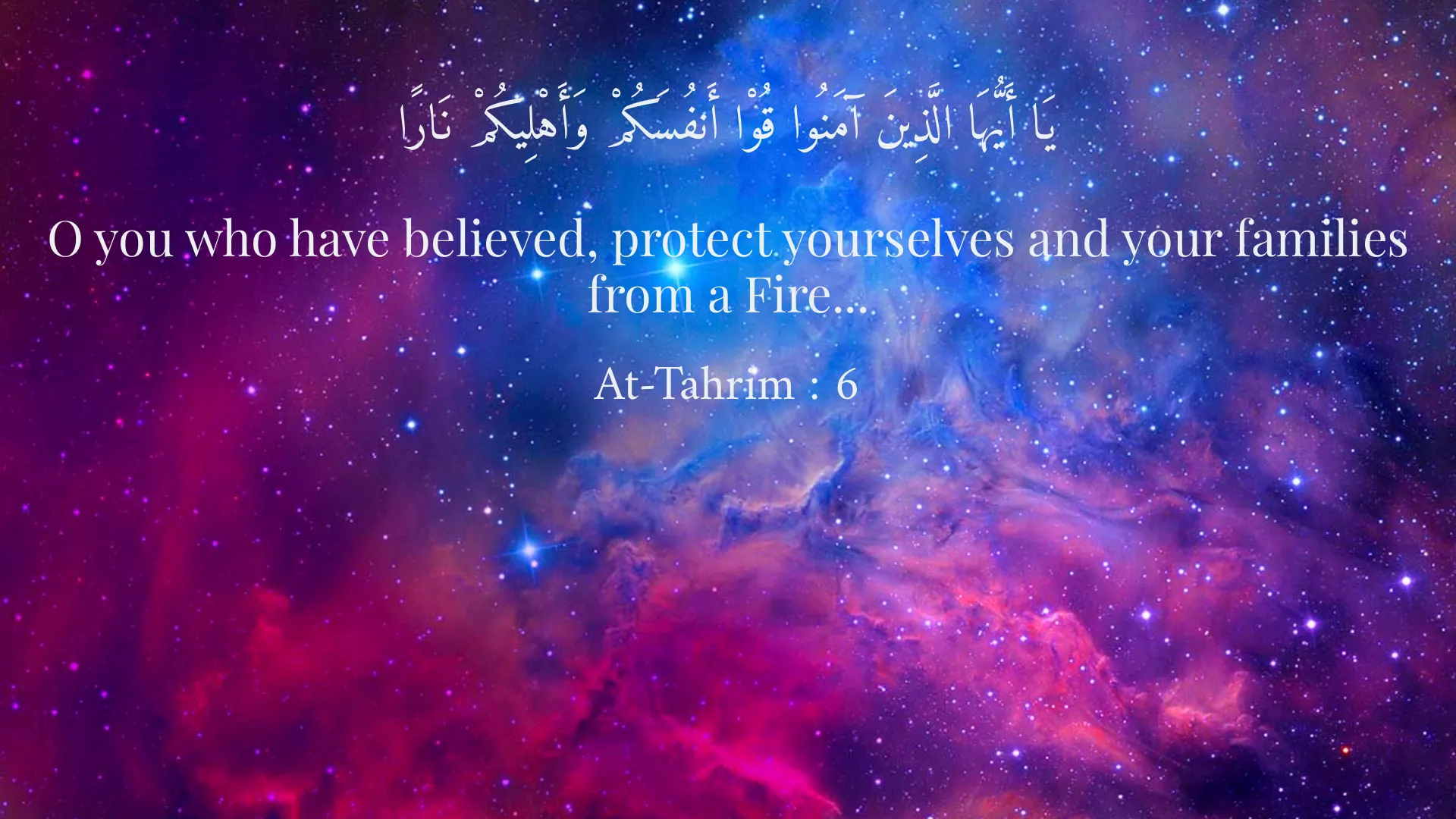
يَا أَيُّهَا الَّذِينَ آمَنُوا قُوْا أَنفُسَكُمْ وَأَهْلِيكُمْ نَارًا
O you who have believed, protect yourselves and your families from a Fire...
At-Tahrim : 6
وَإِذْ قَالَ لُقْمَانُ لِابْنِهِ وَهُوَ يَعِظُهُ يَا بُنَيَّ لا تُشْرِكْ بِاللَّهِ إِنَّ الشَّرَكَ لَظُلْمٌ عَظِيمٌ
And [mention] when Luqman said to his son while he was instructing him, 'O my son, do not associate [anything] with Allah; indeed, association is great injustice.'
Luqman : 13
وَوَصَّيْنَا الإِنسَانَ بِوَالِدَيْهِ حَمَلَتْهُ أُمُّهُ وَهْنًا عَلَى وَهْنٍ ۖ وَفِصَالُهُ فِي عَامَيْنِ أَنِ اشْكُرْ لِي وَلِوَالِدَيْكَ إِلَيَّ الْمَصِيرُ
And We have enjoined upon man [care] for his parents. But if they endeavor to make you associate with Me that of which you have no knowledge, do not obey them. To Me is your return, and I will inform you about what you used to do.
Luqman : 14
Short Story
One day, a teacher said to his students: 'Raising children properly is like planting a sapling. If you take good care of this sapling, it will grow into a strong and fruitful tree.' One of the students asked, 'How can we nurture this sapling?' The teacher replied: 'By instilling love, honesty, and faith in them and guiding them based on the noble values of the Quran.' And so, the children grew up understanding Islamic teachings and became good individuals.