Quranic Answer
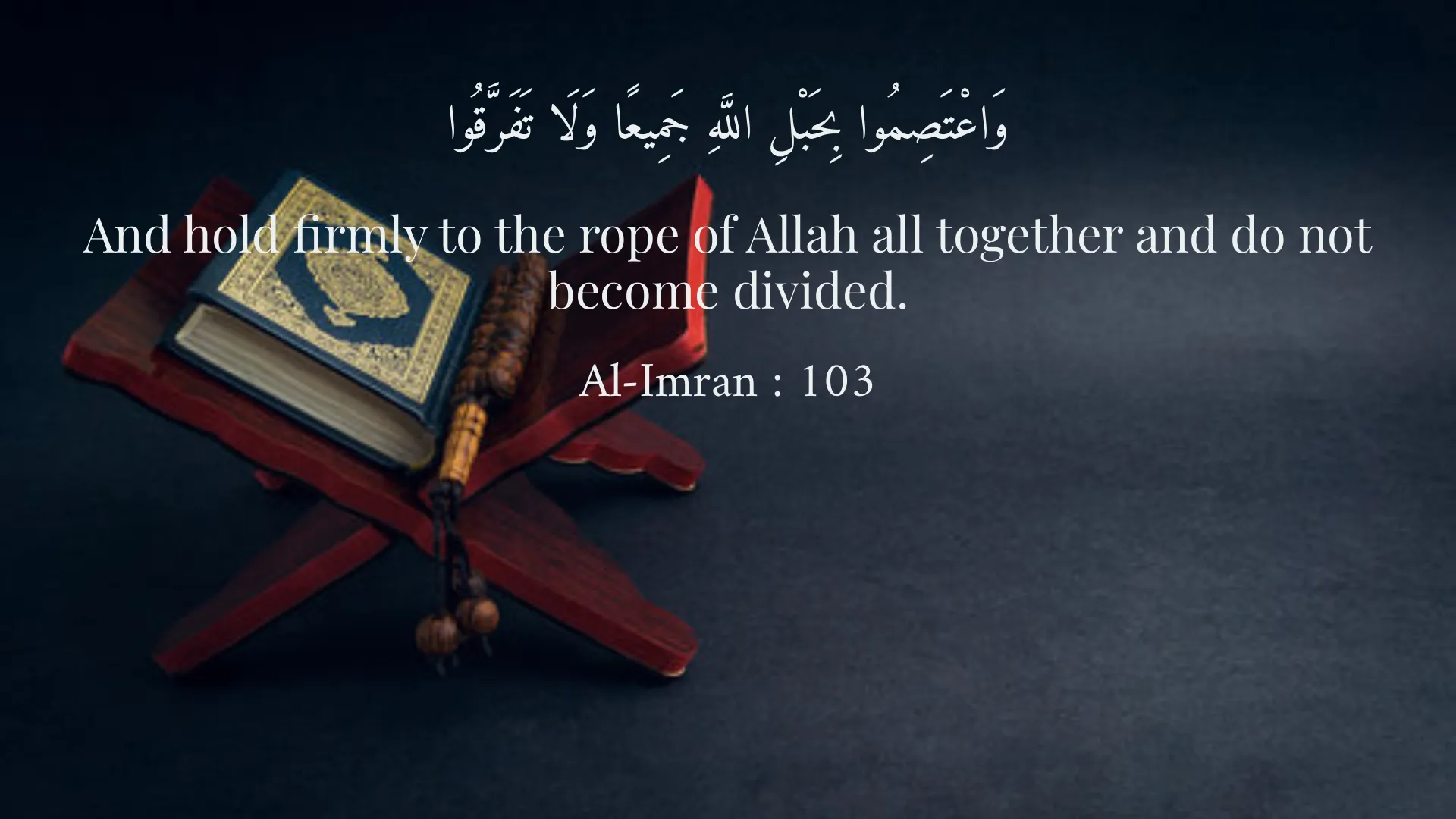
The concept of friendship and human relationships is deeply embedded in the teachings of the Holy Quran. Throughout its verses, the Quran emphasizes the significance of having good friendships and human connections, advocating for unity, love, and mutual respect among individuals. In an era where individualism often supersedes camaraderie, these teachings provide a profound reminder of the essential nature of togetherness in a believer's life. One of the most significant verses that highlight the importance of friendship is found in Surah Al-Imran, verse 103, where Allah commands: "And hold firmly to the rope of Allah all together and do not become divided." This verse serves as a powerful reminder that unity among believers is not just a desirable trait but a divine command. By holding on to the 'rope of Allah', which can be understood as a metaphor for faith and guidance, believers are encouraged to form a cohesive community. The phrase 'do not become divided' emphasizes the dangers of fragmentation and discord, suggesting that friendships can act as a binding force that prevents disunity. Friendships, in this context, serve as essential tools for promoting social cohesion. When individuals come together in friendship, they create an environment conducive to mutual support and understanding, which ultimately strengthens their faith. Good friendships foster an atmosphere where love, cooperation, and shared goals can flourish, leading to a more harmonious community. This interconnectedness is especially vital in maintaining the spiritual and moral fabric of society, allowing believers to uplift each other in their journey of faith. Moreover, in Surah Al-Ma'idah, verse 55, Allah refers to the companions of the believers, stating: "Your ally is only Allah and His Messenger and those who have believed - those who establish prayer and give zakah, and they bow [in worship]." This verse not only highlights the relationship between the believer and Allah, but it also underscores the importance of having friends who are righteous and share similar values. The concept of friendship, as explained in this verse, extends beyond mere companionship; it is about aligning oneself with those who demonstrate their faith through actions such as prayer and charity. Such relationships reinforce good behavior and further strengthen the believer's commitment to their faith. In addition to emphasizing friendships among believers, the Quran also stresses the importance of good relationships among all people. In Surah Al-Hujurat, verse 10, it is stated: "The believers are but brothers," which implies that mutual respect and affection should transcend beyond social divides. In this context, the Quran encourages believers to treat one another as members of a larger family, promoting bonds of love and friendship that can withstand any challenges. This verse illustrates that the foundation of friendship should be rooted in honesty, integrity, and compassion, characteristics that are fundamental to building lasting relationships. Friendship in Islamic teachings is not merely limited to the personal bond shared between individuals; it reflects a broader social obligation. The Quran invites believers to forge connections that foster communal support, social responsibility, and empathy, essential traits for a cohesive society. Engaging in acts of kindness and solidarity, as encouraged by the Quran, enhances the spirit of fellowship among individuals, thereby promoting an inclusive community. Moreover, the Quranic teachings on friendship also encompass the idea of advising one another for the sake of righteousness. In Surah Al-Asr, it is highlighted that, "By time, indeed, mankind is in loss, except for those who have believed and done righteous deeds and advised each other to truth and advised each other to patience." This verse suggests that friendships should entail a connection that encourages mutual growth and accountability. Through honesty and the willingness to guide one another, friends can uplift each other spiritually and morally. In a more practical sense, the social value of friendships is not just a religious ideal; it is deeply relevant in our contemporary lives. Good friendships can help individuals navigate through the challenges of life, providing emotional support during tough times and contributing to their overall well-being. Studies have shown that strong social networks can lead to better psychological and physical health outcomes, reiterating the notion that friendships are vital to human happiness. In the context of a belief system, strong friendships can also cultivate an atmosphere where faith can grow. When individuals surround themselves with like-minded friends, they are more likely to engage in collective worship and discussions that center around their beliefs, therefore increasing their understanding and commitment to their faith. The Quran’s emphasis on friendship thus becomes a source of empowerment, inspiring believers to surround themselves with individuals who encourage and uphold righteousness. In conclusion, the principles laid out in the Holy Quran regarding friendship and human relationships transcend time and cultural boundaries. They serve as a blueprint for believers to navigate their interactions with others, fostering unity, love, and respect. Whether among believers or in relationships with the larger community, the Quran emphasizes that friendships are not only beneficial but are a divine expectation. Such relationships serve to enhance personal growth, reinforce community ties, and foster a spirit of cooperation and love, making friendship one of the essential components in a believer's life. Therefore, it invites believers to consciously strive to cultivate, nurture, and maintain relationships that reflect the values of honesty, love, and cooperation, thereby enriching their own lives and the lives of those around them.
Related Verses
وَاعْتَصِمُوا بِحَبْلِ اللَّهِ جَمِيعًا وَلَا تَفَرَّقُوا
And hold firmly to the rope of Allah all together and do not become divided.
Al-Imran : 103
إِنَّمَا وَلِيُّكُمُ اللَّهُ وَرَسُولُهُ وَالَّذِينَ آمَنُوا الَّذِينَ يُقِيمُونَ الصَّلَاةَ وَيُقْتُونَ الزَّكاةَ وَهُمْ رَاكِعُونَ
Your ally is only Allah and His Messenger and those who have believed - those who establish prayer and give zakah, and they bow [in worship].
Al-Ma'idah : 55
إنما المؤمنون إخوة
The believers are but brothers.
Al-Hujurat : 10
Short Story
Once in a neighborhood, there were two close friends named Ali and Hossein. They spent time together every day and discussed various issues. One day, Hossein said to Ali, "My good friend, I have been thinking about the verses of the Quran, and I realize that our friendship should lay the foundation for better relationships in our community." Ali smiled back and replied, "Exactly! The Quran teaches us the lesson of friendship and love, and we must implement these values in our lives." From that day on, they decided to not only maintain their friendship but also collaborate in charitable acts and helping others, preserving this friendship for life.