Quranic Answer
In the life-giving school of the Holy Quran, silence and submission to truth are two sides of the same coin, deeply intertwined. Submission to truth itself is the essence of Islam; 'Islam' means complete surrender to the will and the absolute divine truth. This absolute truth is Allah Almighty Himself, who is referred to as 'Al-Haqq' (The Truth) in the Quran. When a human being encounters truth, they exhibit various reactions, but the pinnacle of spiritual and intellectual maturity lies in accepting and submitting to that truth. In many instances, silence is a sign of this deep and unconditional acceptance. Here, silence does not mean inaction or absence of speech, but rather the quieting of mental and emotional struggles, and the attainment of an inner peace that stems from the complete acceptance of truth. The Holy Quran repeatedly invites people to ponder, reflect (tadabbur, tafakkur), and contemplate divine verses and the signs of creation. This contemplation and reflection require an atmosphere of inner peace and silence. It is in silence that the heart and mind, free from the world's clamor, become ready to receive and comprehend truths. Verses like Surah Al-A'raf, verse 204, which states: “And when the Qur’an is recited, then listen to it and pay attention (be silent), that you may receive mercy,” clearly emphasize the importance of silence when encountering the divine word. This 'insat' or silence is not merely the stillness of the tongue, but the silencing of the mind from any obstinacy, prejudice, or resistance, so that the truth of the divine word can penetrate the heart without any hindrance, paving the way for mercy and submission. This silence is the silence of acceptance, not the silence of denial or indifference. Furthermore, silence can be a symbol of humility and awe before the grandeur of truth. When a person faces a sublime and undeniable truth, instead of arguing and insisting on their previous opinions, they might fall into a state of wonder and reverence. This silence is the silence of realization and humility. The Holy Quran beautifully expresses this concept in Surah Al-Hashr, verse 21: “Had We sent down this Qur’an upon a mountain, you would have seen it humbled and split apart from the fear of Allah. And these examples We present to the people that perhaps they will give thought.” If a mountain, with all its grandeur, can shatter before the divine word, then the human heart must also be humble and submissive to its truth. This humility brings with it a state of inner silence and the cessation of resistance. Silence in this state is a manifestation of man’s complete and unquestioning submission to the truth, indicating the grandeur and penetration of the divine word into the depths of being. Moreover, silence acts as a fertile ground for the growth of faith and certainty. Deep and firm faith often develops in a calm environment, away from external distractions. When a person becomes certain of divine truth, they no longer need arguments or debates. Their heart finds peace, and this inner peace is also outwardly manifested as silence and dignity. Silence in this sense is a sign of maturity and perfection in faith, as the person has reached a level of understanding where they have felt the truth with their whole being and have submitted to it. This silence is not from an inability to express, but from the richness of knowledge and the filling of one's being with truth. Therefore, the relationship between silence and submission to truth is a reciprocal and profound one. On one hand, silence provides a conducive environment for deeper acceptance and understanding of truth; and on the other hand, complete and true submission to truth leads to inner peace and a silence full of certainty and contentment. This silence is not an inactivity, but an active state of acceptance, contemplation, and connection with the absolute divine truth. The Holy Quran, by emphasizing reflection, contemplation, and attentive listening ('insat'), paves the way for humanity to attain the treasure of truth through conscious silence and submit to it with their whole being. This process guides humanity towards true peace and salvation, where the heart finds rest only in absolute truth, and the tongue is opened only for the remembrance of truth. Ultimately, both silence and submission are manifestations of knowledge and faith that bring humanity closer to the essence of truth. This silence is not an emptiness, but a fullness of wisdom and knowledge from which good deeds and noble words originate.
Related Verses
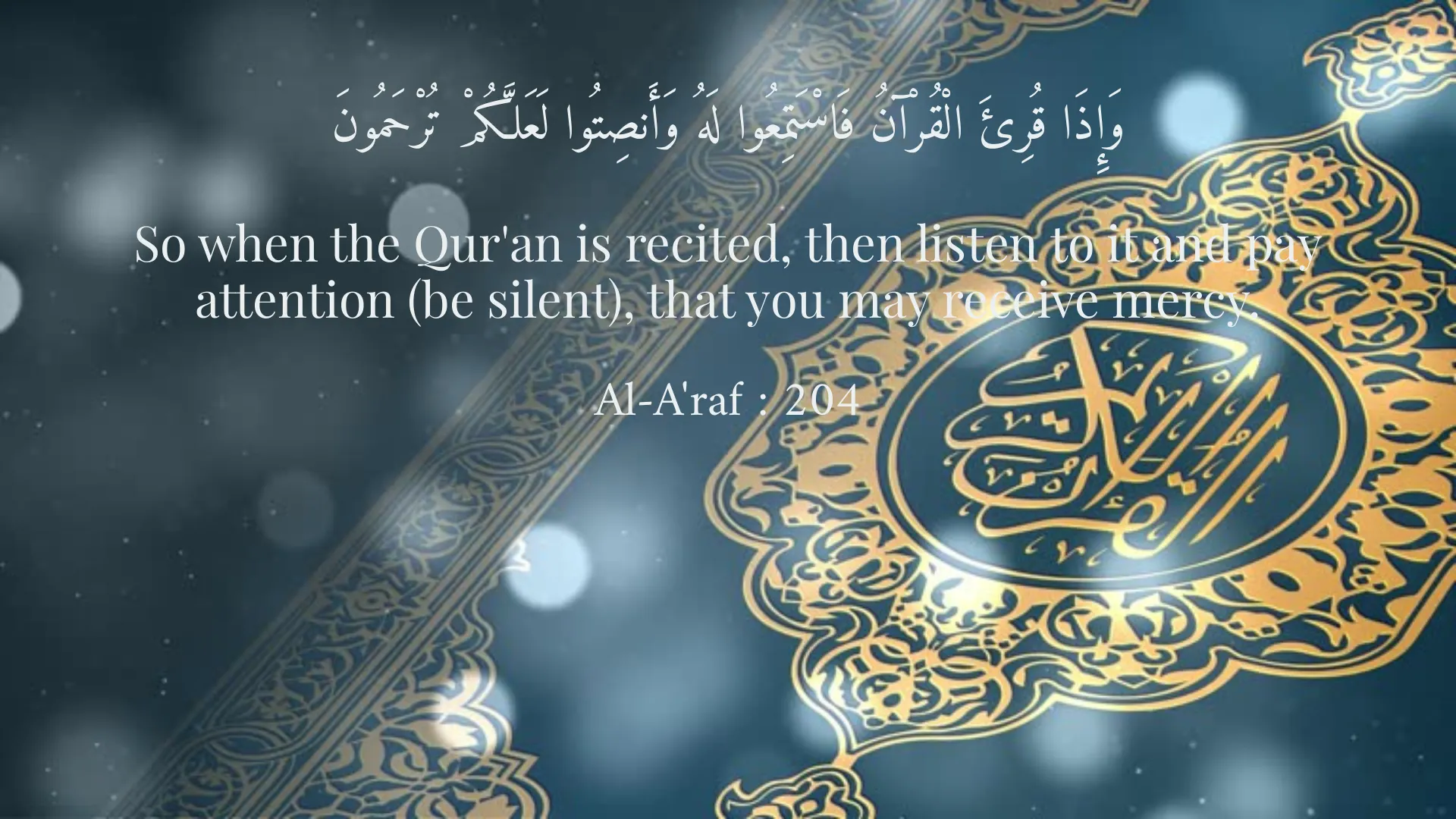
وَإِذَا قُرِئَ الْقُرْآنُ فَاسْتَمِعُوا لَهُ وَأَنصِتُوا لَعَلَّكُمْ تُرْحَمُونَ
So when the Qur'an is recited, then listen to it and pay attention (be silent), that you may receive mercy.
Al-A'raf : 204
لَوْ أَنزَلْنَا هَٰذَا الْقُرْآنَ عَلَىٰ جَبَلٍ لَّرَأَيْتَهُ خَاشِعًا مُّتَصَدِّعًا مِّنْ خَشْيَةِ اللَّهِ ۚ وَتِلْكَ الْأَمْثَالُ نَضْرِبُهَا لِلنَّاسِ لَعَلَّهُمْ يَتَفَكَّرُونَ
Had We sent down this Qur'an upon a mountain, you would have seen it humbled and split apart from the fear of Allah. And these examples We present to the people that perhaps they will give thought.
Al-Hashr : 21
إِنَّ فِي ذَٰلِكَ لَذِكْرَىٰ لِمَن كَانَ لَهُ قَلْبٌ أَوْ أَلْقَى السَّمْعَ وَهُوَ شَهِيدٌ
Indeed in that is a reminder for whoever has a heart or gives ear while he is a witness.
Qaf : 37
Short Story
It is narrated that a king once asked a wise man: 'What is the best human quality?' The wise man replied: 'Knowing when to be silent in the face of truth, and speaking the truth in the face of ignorance.' The king reflected deeply and fell into a profound silence. For he understood that truth is like the sun, radiant and in no need of description. When the soul reaches truth, the tongue ceases to speak, and the heart finds peace in complete submission. This silence is not born of ignorance, but from the utmost knowledge, a sign that the spirit has embraced the truth and submitted to it with its entire being. And this, indeed, is the highest degree of knowledge and submission.