Quranic Answer
Feeling aversion or detachment from certain acts of worship is an experience many individuals encounter on their spiritual journey. This is a completely natural and human feeling, and it’s not something to be alarmed about. Instead, it serves as an opportunity for deeper introspection into our inner state and our connection with the Almighty. The Holy Quran, with its profound insight into human psychology and the obstacles one faces, indirectly addresses the roots of this feeling and the ways to overcome it. Indeed, this divine book guides us to understand the internal and external factors that can deter a person from performing devotional duties, and it offers solutions for establishing a deeper, sweeter connection with God. One of the primary reasons mentioned in the Quran is the whispers and machinations of Satan (Shaytan). In numerous verses, Allah explicitly speaks about Satan's role in misleading humans and deterring them from the path of truth. Satan constantly tries to make good deeds appear insignificant or burdensome and difficult to perform. By injecting feelings of fatigue, futility, or even doubt into the believer's heart, he attempts to distance them from the path of worship. The Quran teaches us that to counter these temptations, we must seek refuge in Allah and seek His help. This refuge is not merely a verbal supplication but a heartfelt state of reliance and trust in divine power, which can act as a strong barrier against Satan's influence. Whenever you feel aversion to worship, remember that this could be one of Satan's tricks, and by saying 'A'udhu billahi minash-shaytanir-rajim' (I seek refuge in Allah from the accursed Satan), and more importantly, with your heart and actions, draw closer to Allah. Another significant reason, highly emphasized by the Quran, is excessive attachment to worldly life and its material pleasures. When a person becomes immersed in worldly affairs, and their life's sole objective becomes the pursuit of wealth, status, and fame, it is natural for acts of worship to feel heavy and burdensome. Worship requires a heart free from worldly distractions and focused on the Hereafter, whereas attachment to the world occupies and weighs down the heart. The Quran repeatedly warns humanity that worldly life is fleeting and temporary and should not deter one from remembering the main purpose of creation and their eternal destiny. When the love for this world overshadows the love for Allah and the Hereafter, acts of worship, instead of being a source of peace and joy, transform into a burden and an obligation. The solution here is to change one's perspective on the world and understand its true reality: that the world is a means to achieve perfection and divine pleasure, not the ultimate goal. Heedlessness and obliviousness to the remembrance of Allah are also crucial factors. Heedlessness (Ghaflah) is a state where a person becomes unaware of their true essence, the purpose of creation, and Allah's constant presence in their life. In this state, the human heart hardens and loses its zeal and longing for communion and supplication with the Creator. The Quran places great emphasis on Dhikr (remembrance of Allah) because the remembrance of Allah brings tranquility to hearts and prevents heedlessness. When a person, through remembrance and contemplation, makes Allah's presence more vivid in their life, acts of worship become easier and sweeter for them. Dhikr is not just about uttering words; it also includes contemplating Allah's greatness, His blessings, and the meaning of life. This continuous remembrance is what can bridge the gap between a person and worship, transforming it into an inseparable part of life. Weakness of faith and a lack of proper understanding of the philosophy behind worship can also fuel this feeling of aversion. If a person does not have strong faith in the truth of prayer, fasting, or Hajj, and does not understand how these acts of worship contribute to their spiritual growth and proximity to Allah, it is natural for them to find their performance difficult. The Quran presents worship not just as duties but as tools for self-purification, spiritual development, and attaining true tranquility. Whenever you feel the heaviness of worship, reflect on their depth and philosophy; consider that prayer is the pillar of religion and prevents indecency and evil, fasting is a training in self-discipline and empathy, and Hajj symbolizes unity and return to the divine nature. By increasing one's knowledge and insight into the wisdom of worship, the heart becomes more eager to perform them. Finally, the negative effects of sins on the human heart should not be overlooked. Sins settle on the heart like a layer of rust, darkening it. A heart tainted by sin finds it harder to taste the sweetness of worship, and the inclination towards sin distances a person from the straight path of servitude. The Quran strongly emphasizes repentance (Tawbah) and seeking forgiveness (Istighfar), because repentance cleanses sins and restores the heart to its pure divine nature. By repenting and returning to Allah, not only are the burdens of sins lightened, but the heart also becomes more prepared to receive divine light and enjoy acts of worship. So, whenever you feel distant from worship, reflect on your actions and pave the way for a renewed closeness to the Lord through repentance and seeking forgiveness. This spiritual journey is a continuous path of growth and self-improvement, where challenges and obstacles sometimes arise, but with reliance on Allah and sincere effort, one can overcome them and taste the true sweetness of devotion.
Related Verses
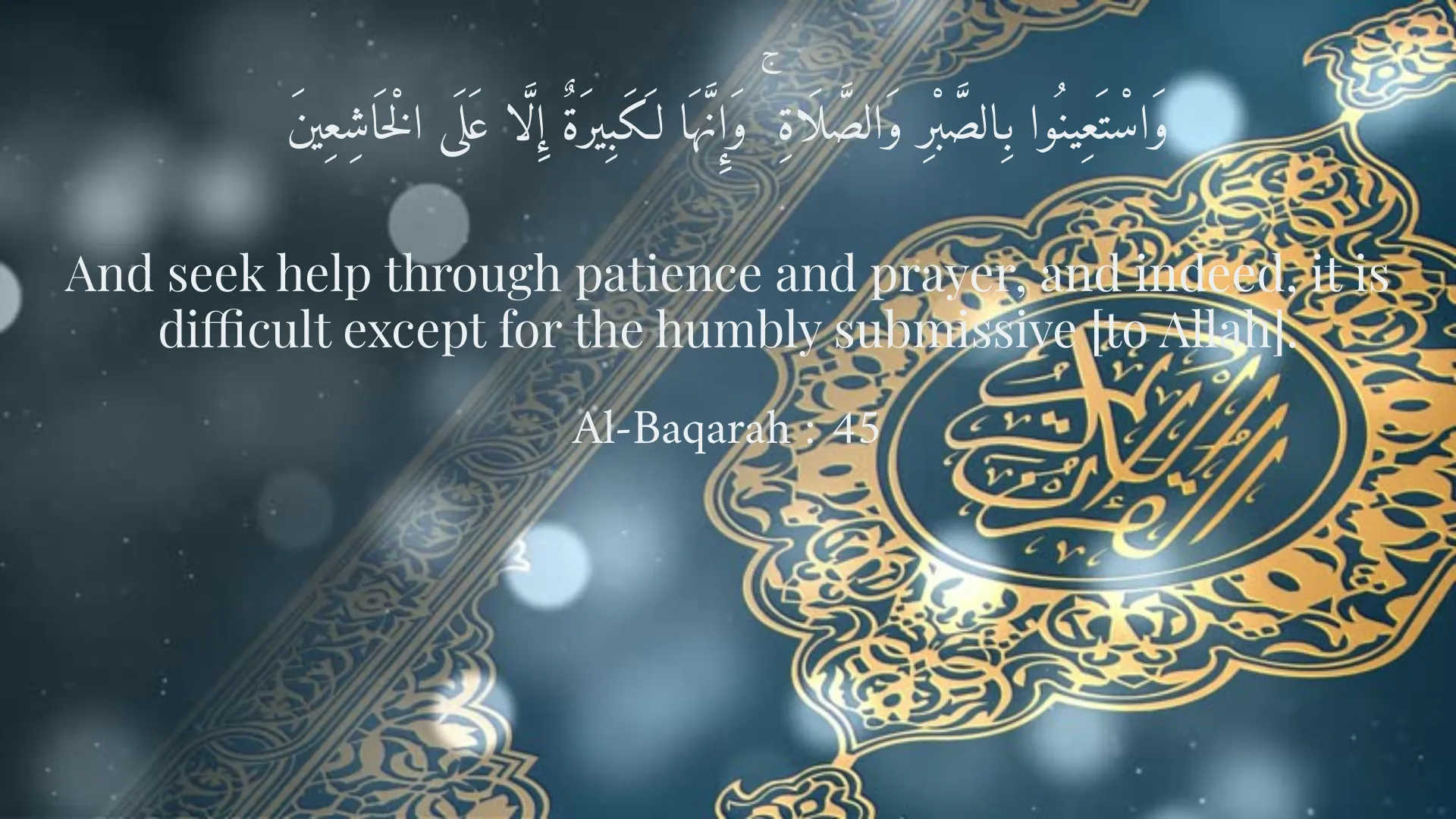
وَاسْتَعِينُوا بِالصَّبْرِ وَالصَّلَاةِ ۚ وَإِنَّهَا لَكَبِيرَةٌ إِلَّا عَلَى الْخَاشِعِينَ
And seek help through patience and prayer, and indeed, it is difficult except for the humbly submissive [to Allah].
Al-Baqarah : 45
فَإِذَا قَرَأْتَ الْقُرْآنَ فَاسْتَعِذْ بِاللَّهِ مِنَ الشَّيْطَانِ الرَّجِيمِ
So when you recite the Qur'an, [first] seek refuge in Allah from Satan, the expelled [from His mercy].
An-Nahl : 98
الَّذِينَ آمَنُوا وَتَطْمَئِنُّ قُلُوبُهُم بِذِكْرِ اللَّهِ ۗ أَلَا بِذِكْرِ اللَّهِ تَطْمَئِنُّ الْقُلُوبُ
Those who have believed and whose hearts are assured by the remembrance of Allah. Unquestionably, by the remembrance of Allah hearts are assured.
Ar-Ra'd : 28
Short Story
They say that in ancient times, there was a man so engrossed in his worldly business that he found no time or inclination for acts of worship. Whenever he intended to pray, his heart felt heavy, and a thousand excuses would come to his mind. One day in the market, he saw a shabbily dressed but pure-hearted sage, who, despite his apparent poverty, had a calm and cheerful face. The businessman became curious and asked: 'O wise one, I see you are always joyful and content, while we, despite our wealth, have hearts full of turmoil and even flee from performing our duties. What is your secret?' The sage smiled and said: 'My secret is that I consider this world a rented house, not personal property. I do not attach my heart to rented things, and I know that the landlord may call me at any moment. When the heart is freed from the chains of the world, acts of worship are no longer burdens, but rather wings for the soul to fly towards the Beloved.' The businessman was transformed by the sage's words, and little by little, he detached his heart from worldly attachments and tasted the sweetness of worship.