Quranic Answer
This profound and thought-provoking question touches upon a common yet often disheartening aspect of human experience: the swift forgetting of good deeds. Understanding this phenomenon from the perspective of the Holy Quran requires deep reflection on the nature of humanity, the true purpose of benevolent actions, and the ultimate source of genuine reward. While the Quran does not contain a direct verse stating "good deeds are forgotten," it articulates concepts that illuminate this phenomenon and offer a comprehensive response. This answer not only addresses the 'why' but also provides Quranic solutions for coping with this reality and preserving the true value of good deeds. One of the primary reasons highlighted by the Quran is the "inherent human flaw of forgetfulness and ingratitude." Humanity is depicted as a being susceptible to immediate circumstances and fleeting emotions, and its memory can operate selectively. The Quran repeatedly mentions that humans are hasty (Surah Al-Isra, verse 11), ungrateful (Surah Ibrahim, verse 34), and tend to forget past blessings and hardships once comfort is attained (Surah Yunus, verse 12; Surah An-Nahl, verses 53-54). This forgetfulness extends not only to divine favors but can also encompass kindness received from others. The human soul often leans towards self-interest, and sometimes, after a need is met or time passes, the good deed that facilitated it may no longer be a mental priority. These psychological traits stem from the weakness of the self, the instability of emotions, and attachment to worldly matters. Due to life's numerous preoccupations, daily pressures, and the tendency to focus on current needs, humans may easily neglect or devalue remembering past kindnesses. This issue is particularly evident in societies where changes are rapid, and values quickly transform. Secondly, a crucial reason lies in the "transient nature of this world and its rewards." The Quran consistently emphasizes that worldly life is fleeting and perishable, whereas what is with Allah is enduring and eternal (Surah An-Nahl, verse 96). When a good deed is performed with the intention of gaining worldly benefits, such as human praise or admiration, there is an expectation that this recognition will last. However, human appreciation, much like the world itself, is transient and subject to change. People might praise you today and forget your kindness tomorrow due to new circumstances, different priorities, or even subtle shifts in relationships. Therefore, if the primary motivation for performing good deeds is to be seen and remembered by others, the likelihood of disappointment and oblivion is very high. The Quran teaches believers to perform their actions sincerely and solely for the pleasure of Allah (Surah Al-Insan, verses 8-9). When an action is performed with such divine intention, its forgetfulness by people does not diminish its essence or its reward, because it is meticulously recorded with the Almighty. This perspective frees a person from attachment to fleeting worldly rewards, granting them lasting peace. Thirdly, a significant point relates to "the lack of sincerity in the benefactor's intention, or the presence of reminders of obligation (mann) and harm." The Quran, in Surah Al-Baqarah, verse 262, clearly states: "Those who spend their wealth in the way of Allah and then do not follow up what they have spent with reminders of obligation or [other] annoyance will have their reward with their Lord, and there will be no fear concerning them, nor will they grieve." This verse indicates that if a benevolent act is accompanied by reminding the recipient of the favor or causing them distress, its spiritual value diminishes, and it can even lead the recipient to disregard or resent it. Sometimes, good deeds are forgotten not because of the recipient's ingratitude, but because of how they were offered or the donor's undue expectations. A person who expects their good deed to be perpetually remembered and praised lacks complete sincerity. Such an expectation can cause discomfort to the recipient and, consequently, lead to the deed not being remembered. This self-serving aspect in intention reduces the value of the action and can also damage the human connection. Fourth, the factor of "changing times and human priorities" plays a role. As time passes, life circumstances and individual needs evolve. What is a pressing need today, and a kindness shown in that context is deeply appreciated, might lose its significance tomorrow, or new needs might replace it. The human mind, by necessity, filters and prioritizes past information to adapt and survive. This natural filtering process sometimes leads to the forgetting of certain good deeds that were highly valuable at a particular moment but are now overshadowed by new priorities. The Quran encourages us to be insightful about the mutable nature of the world and its impermanence, so that we do not become overly attached to it, but instead seek true reward in a more enduring place. From a Quranic perspective, the solution to this dilemma lies in shifting one's focus from worldly rewards to eternal ones. Allah repeatedly affirms in numerous verses that He never allows the good deeds of those who do good to be lost (Surah Al-Kahf, verse 30; Surah Ali Imran, verse 195). This means that even if all of humanity forgets your kindness, Allah will never forget it and will reward you in the most complete way possible. This belief grants immense peace of mind to the doer of good, freeing them from the disappointment caused by human forgetfulness. Therefore, a true believer performs good deeds solely for the pleasure of Allah, knowing that only divine reward is eternal and complete and will never be forgotten. This perspective emancipates the benefactor from dependence on the praise and adoration of creation and guides them towards the Creator, where the true value of every action lies not in the memory of humans, but in the measure of its sincerity and divine acceptance. Ultimately, the phenomenon of forgotten good deeds serves as an opportunity for spiritual growth and elevation. It reminds us that the purpose of performing good should not be to gain fame, expect gratitude, or receive worldly recompense. Instead, it should be done purely for the sake of Allah and with sincere intention. Then, even if people quickly forget our good deeds, we will never incur loss, for our eternal reward is preserved with our compassionate Lord. This is where the value of patience, sincerity, and reliance on Allah becomes evident. A believer knows that every atom of their good deed is recorded in the divine ledger and will be returned to them in the best possible way on the Day of Judgment, without anything being forgotten. This Quranic viewpoint not only answers the question "Why are good deeds quickly forgotten?" but also provides a way to cope with this reality and transform it into a means for spiritual elevation. It teaches us the profound lesson that the true worth of our actions lies in the purity of our intentions, not in the extent of others' remembrance and appreciation. This inner peace and profound contentment are themselves the greatest worldly rewards for the benevolent individual, never diminishing with the forgetfulness of people.
Related Verses
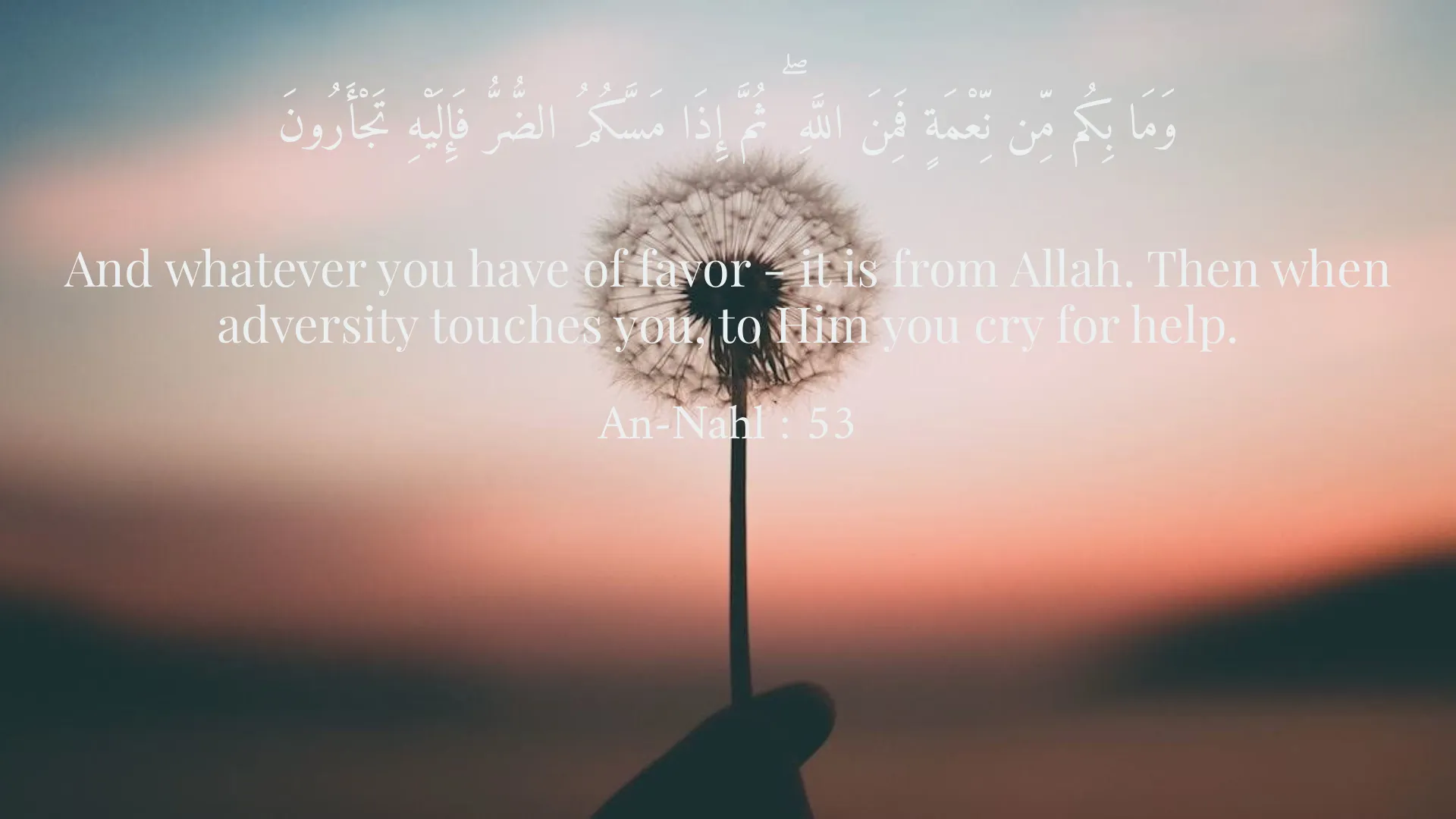
وَمَا بِكُم مِّن نِّعْمَةٍ فَمِنَ اللَّهِ ۖ ثُمَّ إِذَا مَسَّكُمُ الضُّرُّ فَإِلَيْهِ تَجْأَرُونَ
And whatever you have of favor - it is from Allah. Then when adversity touches you, to Him you cry for help.
An-Nahl : 53
ثُمَّ إِذَا كَشَفَ الضُّرَّ عَنكُمْ إِذَا فَرِيقٌ مِّنكُم بِرَبِّهِمْ يُشْرِكُونَ
Then when He removes the adversity from you, at once a party of you associate others with their Lord.
An-Nahl : 54
وَيُطْعِمُونَ الطَّعَامَ عَلَىٰ حُبِّهِ مِسْكِينًا وَيَتِيمًا وَأَسِيرًا
And they give food in spite of love for it to the needy, the orphan, and the captive,
Al-Insan : 8
إِنَّمَا نُطْعِمُكُمْ لِوَجْهِ اللَّهِ لَا نُرِيدُ مِنكُمْ جَزَاءً وَلَا شُكُورًا
[Saying], "We feed you only for the countenance of Allah. We wish not from you reward or gratitude."
Al-Insan : 9
الَّذِينَ يُنْفِقُونَ أَمْوَالَهُمْ فِي سَبِيلِ اللَّهِ ثُمَّ لَا يُتْبِعُونَ مَا أَنْفَقُوا مَنًّا وَلَا أَذًى لَهُمْ أَجْرُهُمْ عِنْدَ رَبِّهِمْ وَلَا خَوْفٌ عَلَيْهِمْ وَلَا هُمْ يَحْزَنُونَ
Those who spend their wealth in the way of Allah and then do not follow up what they have spent with reminders of obligation or [other] annoyance will have their reward with their Lord, and there will be no fear concerning them, nor will they grieve.
Al-Baqarah : 262
Short Story
It is recounted in one of Saadi's tales from the Bustan that there was a just and virtuous king who greatly aided the poor and needy. One day, a courtier remarked to him, "O King, your benevolence is boundless, yet I observe that sometimes, after a while, people fail to appreciate these kindnesses and even forget who helped them." The king smiled and said, "O virtuous one, if our intention in helping was to gain remembrance and praise from people, then we would now be saddened. But we do this for the pleasure of God and the comfort of His servants. The memory of people is like flowing water, it passes quickly, but it is God's remembrance that is recorded in the ledger of eternity and is never forgotten. What is for God is always fresh and enduring, and what is for creation is like dew on a rose petal, quickly vanishing." This saying of the king shows that the true value of good deeds lies not in human memory, but in pure intention and divine reward.