Quranic Answer
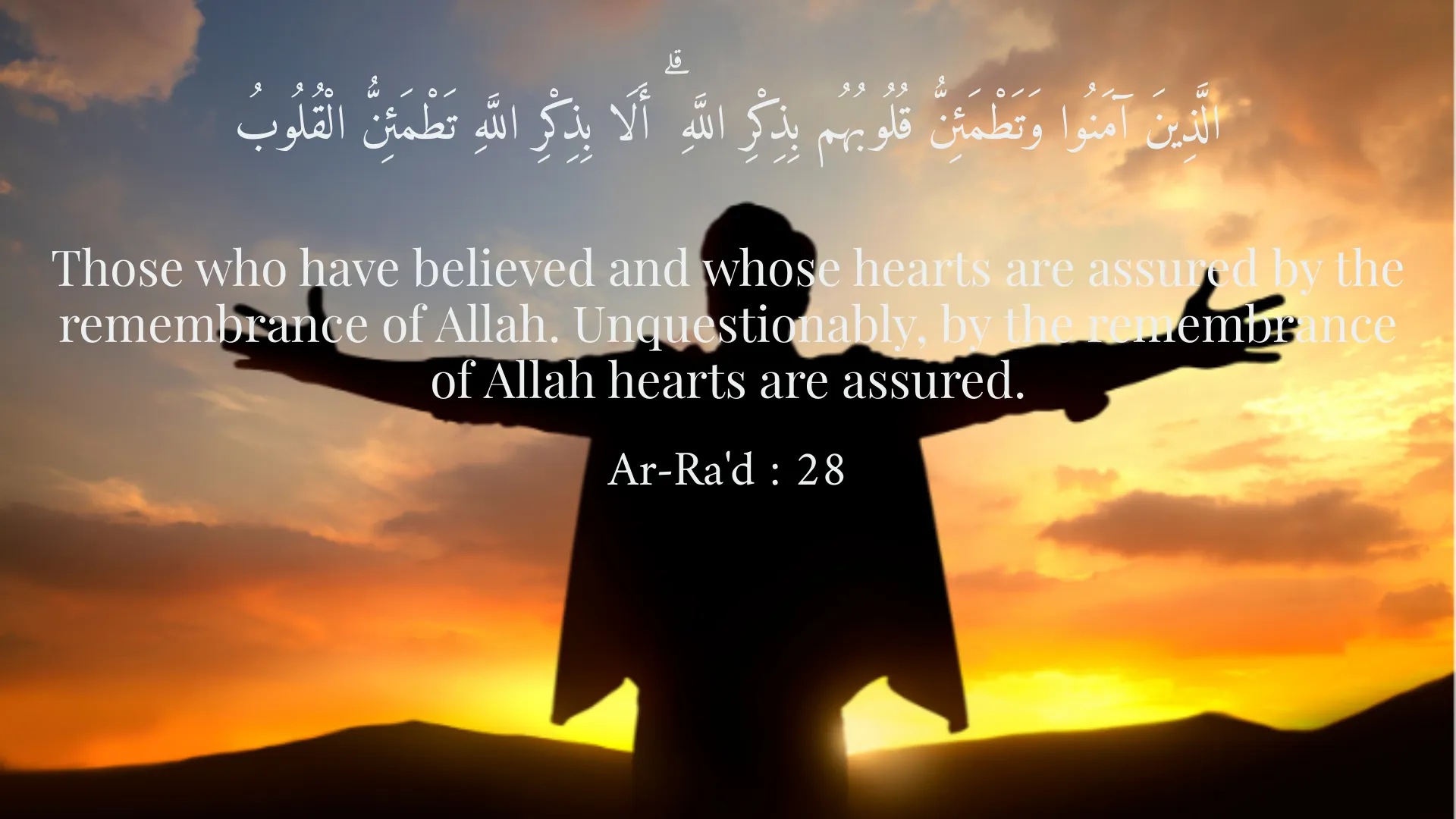
Addressing the question of why some individuals appear calmer despite their lack of religious belief requires a profound understanding of the concept of 'peace' from the perspective of the Holy Quran. At first glance, it might seem that some irreligious people, or those who outwardly seem unburdened by religious obligations, enjoy greater tranquility and ease. They might not have the concerns related to lawful and unlawful matters (halal and haram), sin and reward, or the afterlife, and thus outwardly appear to lead a more carefree life. However, this perceived calmness is often superficial, transient, and heavily dependent on external circumstances and a lack of engagement with existential realities and the consequences of actions. It fundamentally differs from the true, deep peace and tranquility that the Quran speaks of, which has an intrinsic and enduring foundation. The Holy Quran identifies the sole and primary source of true peace and inner tranquility as the 'remembrance of Allah' and faith in Him. This truth forms the cornerstone of understanding peace in the Islamic worldview. In Surah Ar-Ra'd, verse 28, Allah Almighty explicitly and decisively states: "Those who have believed and whose hearts are assured by the remembrance of Allah. Unquestionably, by the remembrance of Allah hearts are assured." This fundamental verse indicates that genuine peace is an inner state, stemming from an unbreakable connection to the eternal source of existence, Allah Almighty. 'Dhikr Allah' (remembrance of Allah) is not merely reciting His names or praising Him; it encompasses contemplation of divine signs, mindfulness of actions, reliance on Him, and living according to His commands. This peace is not lost with the loss of wealth, nor shaken by worldly failures, nor diminished by life's hardships and difficulties. Instead, it is a stable pillar that safeguards the believer's heart against the turmoil and formidable waves of life, endowing them with strength and steadfastness. The apparent calmness observed in some irreligious individuals can stem from various factors, none of which are rooted in the depth of their being or their connection to the Creator. These factors might include: 1. Ignorance and heedlessness of ultimate realities: Some individuals, due to a lack of awareness or deliberate neglect of existential truths, the purpose of creation, the Day of Judgment, accountability, and the consequences of their deeds, may outwardly appear to have no concerns regarding these matters. This heedlessness is akin to a deep, sweet sleep that does not alert the individual to the significant dangers and responsibilities ahead. The Quran refers to such individuals: "They know only the outside of the worldly life, while they are of the Hereafter unmindful." (Ar-Rum: 7). This ignorance of transcendent realities and existential responsibilities can never be considered true peace; rather, it is a form of indifference stemming from a lack of deep understanding. 2. Immersion in worldly pleasures and preoccupations: Some people exclusively pursue the gratification of fleeting worldly desires, such as accumulating wealth, gaining power, or achieving fame. When these pleasures are available and worldly preoccupations fill their minds, they may experience a temporary sense of superficial joy and peace. However, this type of peace is extremely fragile and shallow. With the loss of these pleasures, encountering illness, or facing problems and failures, it quickly gives way to anxiety, despair, emptiness, and even severe depression. This is because their source of peace is external and perishable. 3. Refusal to accept moral and spiritual responsibilities: A religious life necessitates accepting moral responsibilities, respecting the rights of others, self-purification, and striving against one's lower self. Someone who rejects these responsibilities and considers themselves free from moral and religious constraints might, in the short term, feel a sense of freedom and liberation from the burden of obligations. However, this liberation is not true freedom; it is an escape from reality and a disregard for the awakened conscience and divine innate nature (fitra) that will sooner or later manifest itself as pangs of conscience, inner dissatisfaction, and a sense of guilt (even if subconscious). This refusal to accept responsibility ultimately leads to inner and outer chaos, preventing the formation of genuine peace. 4. Temporary contentment with current circumstances and avoidance of deep crises: Some irreligious individuals achieve temporary peace due to their possession of wealth, power, sustained health, or social success, a peace derived from worldly prosperity. This tranquility does not originate from the depth of their being but from the availability of worldly means. When these means disappear, or when a person faces severe illness, poverty, the loss of loved ones, or significant life failures, this superficial peace also vanishes, replaced by despair and anxiety. Without reliance on a higher power and a meaning beyond the worldly, humanity remains defenseless and alone in the face of great calamities. In contrast, the believer's inner peace is rooted in their certainty in Allah Almighty, His infinite justice, His eternal wisdom, and His flawless management of all affairs in the universe. The believer knows that all events in the world are in God's hands and that He desires the true good and welfare of His servants. Even amidst hardships and tribulations, the believer's heart finds peace in the remembrance of Allah, for they know that these are tests for their growth and elevation, and that after every difficulty comes ease, and after every bitterness, sweetness. This type of peace is 'Sakina,' often mentioned in the Quran, which Allah sends down upon the hearts of believers (e.g., Surah Al-Fath: verse 4): "It is He who sent down tranquility into the hearts of the believers that they might add faith to their faith." This Sakina is a divine gift and an inner strength that grants a person immense power to stand firm against any storm without flinching or having their faith waver. This profound peace stems from contentment with divine decree, submission to His will, and absolute reliance on His pure essence. However, the Quran issues a serious warning to those who turn away from the remembrance of Allah and distance themselves from the source of true peace. In Surah Taha, verse 124, we read: "And whoever turns away from My remembrance - indeed, he will have a difficult life, and We will gather him on the Day of Resurrection blind." The phrase 'ma'ishatan dhanka' signifies a difficult, constricted, limited, and arduous life. This difficulty is not necessarily material poverty or external problems but can encompass spiritual constriction, constant anxiety, emptiness, inner dissatisfaction, a sense of meaninglessness, and a lack of transcendent purpose in life, even if the person is materially very rich and socially very successful. Anyone who does not recognize a higher purpose for their life and does not establish a deep and enduring connection with their Creator is constantly immersed in a whirlpool of meaninglessness, agitation, and inner confusion. They may appear calm outwardly, but their inner self is subject to storms and concerns that cannot be overcome without relying on a spiritual and transcendental power. Therefore, the peace observed in some irreligious individuals is often a form of indifference to profound existential truths, or an immersion in fleeting pleasures and worldly preoccupations. This peace is fragile, unstable, and devoid of depth, shattering in the face of the slightest adversities, illnesses, or the death of loved ones. In contrast, the believer's peace is rooted in strong faith, boundless reliance (tawakkul), patience in the face of trials, and complete contentment with divine decree. This peace is a deep, stable, and genuine tranquility that keeps the heart firm and secure even in the most difficult circumstances, enabling them to live with meaning and purpose. In essence, the question posed is a perceptual error; true and eternal peace does not come through any path other than faith in God and His constant remembrance. The Quran clearly states that the only way to achieve inner tranquility and true well-being is through the remembrance of Allah and faith in Him. Human life without this vital connection ultimately leads to emptiness and inner anxiety, even if outward signs of peace are observed for a period, which in reality is not peace but heedlessness of the truth and a failure to confront the deeper dimensions of existence. True peace begins with faith and is strengthened by constant remembrance of the Lord and righteous deeds, and only on this path can one attain a Sakina that no worldly thing can destroy. This peace is the sweet fruit of submission, contentment, and reliance on divine command, a fruit that ripens only in the garden of faith and whose roots are deeply embedded in the human soul.
Related Verses
الَّذِينَ آمَنُوا وَتَطْمَئِنُّ قُلُوبُهُم بِذِكْرِ اللَّهِ ۗ أَلَا بِذِكْرِ اللَّهِ تَطْمَئِنُّ الْقُلُوبُ
Those who have believed and whose hearts are assured by the remembrance of Allah. Unquestionably, by the remembrance of Allah hearts are assured.
Ar-Ra'd : 28
وَمَنْ أَعْرَضَ عَن ذِكْرِي فَإِنَّ لَهُ مَعِيشَةً ضَنكًا وَنَحْشُرُهُ يَوْمَ الْقِيَامَةِ أَعْمَىٰ
But whoever turns away from My remembrance - indeed, he will have a difficult life, and We will gather him on the Day of Resurrection blind.
Taha : 124
هُوَ الَّذِي أَنزَلَ السَّكِينَةَ فِي قُلُوبِ الْمُؤْمِنِينَ لِيَزْدَادُوا إِيمَانًا مَّعَ إِيمَانِهِمْ ۗ وَلِلَّهِ جُنُودُ السَّمَاوَاتِ وَالْأَرْضِ ۚ وَكَانَ اللَّهُ عَلِيمًا حَكِيمًا
It is He who sent down tranquility into the hearts of the believers that they might add faith to their faith; and to Allah belong the forces of the heavens and the earth, and Allah is Ever All-Knower, All-Wise.
Al-Fath : 4
Short Story
Once, a king, a wealthy and seemingly joyous man, was always immersed in revelry and indulgence. In the same city, there lived a humble dervish who, though devoid of worldly possessions, carried a serene face and a perpetual smile. One day, the king, despite all his pomp and power, who often tossed and turned restlessly at night, saw the dervish and asked in wonder: "O Dervish, I see that you have neither wealth nor status, yet you are always calm and content. How is it that I, with all this fortune and might, cannot sleep peacefully at night, while you rest soundly?" The dervish replied with a warm smile: "O King, our ease and unease are of a different kind. Your worries stem from what you possess and fear losing, and what you desire but cannot attain. But my peace comes from possessing nothing that can cause me sorrow by its loss, and my only wish is union with the Eternal Truth. My heart finds rest in the remembrance of the Creator, while your heart is burdened by a thousand concerns of creation and worldly attachments." Although the king initially did not fully grasp the dervish's words, upon hearing them, he fell into thought, realizing that outward calm does not necessarily equate to true inner peace.