Quranic Answer
The feeling of dissatisfaction despite extensive efforts is a common human experience that many encounter on their life's journey. In today's world, many of us are raised with the belief that success, wealth, status, and material achievements are the keys to inner happiness and contentment. From childhood, we are taught to strive for specific goals, climb the ladder of progress, accumulate wealth, and achieve fame and recognition at all costs. However, the reality often hits when, even after reaching many of these objectives, we find ourselves facing a deeper void and a more unsettling sense of dissatisfaction. This paradox – the relentless pursuit of what we believe to be happiness, only to find it elusive – has deep roots in our perception of life and the world, a perception that the Holy Quran beautifully addresses. The Holy Quran, this divine book of guidance, teaches us that true satisfaction is an internal, heartfelt matter that originates from a connection to the source of all existence, Allah Almighty, and not from the accumulation of material possessions or external validation. In Surah Ar-Ra'd, verse 28, Allah states: “الَّذِينَ آمَنُوا وَتَطْمَئِنُّ قُلُوبُهُم بِذِكْرِ اللَّهِ ۗ أَلَا بِذِكْرِ اللَّهِ تَطْمَئِنُّ الْقُلُوبُ”; which translates to: “Those who have believed and whose hearts are assured by the remembrance of Allah. Unquestionably, by the remembrance of Allah hearts are assured.” This verse reveals a fundamental truth: genuine peace and contentment are contingent upon a heartfelt connection with Allah and constant remembrance of Him. This remembrance is not merely verbal invocation; rather, it encompasses mindfulness, contemplation of divine signs, acting upon His commands, and relying on Him in all aspects of life. When an individual neglects this primary source of tranquility, no matter how much they advance in material pursuits, they will continue to experience a sense of emptiness and dissatisfaction. The human heart, by its very nature, yearns for something infinite and eternal. Worldly gains are finite and temporary; thus, they can never truly fill the boundless spiritual void. The material world, with all its glitter and allure, is described in the Quran as fleeting and transient. In Surah Al-Hadid, verse 20, Allah Almighty describes the reality of worldly life: “اعْلَمُوا أَنَّمَا الْحَيَاةُ الدُّنْيَا لَعِبٌ وَلَهْوٌ وَزِينَةٌ وَتَفَاخُرٌ بَيْنَكُمْ وَتَكَاثُرٌ فِي الْأَمْوَالِ وَالْأَوْلَادِ ۖ كَمَثَلِ غَيْثٍ أَعْجَبَ الْكُفَّارَ نَبَاتُهُ ثُمَّ يَهِيجُ فَتَرَاهُ مُصْفَرًّا ثُمَّ يَكُونُ حُطَامًا ۖ وَفِي الْآخِرَةِ عَذَابٌ شَدِيدٌ وَمَغْفِرَةٌ مِّنَ اللَّهِ وَرِضْوَانٌ ۗ وَمَا الْحَيَاةُ الدُّنْيَا إِلَّا مَتَاعُ الْغُرُورِ”; meaning: “Know that the life of this world is only play and amusement, an adornment and boasting among yourselves, and competition in increase of wealth and children - like the example of a rain whose [resulting] plant growth pleases the tillers; then it dries and you see it [become] yellow; then it becomes [scattered] debris. And in the Hereafter is severe punishment and forgiveness from Allah and approval. And what is the worldly life except the enjoyment of delusion.” This verse clearly illustrates that a sole focus on wealth, offspring, and worldly beauties is like a mirage that never quenches thirst. What endures are righteous deeds and divine pleasure. When a person makes these fleeting worldly gains their ultimate goal, it is natural for them to reach a dead end of dissatisfaction, either upon their completion or even at their peak. The Quran emphasizes that these are merely embellishments, temporary delights, and not the true essence of life or the source of ultimate joy. Another Quranic reason for the feeling of dissatisfaction is the neglect of gratitude (shukr). In Surah Ibrahim, verse 7, Allah says: “وَإِذْ تَأَذَّنَ رَبُّكُمْ لَئِن شَكَرْتُمْ لَأَزِيدَنَّكُمْ ۖ وَلَئِن كَفَرْتُمْ إِنَّ عَذَابِي لَشَدِيدٌ”; meaning: “And [remember] when your Lord proclaimed, ‘If you are grateful, I will surely increase you [in favor]; but if you deny, indeed, My punishment is severe.’” Gratitude not only leads to an increase in blessings but also shifts one's perspective from focusing on what is lacking to appreciating divine bounties. An ungrateful person constantly thinks about what they don't have and strives to acquire it, consequently never feeling sufficient or content. Conversely, gratitude for everything we possess, even the smallest things, fills the heart with blessings and satisfaction. This does not mean ceasing efforts to improve life, but rather having inner contentment with divine decree and striving within the framework of His pleasure. Gratitude redirects the heart's focus from what is absent to what is present, fostering a sense of abundance and well-being. The Quran also teaches humanity that the purpose of human creation is the worship of Allah. In Surah Adh-Dhariyat, verse 56, it states: “وَمَا خَلَقْتُ الْجِنَّ وَالْإِنسَ إِلَّا لِيَعْبُدُونِ”; meaning: “And I did not create the jinn and mankind except to worship Me.” Worshipping Allah is not merely performing religious rituals; it encompasses living according to divine values and principles. When a person deviates from this primary objective and dedicates all their energy to worldly goals, it is as if they have strayed from their true path, and this deviation manifests as a feeling of emptiness and dissatisfaction. This worship includes Tawakkul (complete reliance on divine will), Sabr (patience in the face of difficulties and calamities), and Qana'ah (contentment with what is available and striving for what is lawful and legitimate). A person with true Tawakkul understands that their efforts are merely means and that the ultimate outcome rests with Allah; thus, they do not despair in the event of apparent failure. They find peace in knowing that their role is to strive, and the outcome is in the hands of the All-Wise. To achieve lasting satisfaction and overcome this unpleasant feeling, the Quran provides practical guidance. The first step is to return to the remembrance of Allah and strengthen one's spiritual connection. This includes regular prayer (Salat), thoughtful recitation of the Quran, Dhikr (remembrance of Allah's names and attributes), supplication (Dua), and contemplation of divine creation. These practices serve as spiritual nourishment, grounding the soul and connecting it to its divine source. Secondly, there must be a shift in perspective regarding this world and the Hereafter. While striving in this world for lawful provision and a dignified life is affirmed, the ultimate goal must be the Hereafter. In Surah Al-Qasas, verse 77, Allah states: “وَابْتَغِ فِيمَا آتَاكَ اللَّهُ الدَّارَ الْآخِرَةَ وَلَا تَنسَ نَصِيبَكَ مِنَ الدُّنْيَا ۖ وَأَحْسِن كَمَا أَحْسَنَ اللَّهُ إِلَيْكَ ۖ وَلَا تَبْغِ الْفَسَادَ فِي الْأَرْضِ ۖ إِنَّ اللَّهَ لَا يُحِبُّ الْمُفْسِدِينَ”; meaning: “But seek, through that which Allah has given you, the home of the Hereafter; and [yet], do not forget your share of the world; and do good as Allah has done good to you; and desire not corruption in the land. Indeed, Allah does not like corrupters.” This verse beautifully outlines the balance between this world and the Hereafter. One should utilize this world as a means to attain the Hereafter, rather than making this world the ultimate aim. Thirdly, cultivating gratitude in daily life is crucial. Fourthly, practicing contentment (Qana'ah) and reliance (Tawakkul) is essential. Qana'ah does not mean giving up effort; it means inner contentment with what one possesses and being free from greed and covetousness for what one lacks. Tawakkul, similarly, means entrusting one's affairs to Allah after exerting all possible efforts. Ultimately, true satisfaction is the sweet fruit of this Quranic insight that views life not as an arena for competition and accumulation, but as an opportunity for spiritual growth, service to creation, and drawing closer to Allah. This paradigm shift liberates an individual from the endless cycle of wanting and not attaining, leading them into an ocean of eternal peace and contentment, allowing them to experience inner tranquility even amidst challenges.
Related Verses
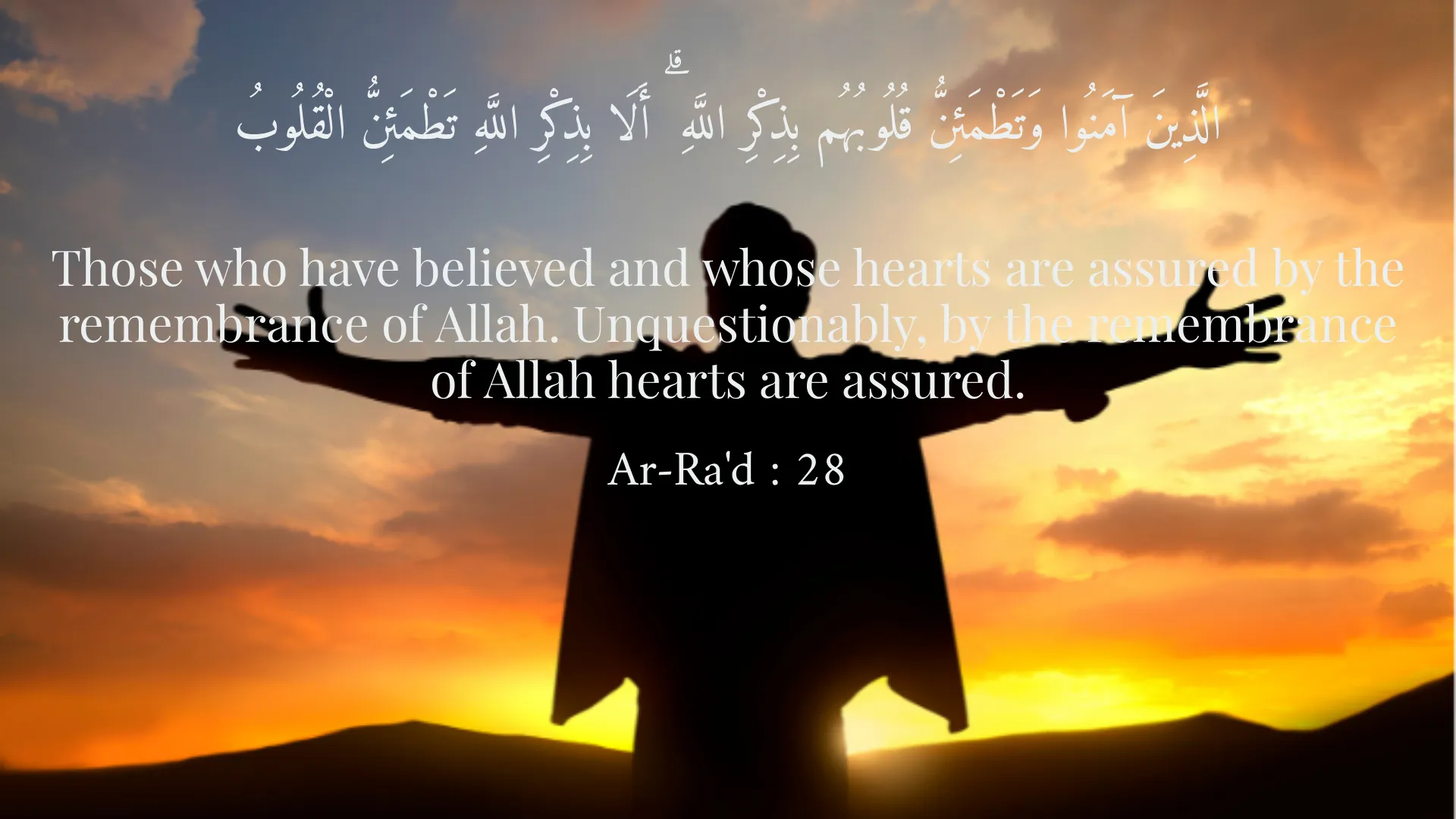
الَّذِينَ آمَنُوا وَتَطْمَئِنُّ قُلُوبُهُم بِذِكْرِ اللَّهِ ۗ أَلَا بِذِكْرِ اللَّهِ تَطْمَئِنُّ الْقُلُوبُ
Those who have believed and whose hearts are assured by the remembrance of Allah. Unquestionably, by the remembrance of Allah hearts are assured.
Ar-Ra'd : 28
اعْلَمُوا أَنَّمَا الْحَيَاةُ الدُّنْيَا لَعِبٌ وَلَهْوٌ وَزِينَةٌ وَتَفَاخُرٌ بَيْنَكُمْ وَتَكَاثُرٌ فِي الْأَمْوَالِ وَالْأَوْلَادِ ۖ كَمَثَلِ غَيْثٍ أَعْجَبَ الْكُفَّارَ نَبَاتُهُ ثُمَّ يَهِيجُ فَتَرَاهُ مُصْفَرًّا ثُمَّ يَكُونُ حُطَامًا ۖ وَفِي الْآخِرَةِ عَذَابٌ شَدِيدٌ وَمَغْفِرَةٌ مِّنَ اللَّهِ وَرِضْوَانٌ ۗ وَمَا الْحَيَاةُ الدُّنْيَا إِلَّا مَتَاعُ الْغُرُورِ
Know that the life of this world is only play and amusement, an adornment and boasting among yourselves, and competition in increase of wealth and children - like the example of a rain whose [resulting] plant growth pleases the tillers; then it dries and you see it [become] yellow; then it becomes [scattered] debris. And in the Hereafter is severe punishment and forgiveness from Allah and approval. And what is the worldly life except the enjoyment of delusion.
Al-Hadid : 20
وَمَا خَلَقْتُ الْجِنَّ وَالْإِنسَ إِلَّا لِيَعْبُدُونِ
And I did not create the jinn and mankind except to worship Me.
Adh-Dhariyat : 56
وَإِذْ تَأَذَّنَ رَبُّكُمْ لَئِن شَكَرْتُمْ لَأَزِيدَنَّكُمْ ۖ وَلَئِن كَفَرْتُمْ إِنَّ عَذَابِي لَشَدِيدٌ
And [remember] when your Lord proclaimed, 'If you are grateful, I will surely increase you [in favor]; but if you deny, indeed, My punishment is severe.'
Ibrahim : 7
وَابْتَغِ فِيمَا آتَاكَ اللَّهُ الدَّارَ الْآخِرَةَ وَلَا تَنسَ نَصِيبَكَ مِنَ الدُّنْيَا ۖ وَأَحْسِن كَمَا أَحْسَنَ اللَّهُ إِلَيْكَ ۖ وَلَا تَبْغِ الْفَسَادَ فِي الْأَرْضِ ۖ إِنَّ اللَّهَ لَا يُحِبُّ الْمُفْسِدِينَ
But seek, through that which Allah has given you, the home of the Hereafter; and [yet], do not forget your share of the world; and do good as Allah has done good to you; and desire not corruption in the land. Indeed, Allah does not like corrupters.
Al-Qasas : 77
Short Story
In Saadi's "Golestan," there is a tale of a wealthy man who was perpetually striving to accumulate more wealth and possessions. He owned vast lands, countless servants, and immeasurable treasures, yet he was constantly restless and preoccupied with his worldly affairs. One day, he encountered a dervish sitting peacefully under a tree, possessing only a worn cloak and an empty bowl, yet singing praises to God. The wealthy man, astonished by the dervish's contentment, inquired, "How can you be so content with so little, while I, with all my riches, find no peace?" The dervish replied with a gentle smile, "My dear friend, my heart is free from the burden of guarding possessions, and my soul is at peace with what Allah has provided. Your wealth has become a heavy load that burdens your heart; for the more you acquire, the more you fear losing it, and the more you desire what you do not yet possess. True satisfaction lies not in possessing much, but in desiring little and finding sufficiency in what is granted by the Divine." The wealthy man pondered the dervish's words and realized that his tireless efforts had only led to greater worry, not increased joy. From that day forward, he began to simplify his life and sought contentment in gratitude and spiritual tranquility rather than in endless accumulation.