Quranic Answer
Losing hope is a profoundly human experience that almost everyone encounters at various points in their lives. This feeling of despair and hopelessness can stem from various factors, but the Holy Quran, as divine revelation, profoundly and wisely explains the root causes of this phenomenon and offers solutions to combat it. From a Quranic perspective, despair is not merely a psychological weakness; it is also a form of sin and a misapprehension of God's boundless power and mercy. Fundamentally, despairing of divine mercy is considered a major sin, as faith in God and His absolute power necessitates that we never lose hope in His provision and grace. One of the primary reasons humans lose hope is related to their perspective and relationship with this world and the afterlife. When a person places all their reliance on material possessions, worldly successes, human relationships, or social status, they fall into a deep void of despair and hopelessness upon losing any of these. The Holy Quran repeatedly emphasizes that worldly life is fleeting and perishable, and one should not attach their heart to it. When humans define their goals and aspirations solely within the limited framework of this world, worldly failures and adversities can easily drag them into the abyss of despair. In contrast, one who understands that this world is a passage to the hereafter, and the ultimate goal is to attain divine pleasure and eternal felicity, will never entirely lose hope upon losing worldly matters. Instead, they will view the future with a broader perspective and deeper reliance on God. Another factor is the weakness of faith and a misunderstanding of divine will. The Quran teaches that every hardship and ease in life comes from God and is part of a divine test. 'And We will surely test you with something of fear and hunger and a loss of wealth and lives and fruits, but give good tidings to the patient.' (Al-Baqarah, 2:155). Humans, when facing problems, sometimes fail to see the hidden wisdom behind them and assume they have been abandoned. Yet, Allah (SWT) has repeatedly emphasized in numerous verses that He never abandons His servants and that ease follows every hardship: 'For indeed, with hardship [will be] ease. Indeed, with hardship [will be] ease.' (Al-Inshirah, 94:5-6). A weak belief that God is benevolent and absolutely wise, and that all trials are for human growth and elevation, can lead to despair. Strong faith in divine decree and acceptance that 'everything is in God's hands' and He desires the best for His servants, serves as a strong shield against hopelessness. Furthermore, satanic whispers play a significant role in weakening morale and instilling despair. Satan constantly strives to divert humans from the righteous path and make them despair of divine mercy. He tries to eliminate human hope by exaggerating problems, instilling negative thoughts, and recalling past mistakes and sins. In Surah Yusuf, verse 87, we read: 'And do not despair of the mercy of Allah. Indeed, no one despairs of the mercy of Allah except the disbelieving people.' This verse clearly states that only disbelievers despair of God's mercy, indicating that despair is contrary to faith. Therefore, combating despair is essentially battling satanic whispers and strengthening one's faith. The Quranic solution for combating despair is summarized in several fundamental axes: First, strengthening 'Tawakkul' (complete reliance on God). Humans must know that their sustainer, problem-solver, and primary supporter is God. Second, perseverance and patience in the face of difficulties. The Holy Quran repeatedly calls believers to patience and promises that God is with the patient: 'O you who have believed, seek help through patience and prayer. Indeed, Allah is with the patient.' (Al-Baqarah, 2:153). Patience means not only enduring hardships but also steadfastness and not losing hope on the path of noble goals, awaiting divine relief. Third, repentance and returning to God. In Surah Az-Zumar, verse 53, the Quran states: 'Say, 'O My servants who have transgressed against themselves [by sinning], do not despair of the mercy of Allah. Indeed, Allah forgives all sins. Indeed, it is He who is the Forgiving, the Merciful.'' This verse opens the door of hope even for the most sinful humans, showing that no sin is too great for Allah's mercy to encompass. Fourth, gratitude and focusing on existing blessings. When a person focuses on problems, they forget the countless blessings around them. The Holy Quran invites humans to gratitude by reminding them of blessings, thereby shifting their perspective from deficiencies to abundance and strengthening a hopeful spirit. Ultimately, hope, according to the Quran, is rooted in faith in God's essence, His power, His wisdom, and His limitless mercy and forgiveness. Whenever humans become heedless of this truth, they fall into despair. The way to overcome it is to return to these roots, strengthen the connection with God through prayer, supplication, repentance, and reflection on divine verses, as well as adherence to patience and gratitude. These are all tools that God has provided to cope with challenges and maintain hope in the human heart.
Related Verses
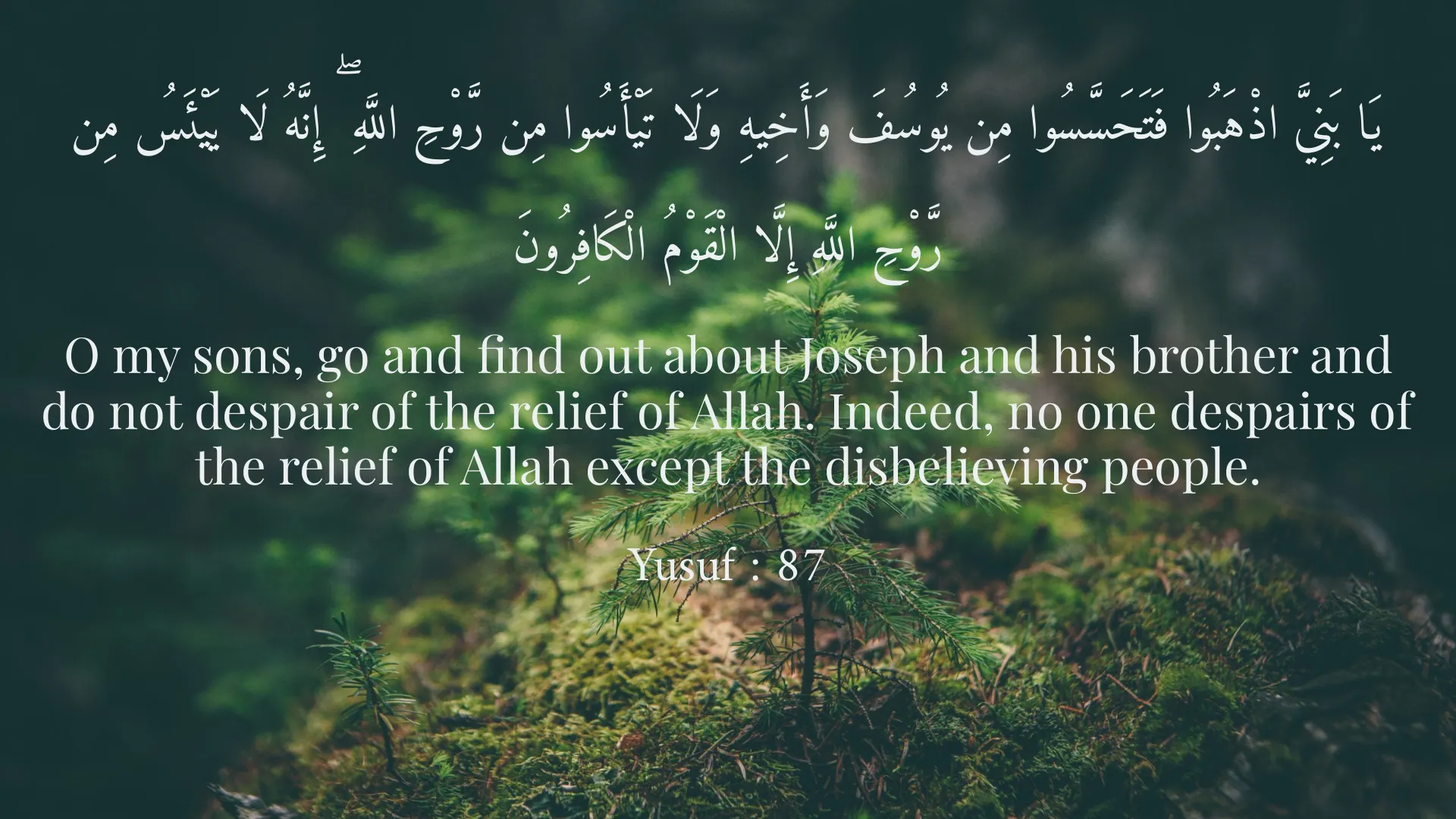
يَا بَنِيَّ اذْهَبُوا فَتَحَسَّسُوا مِن يُوسُفَ وَأَخِيهِ وَلَا تَيْأَسُوا مِن رَّوْحِ اللَّهِ ۖ إِنَّهُ لَا يَيْئَسُ مِن رَّوْحِ اللَّهِ إِلَّا الْقَوْمُ الْكَافِرُونَ
O my sons, go and find out about Joseph and his brother and do not despair of the relief of Allah. Indeed, no one despairs of the relief of Allah except the disbelieving people.
Yusuf : 87
قُلْ يَا عِبَادِيَ الَّذِينَ أَسْرَفُوا عَلَىٰ أَنفُسِهِمْ لَا تَقْنَطُوا مِن رَّحْمَةِ اللَّهِ ۚ إِنَّ اللَّهَ يَغْفِرُ الذُّنُوبَ جَمِيعًا ۚ إِنَّهُ هُوَ الْغَفُورُ الرَّحِيمُ
Say, 'O My servants who have transgressed against themselves [by sinning], do not despair of the mercy of Allah. Indeed, Allah forgives all sins. Indeed, it is He who is the Forgiving, the Merciful.'
Az-Zumar : 53
فَإِنَّ مَعَ الْعُسْرِ يُسْرًا
For indeed, with hardship [will be] ease.
Al-Inshirah : 5
إِنَّ مَعَ الْعُسْرِ يُسْرًا
Indeed, with hardship [will be] ease.
Al-Inshirah : 6
Short Story
It is narrated in Saadi's Golestan that a king asked a man: "Why, despite all the hardships you have seen in your life, do you never get weary or despair?" The man replied: "In my youth, I embarked on a sea journey. Suddenly, our ship was caught in a fierce storm, and it seemed we would drown. All passengers were terrified and screaming, except me, who was looking at the waves with anger and despair. A wise old man on the ship told me: 'O young man, are you afraid of the ocean's might? Remember that the greater the wave, the greater is the power of Him who commands the waves.' Those words were like water to the fire of my heart. I understood that despair does not come from one's own weakness, but from forgetting the power of Him who is capable of all that is in the heavens and the earth. From that day, whenever a wave of hardship hits my life, instead of seeing the wave, I see the commanding power, and I remain hopeful." This story reminds us that despair often stems from forgetting reliance on the absolute divine power, and by remembering it, hope returns.