Quranic Answer
Feeling a sense of lack or insufficiency, even when one is at the pinnacle of blessings and material prosperity, is a puzzling phenomenon, yet deeply rooted in the human condition and extensively addressed in Quranic teachings. The Holy Quran, as the guiding scripture, beautifully and eloquently unveils the reasons behind this feeling and offers practical solutions to overcome it. This paradoxical sensation – having everything yet feeling as if something is missing – is a profound indicator that human needs extend far beyond mere material possessions. Deeper layers of one's being yearn for spiritual nourishment and true tranquility. It suggests that while the body and physical life might be well-provided for, the soul, the core of our existence, remains unfulfilled, seeking something eternal and boundless. This situation, with which many people in the modern era struggle, clearly demonstrates that external prosperity does not necessarily bring internal peace, and true happiness has a definition far beyond the accumulation of assets. One of the most fundamental reasons highlighted by the Quran is the forgetfulness of the Creator and heedlessness of His remembrance. Human beings are inherently inclined towards absolute perfection, and it is only through connection with the infinite source of all blessings and perfections, Almighty Allah, that they can experience true peace and contentment. When this connection weakens, even if the entire world were in their hands, a vast void would emerge within them. Allah states in Surah Ibrahim, verse 7: "Lain shakartum la'azeedannakum wa lain kafartum inna 'adhābi lashadeed" (If you are grateful, I will surely increase you [in favor]; but if you deny, indeed, My punishment is severe). This verse speaks not only of an increase in material blessings but also, crucially, of an increase in inner peace and spiritual satisfaction. Ingratitude (kufr al-ni'mah), here understood as neglecting to appreciate blessings and their divine source, not only leads to a reduction in material blessings but also results in the deprivation of spiritual tranquility and a persistent feeling of inadequacy. An individual whose gaze is constantly fixed on the possessions of others, or who perpetually seeks "more," is, in essence, ungrateful, failing to truly enjoy the blessings already at their disposal. This heedlessness can manifest as excessive attachment to worldly life, forgetting the ultimate purpose of creation, and neglecting both verbal and heartfelt gratitude. The feeling of lack, in essence, is the cry of human nature, calling for a meaning beyond the material. It stems from the fact that a human being is not merely a physical entity; they possess a soul that requires spiritual sustenance, and if this need is not met, even being submerged in the utmost luxury cannot fill that void. It's akin to a flower in a pot of rich soil but deprived of sunlight and sufficient water; no matter how good the soil, it will wither. This spiritual hunger cannot be satiated by wealth, power, or fame; it demands a deeper, more profound connection to the Divine. Another reason is the excessive focus on worldly life and the oblivion of the Hereafter. The Holy Quran explicitly states that worldly life is fleeting and deceptive, and the ultimate goal of believers should be to attain eternal felicity in the Hereafter. When an individual dedicates all their efforts and concerns to accumulating wealth and fleeting worldly pleasures, they inevitably reach a point of emptiness and a sense of deficiency. Surah Al-A'la, verses 16 and 17, state: "Bal tu'thiroona al-hayata ad-dunya (16) Wal Akhiratu khayrun wa abqa (17)" (But you prefer the worldly life, while the Hereafter is better and more enduring). These verses remind us that humans are intrinsically drawn to permanence and eternity. When they become attached to transient and ephemeral worldly matters, this deep inner need remains unfulfilled, resulting in a feeling of incompleteness and inadequacy. Material wealth, status, and power, though seemingly blessings, if made the sole aim of life, construct mental prisons that enslave the soul and prevent its ascent towards perfection. This does not mean that one should not enjoy lawful worldly blessings; rather, it means that one should not make the world the ultimate and absolute goal of their life. When a person's perspective is limited to worldly horizons, they will always find new things to "have" and will never achieve true satisfaction, because the nature of the world is insatiable, and carnal desires are endless. A person engrossed in materialism is like someone drinking salty water; the more they drink, the thirstier they become. This endless cycle of "wanting" is what plants the seed of inadequacy in the human heart, leading to a constant chase for something always just out of reach. Furthermore, the testing nature of this world and inherent human disposition play a significant role. The Quran describes this world as a place of trial. Even blessings and possessions are divine tests. Surah At-Taghabun, verse 15, states: "Innama amwalukum wa awladukum fitnah; wallahu 'indahu ajrun 'adheem" (Indeed, your wealth and your children are but a trial; and with Allah is a great reward). This verse indicates that blessings are given to test the extent of human gratitude and steadfastness on the path of truth, not for complete and unconditional satisfaction. Moreover, humanity is created with an impatient and greedy nature, except for those who turn to Allah. Surah Al-Ma'arij, verses 19-21, elucidates: "Inna al-insana khuliqa haloo'a (19) Idha massahu ash-sharru jazoo'a (20) Wa idha massahu al-khayru manoo'a (21)" (Indeed, mankind was created anxious: when evil touches him, impatient; and when good touches him, withholding [of it]). These inherent traits cause individuals, even at the peak of blessings, to worry more about losing what they have or to envy what they lack, rather than expressing gratitude and contentment. They are always seeking more and are not content with what they possess. This insatiable greed and covetousness are deeply rooted in the feeling of inadequacy, and until an individual can overcome this trait with divine assistance, they will never achieve true peace and inner tranquility. The sense of lack can also stem from comparing oneself to others, holding unrealistic expectations, or losing sight of the true purpose of life. Without a clear purpose and a strong spiritual foundation, material gains feel hollow and unsatisfying, akin to trying to fill a bottomless pit. Quranic Solutions to Overcome This Feeling: The Quran provides practical and spiritual solutions to alleviate this feeling: 1. Practical and Heartfelt Gratitude (Shukr): Not merely verbal, but by correctly using blessings in the way of Allah and helping others. Gratitude opens the doors of blessings and strengthens the feeling of inner richness and self-sufficiency. The more we express gratitude, the more we truly feel that we "have," and this genuine sense of "having," rather than "lack," takes root in our hearts. It shifts our perspective from what is missing to what is present, fostering a profound sense of abundance. 2. Remembrance of Allah (Dhikr): True peace lies in the remembrance of Allah. "Ala bidhikri Allahi tatma'innu al-quloob" (Unquestionably, by the remembrance of Allah hearts are assured tranquility) (Surah Ar-Ra'd: 28). This tranquility fills internal voids and brings about a sense of detachment from worldly desires. Dhikr is not just recitation; it includes pondering over divine verses, prayer, supplication, and any act that brings a person closer to Allah. This continuous connection nourishes the soul, providing a stability that no worldly possession can offer. 3. Contentment (Qana'ah) and Satisfaction: Understanding that the world is temporary and what is with Allah is lasting and better. Contentment does not mean abandoning efforts to improve one's life but rather being satisfied with what Allah has provided and avoiding greed and covetousness. This approach helps an individual to enjoy what they possess rather than constantly yearning for what they do not. It’s about appreciating the journey and the blessings along the way, rather than fixating solely on the destination or material accumulation. 4. Giving and Helping the Needy (Infaq): Spending from what Allah has bestowed upon an individual not only increases material blessings but also brings deep spiritual peace. Helping others shifts one's focus from self-centeredness to altruism, which is itself a source of joy and contentment. The act of giving purifies wealth and the soul, making one feel truly wealthy in spirit and connected to the broader community. 5. Pondering on Blessings and Divine Signs: Reflecting on the grandeur of creation and the countless blessings that surround humanity helps to shift one's perspective from "lack" to "abundance." This contemplation strengthens gratitude and frees an individual from material preoccupations. It allows one to see the vastness of Allah's generosity and feel overwhelmed by His mercy, thereby diminishing the feeling of personal inadequacy. Ultimately, feeling a sense of lack amidst abundant blessings is a symptom of a deeper need that cannot be satisfied by material possessions. It is an invitation towards spirituality, gratitude, and connection with the ultimate source of all blessings – Almighty Allah. By returning to these spiritual roots and re-aligning one's priorities, one can achieve a state of peace and contentment that no material wealth can buy. It is then that an individual truly understands that real wealth lies in the tranquility of the heart and connection with the Creator, not in the extent of worldly possessions.
Related Verses
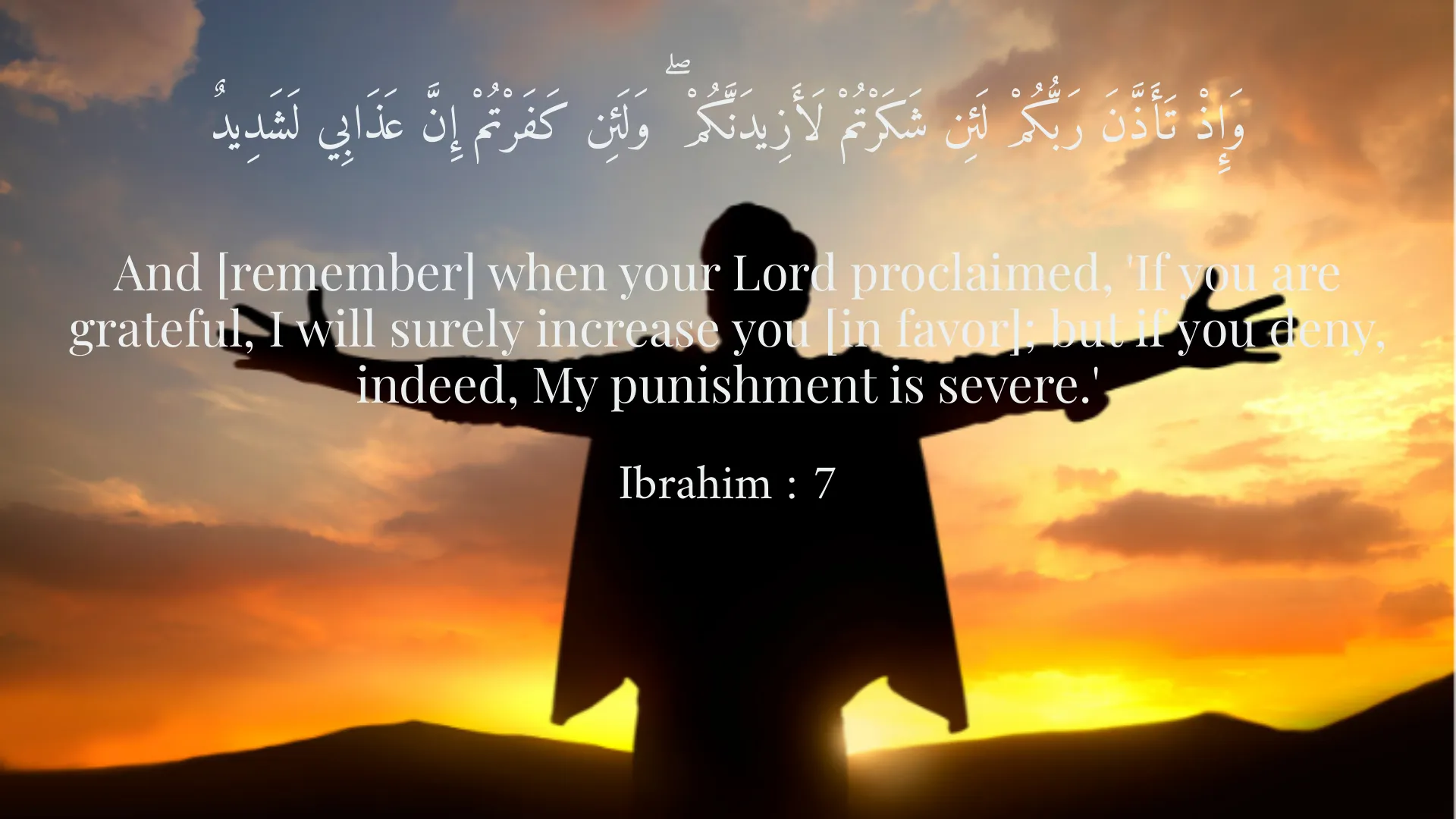
وَإِذْ تَأَذَّنَ رَبُّكُمْ لَئِن شَكَرْتُمْ لَأَزِيدَنَّكُمْ ۖ وَلَئِن كَفَرْتُمْ إِنَّ عَذَابِي لَشَدِيدٌ
And [remember] when your Lord proclaimed, 'If you are grateful, I will surely increase you [in favor]; but if you deny, indeed, My punishment is severe.'
Ibrahim : 7
بَلْ تُؤْثِرُونَ الْحَيَاةَ الدُّنْيَا
But you prefer the worldly life,
Al-A'la : 16
وَالْآخِرَةُ خَيْرٌ وَأَبْقَىٰ
while the Hereafter is better and more enduring.
Al-A'la : 17
الَّذِينَ آمَنُوا وَتَطْمَئِنُّ قُلُوبُهُم بِذِكْرِ اللَّهِ ۗ أَلَا بِذِكْرِ اللَّهِ تَطْمَئِنُّ الْقُلُوبُ
Those who have believed and whose hearts are assured by the remembrance of Allah. Unquestionably, by the remembrance of Allah hearts are assured tranquility.
Ar-Ra'd : 28
Short Story
In Sa'di's Gulistan, it is told that a king inquired about the state of a dervish, asking, "Do you not feel any lack in your life?" The dervish calmly replied, "O King! Should I ask about lack, or should you? You, who are always striving to conquer another country and have no peace, staying awake at night in fear of enemies and growing weary by day from the greed of accumulating wealth, do <i>you</i> not feel a sense of lack? But I, with a piece of bread and some water, possess a peaceful heart and a joyful soul. I see what I have, and you see what you do not." This beautiful story teaches us that true peace and richness lie in the contentment of the heart and gratitude for what one possesses, not in the vastness of dominion or wealth.