Quranic Answer
Feeling distant from God, even amidst abundant worship, is an experience that can perplex and sometimes discourage believers. This feeling, rather than indicating a flaw in the act of worship itself, often points to the quality and depth of our inner connection with the Almighty. The Holy Quran teaches us that worship is not merely the performance of external rituals, but a path to spiritual closeness and tranquility of heart. If this tranquility and closeness are not achieved, it necessitates a return to the deeper dimensions of worship emphasized in divine verses.One of the most crucial concepts in worship is 'Ikhlas' (sincerity). The Quran, in Surah Al-Bayyinah, verse 5, states: "And they were not commanded except to worship Allah, [being] sincere to Him in religion, inclining to truth, and to establish prayer and to give zakah. And that is the correct religion." This verse explicitly states that believers were not commanded except to worship Allah, making their religion sincerely for Him, turning away from all forms of polytheism. Sincerity means that our primary intention behind worship should be solely to please Allah, not to gain others' attention, not merely out of habit, or even just to fulfill an obligation or achieve worldly desires. If our acts of worship lack sincerity and lean towards outward show or hypocrisy, it is natural that spiritual closeness will not be achieved, as the heart is preoccupied with non-divine intentions and cannot absorb divine light.Another significant dimension is 'Khushu'' (humility and presence of heart). In Surah Al-Mu'minun, verses 1 and 2, Allah says: "Certainly will the believers prosper * Who are in their prayer humbly submissive." The successful believers are those who are humble in their prayers. Khushu' signifies a state of inner calmness and humility before the greatness of Allah. When our minds are preoccupied with worldly matters or distractions during prayer or other forms of worship, even if we spend hours in devotion, that spiritual connection cannot be established. Worship without presence of heart is like a body without a soul; it has an outer form but no signs of life. To attain Khushu', it is essential to cleanse the heart of unnecessary worries before worship and turn towards Allah with complete focus. 'Dhikr' (remembrance of Allah) is also a fundamental pillar that brings tranquility to the heart. Surah Ar-Ra'd, verse 28, states: "Those who have believed and whose hearts are assured by the remembrance of Allah. Unquestionably, by the remembrance of Allah hearts are assured." If our acts of worship do not lead to a true remembrance and invocation of Allah – meaning it is merely lip service while the heart is heedless of Him – it is natural that not only will tranquility not be achieved, but a feeling of distance may even increase. This is because we are seeking peace in something that has become merely a form without content.Our connection with Allah is not solely through acts of worship; the quality of these acts is also profoundly important. Worship that does not lead to a change in one's behavior and character may indicate its superficiality. In Surah Al-Ankabut, verse 45, Allah says: "Recite, [O Muhammad], what has been revealed to you of the Book and establish prayer. Indeed, prayer prohibits immorality and wrongdoing, and the remembrance of Allah is greater. And Allah knows that which you do." If our prayers or other forms of worship do not deter us from sins and have no effect on our self-purification, the question arises: have we truly attained the essence of prayer?Sometimes, our expectations from worship can contribute to this feeling of distance. We might anticipate experiencing immediate spiritual euphoria or a profound connection with every act of worship. However, spiritual growth is a gradual process. Allah in the Quran invites us to patience and steadfastness. The feeling of distance might be a divine test to gauge our sincerity and perseverance. Finally, to overcome this feeling, it is suggested to: firstly, prioritize the quality of worship over its quantity. Secondly, focus on presence of heart and humility during worship. Thirdly, alongside formal worship, engage in 'Tafakkur' (reflection) on Allah's signs in the Quran and creation. Fourthly, distance oneself from sins and strive for self-purification. And fifthly, supplicate to Allah with humility, asking Him to remove veils from your heart and let you taste the sweetness of worship. This feeling of distance can be a sign from Allah, calling us to deeper contemplation and to reform our intentions and methods of worship, rather than to abandon the path of faith.
Related Verses
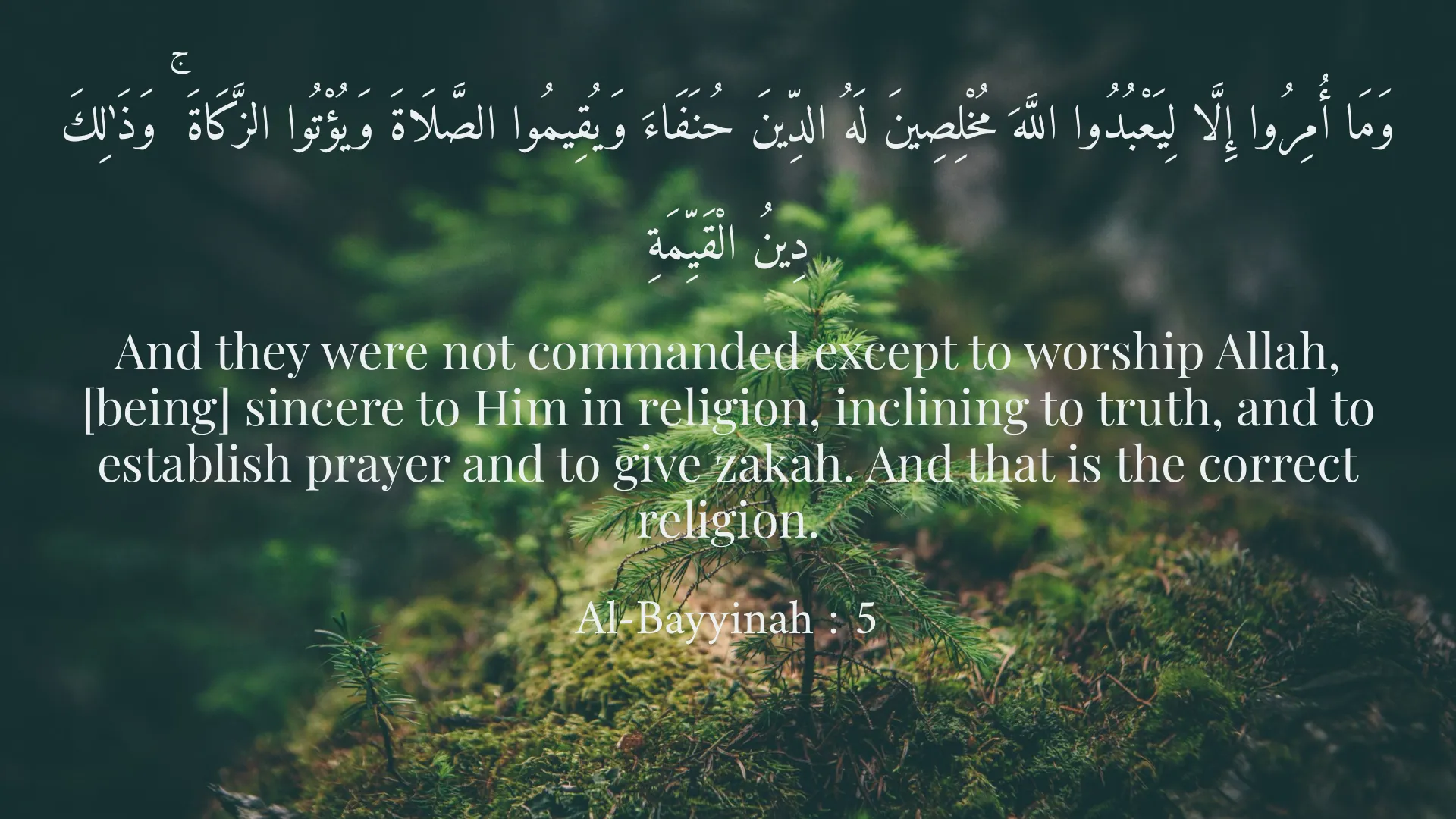
وَمَا أُمِرُوا إِلَّا لِيَعْبُدُوا اللَّهَ مُخْلِصِينَ لَهُ الدِّينَ حُنَفَاءَ وَيُقِيمُوا الصَّلَاةَ وَيُؤْتُوا الزَّكَاةَ ۚ وَذَٰلِكَ دِينُ الْقَيِّمَةِ
And they were not commanded except to worship Allah, [being] sincere to Him in religion, inclining to truth, and to establish prayer and to give zakah. And that is the correct religion.
Al-Bayyinah : 5
قَدْ أَفْلَحَ الْمُؤْمِنُونَ
Certainly will the believers prosper,
Al-Mu'minun : 1
الَّذِينَ هُمْ فِي صَلَاتِهِمْ خَاشِعُونَ
Those who are in their prayer humbly submissive,
Al-Mu'minun : 2
الَّذِينَ آمَنُوا وَتَطْمَئِنُّ قُلُوبُهُم بِذِكْرِ اللَّهِ ۗ أَلَا بِذِكْرِ اللَّهِ تَطْمَئِنُّ الْقُلُوبُ
Those who have believed and whose hearts are assured by the remembrance of Allah. Unquestionably, by the remembrance of Allah hearts are assured.
Ar-Ra'd : 28
اتْلُ مَا أُوحِيَ إِلَيْكَ مِنَ الْكِتَابِ وَأَقِمِ الصَّلَاةَ ۖ إِنَّ الصَّلَاةَ تَنْهَىٰ عَنِ الْفَحْشَاءِ وَالْمُنكَرِ ۗ وَلَذِكْرُ اللَّهِ أَكْبَرُ ۗ وَاللَّهُ يَعْلَمُ مَا تَصْنَعُونَ
Recite, [O Muhammad], what has been revealed to you of the Book and establish prayer. Indeed, prayer prohibits immorality and wrongdoing, and the remembrance of Allah is greater. And Allah knows that which you do.
Al-Ankabut : 45
Short Story
They say that in ancient times, there was a devout worshipper who spent his days and nights in devotion, performing prayers, fasting, and reciting the Quran. Yet, his heart was always restless, and he tasted no sweetness in worship. One day, a wise sheikh encountered him and asked about his state. The worshipper sighed, "For years, I have strived in the service of my Beloved, but it seems the more I worship, the more distant I feel. It's as if my heart is weary from all this exertion." The sheikh smiled kindly and said, "My friend, water must be drunk from a spring, not from a stagnant pond. Worship that stems from mere habit, without the heart being present, is like water drawn from a stagnant pool. Go, and for a moment in the solitude of your heart, with complete sincerity, reflect on the grandeur of the Lord. Then you will see that even a single moment of presence of heart is more precious than years of lifeless worship." The worshipper followed the sheikh's advice. He sat and, with contemplation and sincerity, pondered the meaning of every word he uttered. He reflected on his place before the Creator of the universe and, from the depths of his being, humbly asked Him to cleanse his heart from impurities. Soon, a light ignited within his heart, and for the first time, he felt the sweetness of divine closeness with his entire being. He understood that God does not look at the multitude of deeds, but at the purity of the heart and the sincerity of intention.