Quranic Answer
The feeling of “God's silence” is one of the profound and sometimes painful challenges on a human being's spiritual journey. Many believers, at certain points in their lives, especially when facing hardships, suffering, or prayers that seemingly go unanswered, may experience this sensation. This feeling can lead to a deep misunderstanding of the nature of our relationship with God and how He communicates with His servants, sometimes leading to despair and hopelessness. However, from the perspective of the Holy Quran, God is never silent; rather, He is always present, observing, hearing, knowing, and immensely merciful, and He speaks to His servants in various ways. What we sometimes perceive as “silence” can, in fact, stem from our lack of understanding of the divine language, impatience for immediate answers, or our negligence towards His continuous signs. This feeling is more an internal, perceptual state than an external reality. Almighty God is constantly in conversation with His creation, but it is we who, sometimes due to egoistic veils or insufficient attention, fail to comprehend this dialogue. The Quran teaches us that God is closer to us than our jugular vein. In Surah Qaf, verse 16, it states: “And We are closer to him than [his] jugular vein.” This verse clearly indicates that our distance from God is not a physical or spatial one, but rather a cognitive and spiritual distance. The feeling of silence often arises not because of God's absence, but because of the veils we ourselves have created between us and Him; veils of sin, heedlessness, excessive worldly attachments, and a failure to ponder His signs. Sometimes this feeling is due to our expectations of how God should respond; we expect Him to speak to us or answer our prayers in a specific way, while God communicates with us in thousands of languages and forms that we might not recognize. Almighty God continuously speaks to us through His signs (ayat) in the horizons and within ourselves. Every leaf on a tree that dances in the wind, every raindrop that quenches the thirsty earth, the flawless rising and setting of the sun, the unparalleled order of the universe from atomic particles to boundless galaxies, and even the astonishing complexity of our own existence—all are signs that loudly proclaim His presence, power, wisdom, and mercy. Surah Fussilat, verse 53, states: “We will show them Our signs in the horizons and within themselves until it becomes clear to them that it is the truth.” These signs are God’s language for conversing with us and are always comprehensible to those whose hearts are open to receive. Another reason for feeling God's silence is our lack of understanding of divine wisdom in answering prayers. Many times, we ask God for something we believe is good and beneficial for us, but God, due to His infinite knowledge of all dimensions and consequences of matters, may answer it in a different way, defer it to another time, or even grant us something better and more enduring of which we are unaware. Surah Al-Baqarah, verse 216, states: “…But perhaps you hate a thing and it is good for you; and perhaps you love a thing and it is bad for you. And Allah knows, while you know not.” This verse clearly illustrates that God’s wisdom transcends our limited comprehension. If our prayer seemingly goes unanswered or is not answered immediately, it should not be interpreted as a sign of silence, lack of divine favor, or forgetfulness. Instead, it should be regarded as a manifestation of His boundless wisdom and mercy. Sometimes, the direct non-fulfillment is itself a form of answer that we are oblivious to. God might avert a major calamity from us, of whose existence we were unaware, or store a great reward and provision for our Hereafter whose value far exceeds our worldly desires. Indeed, every supplication at the divine threshold has three types of responses: either it is answered immediately, or it is delayed to reach us at a more appropriate time and in a better form, or a greater good is prepared for us in the Hereafter instead. Trials and tribulations are also among the ways God communicates with His servant, often mistakenly interpreted as “silence.” In Surah Al-Baqarah, verse 155, we read: “And We will surely test you with something of fear and hunger and a loss of wealth and lives and fruits, but give good tidings to the patient.” These tests are by no means an indication of God's silence or indifference; on the contrary, they demonstrate His special attention to His servant. Affliction and hardship are tools for spiritual growth, purification from sins, elevation of status and rank, and the deepening of one’s connection with the Lord. It is in the midst of these difficulties that a person realizes their ultimate weakness and finds their only true refuge in God, turning to Him with their whole being. These moments are peaks of spiritual connection and sincerity, not silence. Through these trials, God refines our faith, tests our patience, and guides us towards perfection and a deeper understanding of ourselves and existence. These are messages from Him that invite us to re-evaluate our lives, repent, and increase our patience and gratitude, offering us an opportunity to emerge from the shell of heedlessness and recognize our true essence. To overcome the feeling of silence, one must actively seek to hear God's voice. This “hearing” means listening to His signs in the universe, deep reflection on the verses of the Quran (which is His direct word), and pondering the events of our own lives and the lessons we derive from them. The remembrance of God (Dhikr), such as prayer, recitation of the Quran, and glorifications, is one of the most powerful tools to fill the void left by this feeling and establish a heart connection. Surah Ar-Ra’d, verse 28, states: “Those who have believed and whose hearts are assured by the remembrance of Allah. Unquestionably, by the remembrance of Allah hearts are assured.” The more we remember Him, the more our hearts become familiar with His presence, and we feel a greater sense of peace and connection. Prayer (Du’a) is direct and intimate communication with God. Even if we do not see the immediate results we expect, the act of praying itself, expressing our needs and desires before Him, is a profound and blessed connection. Persistence in prayer, even at the height of despair and when we see no way out but God, demonstrates complete reliance and trust in Him, and this very trust brings about the best response and the highest tranquility. We must learn to have faith in Him, even when the path is obscure, for His wisdom transcends our imagination. Ultimately, the understanding is that God always speaks to us, but do we have listening ears? Have we opened our eyes to see His signs? Are our hearts ready to comprehend His wisdom? To overcome this feeling, it is necessary to turn inward, abstain from sins (for sins are veils that hinder the perception of His presence), diligently engage in worship and remembrance, reflect upon divine verses, and with patience and reliance, await His wisdom. We must know that Almighty God is the Most Merciful of the merciful and never abandons His servants. Every event in our lives, even what appears bitter and unpleasant, carries a message from Him and is a manifestation of His boundless wisdom. This inner certainty, like a light in the darkness, dissipates the feeling of silence and replaces it with the tranquility of perpetual divine presence. He is always present, hearing, and knowing; it is we who must learn how to listen and how to see, and how to feel His loving and wise presence in every moment of life.
Related Verses
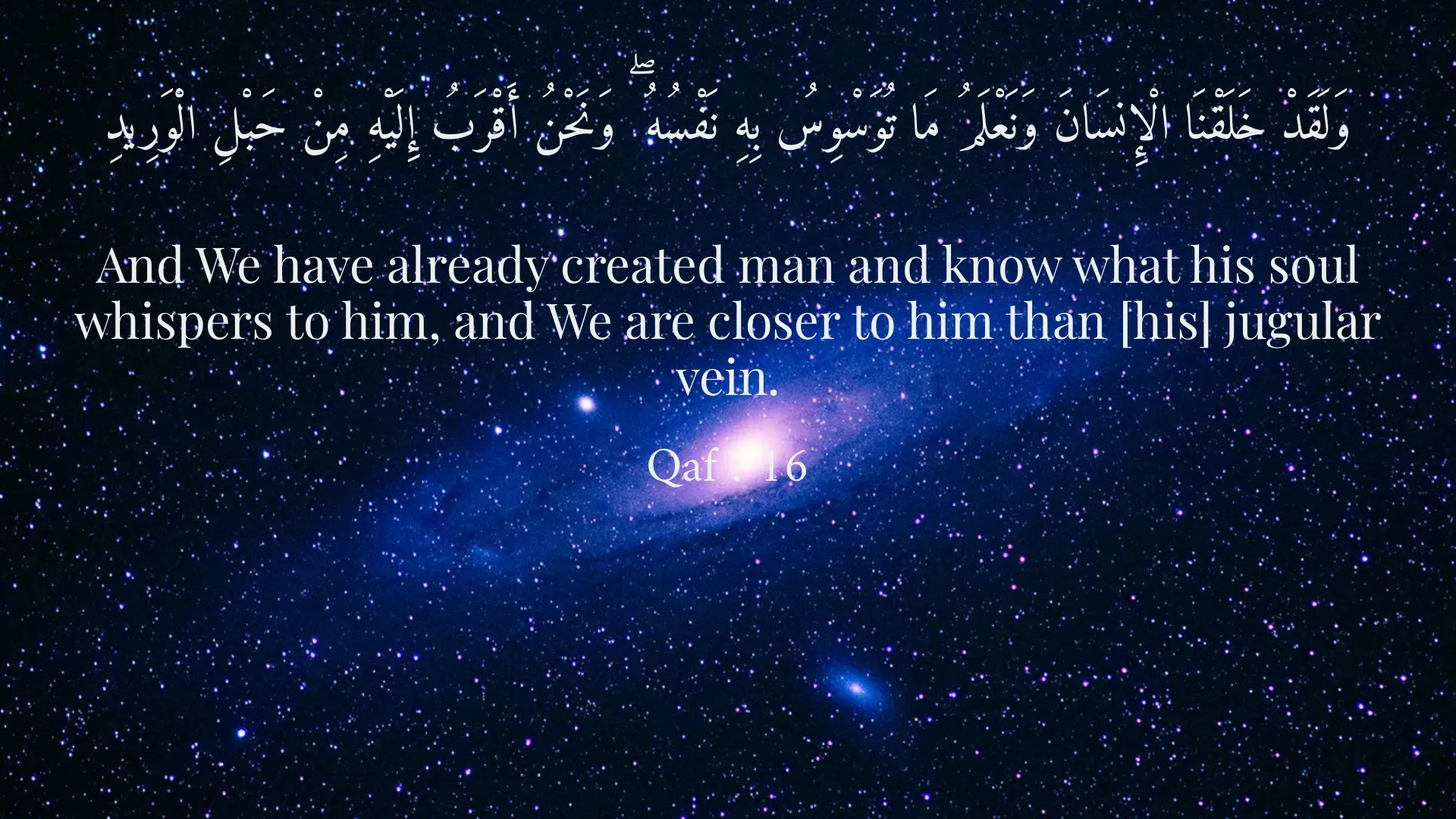
وَلَقَدْ خَلَقْنَا الْإِنسَانَ وَنَعْلَمُ مَا تُوَسْوِسُ بِهِ نَفْسُهُ ۖ وَنَحْنُ أَقْرَبُ إِلَيْهِ مِنْ حَبْلِ الْوَرِيدِ
And We have already created man and know what his soul whispers to him, and We are closer to him than [his] jugular vein.
Qaf : 16
كُتِبَ عَلَيْكُمُ الْقِتَالُ وَهُوَ كُرْهٌ لَّكُمْ ۖ وَعَسَىٰ أَن تَكْرَهُوا شَيْئًا وَهُوَ خَيْرٌ لَّكُمْ ۖ وَعَسَىٰ أَن تُحِبُّوا شَيْئًا وَهُوَ شَرٌّ لَّكُمْ ۗ وَاللَّهُ يَعْلَمُ وَأَنتُمْ لَا تَعْلَمُونَ
Fighting has been enjoined upon you while it is hateful to you. But perhaps you hate a thing and it is good for you; and perhaps you love a thing and it is bad for you. And Allah knows, while you know not.
Al-Baqarah : 216
وَلَنَبْلُوَنَّكُم بِشَيْءٍ مِّنَ الْخَوْفِ وَالْجُوعِ وَنَقْصٍ مِّنَ الْأَمْوَالِ وَالْأَنفُسِ وَالثَّمَرَاتِ ۗ وَبَشِّرِ الصَّابِرِينَ
And We will surely test you with something of fear and hunger and a loss of wealth and lives and fruits, but give good tidings to the patient.
Al-Baqarah : 155
الَّذِينَ آمَنُوا وَتَطْمَئِنُّ قُلُوبُهُم بِذِكْرِ اللَّهِ ۗ أَلَا بِذِكْرِ اللَّهِ تَطْمَئِنُّ الْقُلُوبُ
Those who have believed and whose hearts are assured by the remembrance of Allah. Unquestionably, by the remembrance of Allah hearts are assured.
Ar-Ra'd : 28
Short Story
They say that in ancient times, a dervish, weary and alone in a desolate desert, was so distraught by hardship and solitude that he cried out in his heart, "My God! Why is there no sound from You? Have You forgotten me?" At nightfall, in that parched wilderness, weakened by thirst and hunger, he collapsed to the ground. Suddenly, a cool breeze began to blow, carrying a sweet scent to his nostrils. With his last bit of strength, he raised his head and saw a light in the distance. He painfully dragged himself towards it and reached a clear well of water and a fruit-laden tree. In that moment, a tear streamed from his eyes, and he said to himself, "This breeze, this light, this well, and this fruit; are these not all from Him? He was never silent; it was I who lacked a listening ear and seeing eyes. His wisdom lay in delaying the answer and in concealing the provision, so that I might appreciate it and find Him in my deepest need." That night, the dervish fell asleep with a heart full of gratitude and certainty, realizing that God's grace is always flowing, even in apparent silence.