Quranic Answer
The feeling that God is waiting to punish you is a common human experience, often stemming from past transgressions, shortcomings in religious duties, or simply the whispers of Satan, who seeks to instill despair in the human heart regarding divine mercy. However, when we turn to the Holy Quran, we are presented with a vastly different and infinitely more compassionate image of our Lord—an image where divine mercy and forgiveness overwhelmingly precede wrath and punishment. God introduces Himself in the Quran with numerous attributes, the most prominent being 'Ar-Rahman' and 'Ar-Rahim,' meaning 'The Most Gracious, The Most Merciful.' Every chapter of the Quran, save one, begins with 'Bismillah Ar-Rahman Ar-Rahim,' which itself is a testament to the all-encompassing nature of God's mercy. This repetition carries a clear message: God's mercy encompasses all things, and He loves to show mercy and forgive His servants. In multiple verses, God emphasizes that He is the forgiver of sins, even major ones. In Surah Az-Zumar, verse 53, He says: "Say, 'O My servants who have transgressed against themselves [by sinning], do not despair of the mercy of Allah. Indeed, Allah forgives all sins. Indeed, it is He who is the Forgiving, the Merciful.'" This verse explicitly states that despairing of God's mercy is itself a grave sin. It not only invites repentance but also guarantees that God forgives sins, provided the repentance is sincere, accompanied by genuine remorse, and a firm resolve to abandon the sin. God is by no means waiting for an opportunity to punish His servants; rather, He desires for His servants to return to Him, repent, and embark on a pure life. The very purpose of God sending prophets and divine books was to guide humanity towards salvation and liberation from error, not to entrap them for punishment. Sometimes, the fear of divine punishment can arise from a misunderstanding of the concepts of 'divine decree' (Qadar) or 'divine trials' (Ibtila). God places trials in human lives whose purpose is growth and development, testing faith and patience, and offering an opportunity to return to the right path, rather than merely punishment. In Surah Al-Baqarah, verse 155, we read: "And We will surely test you with something of fear and hunger and a loss of wealth and lives and fruits, but give good tidings to the patient." These trials are not merely punishments; they are opportunities for sins to be expiated and for one's level of faith to increase. Even calamities and hardships that befall a person are considered atonement for sins, according to narrations, provided that one exercises patience and places trust in God. Satanic whispers also play a significant role in creating this feeling of despair and fear. Satan constantly strives to make humans despair of God's mercy and encourages them to commit more sins or abandon good deeds, under the false notion that there is no turning back and God will not forgive them. However, a vigilant Muslim knows that Satan is a clear enemy to humanity and one must seek refuge in God. In Surah An-Nas, verses 4-6, we read: "From the evil of the retreating whisperer - who whispers [evil] into the breasts of mankind - from among the jinn and mankind." Therefore, one must be wary of these whispers and dispel such negative thoughts through seeking forgiveness (Istighfar), repentance (Tawbah), and increasing good deeds. Instead of focusing on the fear of punishment, it is better to concentrate on God's attributes of beauty and grace, such as His mercy, forgiveness, pardon, and benevolence. God loves His servants and desires ease and well-being for them. In Surah Al-Baqarah, verse 185, He says: "Allah intends for you ease and does not intend for you hardship." This verse demonstrates that divine will is based on facilitation and comfort for His servants, not on difficulty and arbitrary punishment. Divine punishment is reserved for those who deliberately, knowingly, and with complete defiance deviate from the truth and persist in their sins, not for those who make mistakes and then regret them and return to God. Overcoming this feeling requires a deeper understanding of divine mercy and justice. It must be known that God is just and never wrongs anyone; He is aware of what is in the hearts and knows intentions. If repentance is sincere and a person resolves to rectify themselves, God not only forgives but can even transform bad deeds into good ones. In Surah Al-Furqan, verse 70, He says: "Except for those who repent, believe and do righteous work. For them Allah will replace their evil deeds with good. And ever is Allah Forgiving and Merciful." Therefore, instead of fear, turn to hope and strive to draw closer to God. Through repentance, seeking forgiveness, performing good deeds, and trusting in God's boundless mercy, this feeling of despair and fear will vanish, replaced by tranquility. God is always waiting for His servants to return, not waiting to punish them.
Related Verses
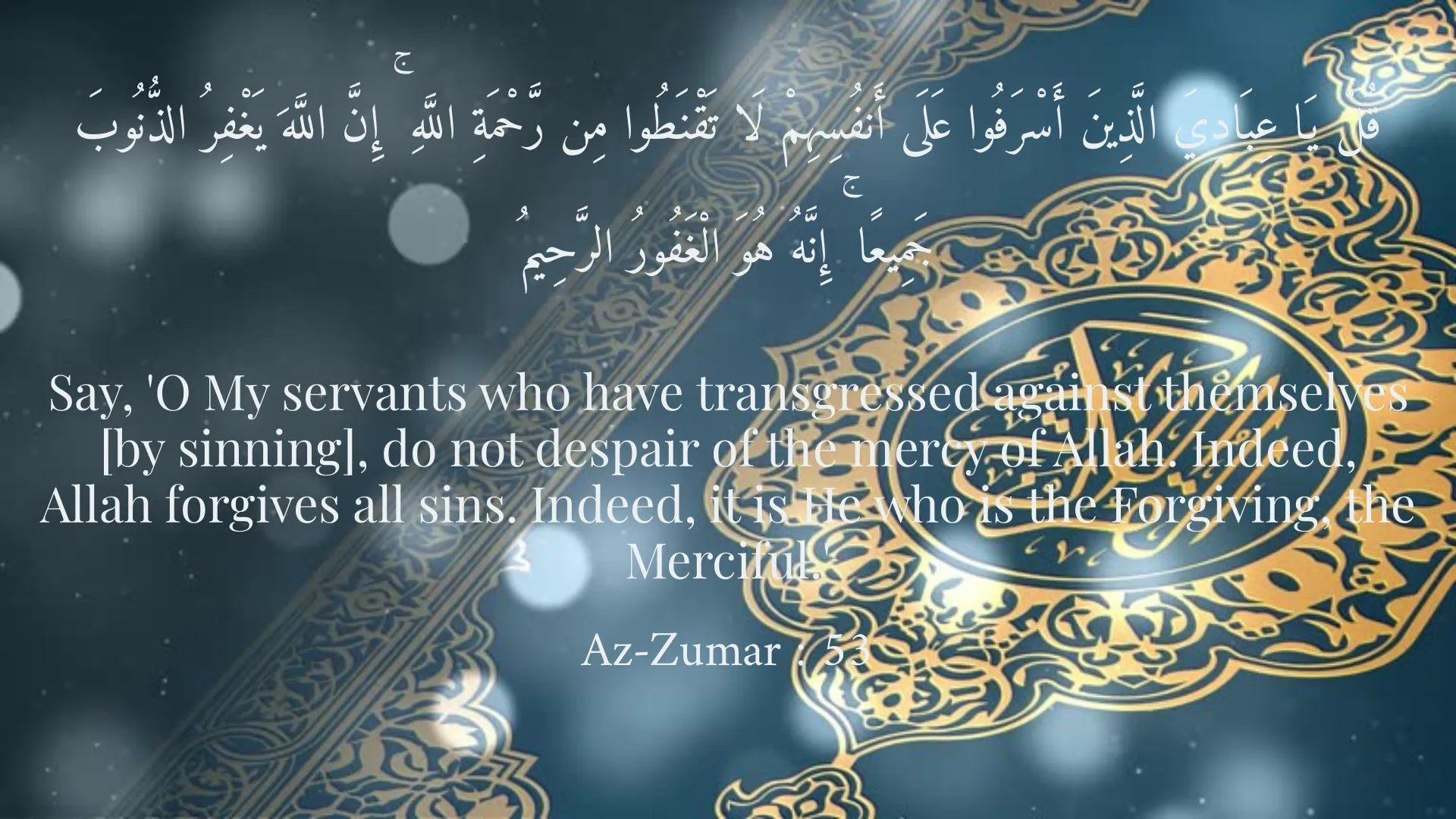
قُلْ يَا عِبَادِيَ الَّذِينَ أَسْرَفُوا عَلَى أَنفُسِهِمْ لَا تَقْنَطُوا مِن رَّحْمَةِ اللَّهِ ۚ إِنَّ اللَّهَ يَغْفِرُ الذُّنُوبَ جَمِيعًا ۚ إِنَّهُ هُوَ الْغَفُورُ الرَّحِيمُ
Say, 'O My servants who have transgressed against themselves [by sinning], do not despair of the mercy of Allah. Indeed, Allah forgives all sins. Indeed, it is He who is the Forgiving, the Merciful.'
Az-Zumar : 53
يُرِيدُ اللَّهُ بِكُمُ الْيُسْرَ وَلَا يُرِيدُ بِكُمُ الْعُسْرَ
Allah intends for you ease and does not intend for you hardship.
Al-Baqarah : 185
إِلَّا مَن تَابَ وَآمَنَ وَعَمِلَ عَمَلًا صَالِحًا فَأُولَٰئِكَ يُبَدِّلُ اللَّهُ سَيِّئَاتِهِمْ حَسَنَاتٍ ۗ وَكَانَ اللَّهُ غَفُورًا رَّحِيمًا
Except for those who repent, believe and do righteous work. For them Allah will replace their evil deeds with good. And ever is Allah Forgiving and Merciful.
Al-Furqan : 70
Short Story
It is narrated that there was a king, stern and imposing, yet inwardly very kind. One day, one of his subordinates committed a grave error and, in his own mind, expected a severe punishment. With a trembling heart and deep remorse, he went before the king and prostrated himself. Everyone expected the king to become enraged and order punishment. But the king looked at him with great compassion and said: 'Rise, my servant! I am not among those who are constantly thinking of retribution. Your repentance and remorse are more valuable to me than any sin you have committed. Go and live anew, and know that Our gate is always open for those who return.' The subordinate rose with tears of joy, realizing that the king's greatness and mercy were far beyond his imagination, and that his fear had been in vain.