Quranic Answer
The feeling of being unimportant or overlooked by others is a common yet often painful human experience that can significantly impact one's self-esteem and inner peace. This sensation often intensifies when an individual seeks validation and worth primarily from external sources, particularly the opinions and recognition of other people. However, the Holy Quran, with its profound and comprehensive view of the human condition, offers a radically different framework for understanding true human value, which can serve as a balm for this inner discomfort. In the Quranic perspective, an individual's worth is not contingent upon the approval of others; rather, it is rooted in divine creation, the ultimate purpose of their existence, and their actions. The first and most crucial point the Quran emphasizes is the inherent dignity and immense worth of every human being. Allah Almighty states in Surah Al-Isra (17:70): “And We have certainly honored the children of Adam and carried them on the land and sea and provided them with good things and preferred them over much of what We have created, with [definite] preference.” This verse unequivocally declares that humanity, by its very nature, regardless of social status, wealth, beauty, or the judgments of others, is an honorable and esteemed creation, blessed with inherent dignity by Allah. This dignity encompasses unique human attributes such as intellect, free will, the ability to discern right from wrong, and the capacity to choose one's life path. Therefore, the initial step towards liberating oneself from feelings of unimportance is to grasp this fundamental Quranic truth: you were created valuable and esteemed from the very beginning, and no human, through their negative behaviors or perceptions, can strip you of this intrinsic worth. Furthermore, the Quran introduces a precise criterion for measuring true superiority and significance: Taqwa (God-consciousness or piety). In Surah Al-Hujurat (49:13), Allah declares: “O mankind, indeed We have created you from male and female and made you peoples and tribes that you may know one another. Indeed, the most noble of you in the sight of Allah is the most righteous of you. Indeed, Allah is Knowing and Acquainted.” This verse explicitly states that the standard for eminence and importance in the sight of Allah is neither race, wealth, beauty, nor social position, but rather Taqwa. Taqwa encompasses not only abstaining from sins but also embodies moral integrity, performing good deeds, sincerity, justice, and serving humanity. The more an individual progresses on the path of Taqwa and draws closer to Allah, the greater their true worth becomes in the sight of the Creator, even if this value remains unacknowledged in the superficial world. This divine perspective liberates individuals from the fluctuating and superficial judgments of society, bestowing upon them profound inner peace. Moreover, the Quran identifies the ultimate purpose of human creation as the worship and servitude of Allah. In Surah Adh-Dhariyat (51:56), it is stated: “And I did not create the jinn and mankind except to worship Me.” This servitude implies complete submission to the divine will and fulfilling one's individual and societal duties. When a person aligns their life's purpose and meaning within this divine framework, they no longer require constant validation from others. They understand that their most significant audience and observer of their actions is Allah, and His attention alone is sufficient. This focus on one's relationship with Allah fortifies inner identity and self-confidence. When you derive your worth from the infinitely powerful and compassionate Creator, the perceived disregard or unimportance from human beings will have a minimal impact on you. The Quran also emphasizes Allah's omniscience, affirming that no deed, however small or grand, escapes His knowledge. In Surah Az-Zalzalah (99:7), it states: “So whoever does an atom's weight of good will see it.” This means that every good deed you perform, every positive step you take, and every effort you make for your own growth or to help others, even if unnoticed or unappreciated by humans, is recorded and will be rewarded by Allah. This divine awareness is profoundly comforting, assuring individuals that even in their most private moments and unrecognized endeavors, they are valuable and noticed. Therefore, instead of focusing on human expectations or judgments, which are perpetually shifting and incomplete, one should redirect their gaze toward gaining the pleasure of Allah Almighty. He alone knows your true worth and appreciates your efforts. This shift in perspective not only dispels feelings of unimportance but also infuses life with a higher meaning and purpose, guiding you on a path of growth and perfection. Finally, if you find yourself grappling with such feelings, remember that this might be a test from Allah, intended to lead you to a deeper understanding of your true worth and reliance upon Him. Instead of being preoccupied with your standing in the eyes of others, focus on strengthening your relationship with Allah, performing your duties with sincere intentions, and serving His creation. In doing so, you will discover an inner peace and assurance that no perceived insignificance from others can ever shake. Your real value rests with your Creator, and He has created you precious and significant.
Related Verses
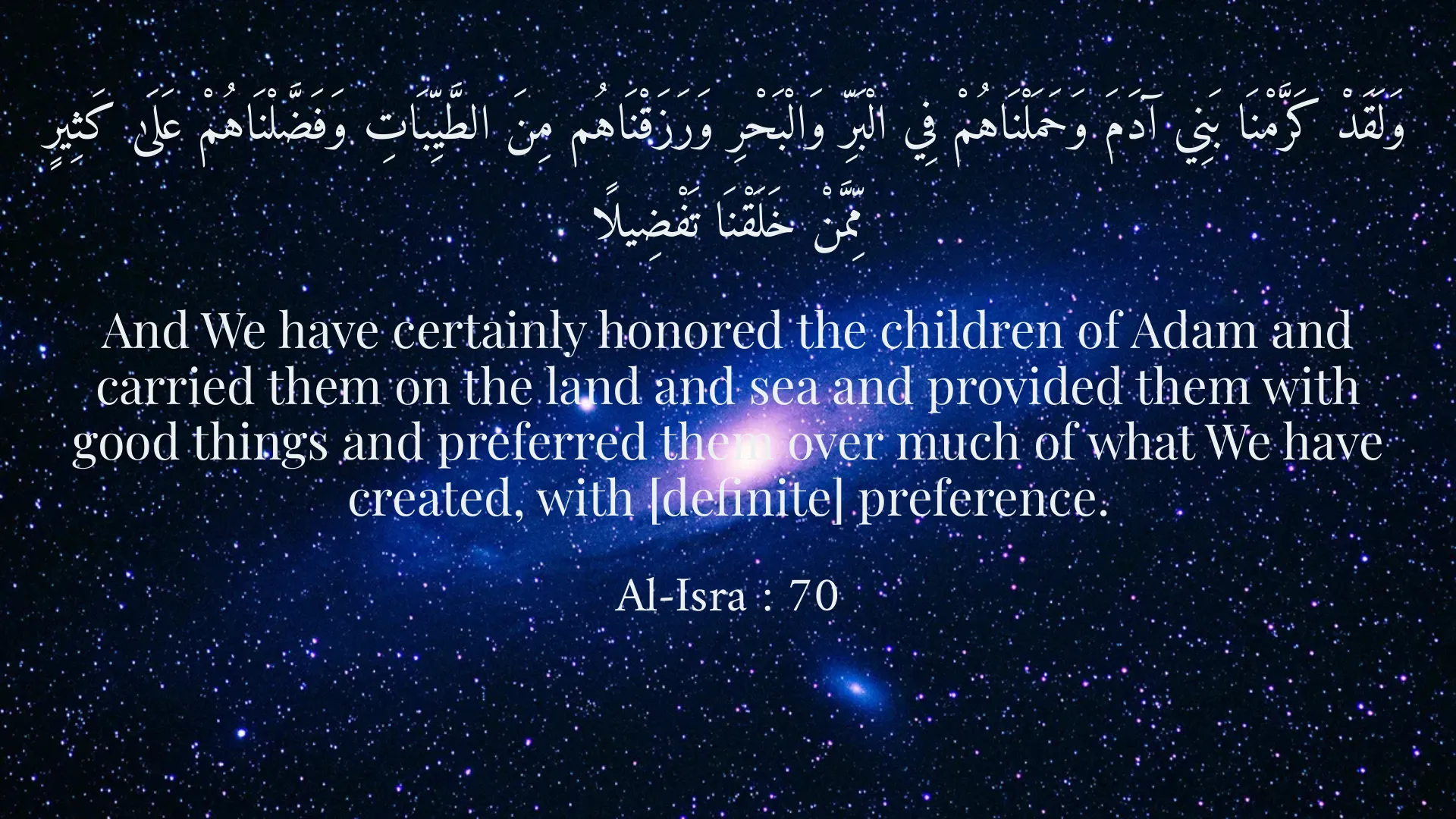
وَلَقَدْ كَرَّمْنَا بَنِي آدَمَ وَحَمَلْنَاهُمْ فِي الْبَرِّ وَالْبَحْرِ وَرَزَقْنَاهُم مِنَ الطَّيِّبَاتِ وَفَضَّلْنَاهُمْ عَلَىٰ كَثِيرٍ مِّمَّنْ خَلَقْنَا تَفْضِيلًا
And We have certainly honored the children of Adam and carried them on the land and sea and provided them with good things and preferred them over much of what We have created, with [definite] preference.
Al-Isra : 70
يَا أَيُّهَا النَّاسُ إِنَّا خَلَقْنَاكُم مِّن ذَكَرٍ وَأُنثَىٰ وَجَعَلْنَاكُمْ شُعُوبًا وَقَبَائِلَ لِتَعَارَفُوا ۚ إِنَّ أَكْرَمَكُمْ عِندَ اللَّهِ أَتْقَاكُمْ ۚ إِنَّ اللَّهَ عَلِيمٌ خَبِيرٌ
O mankind, indeed We have created you from male and female and made you peoples and tribes that you may know one another. Indeed, the most noble of you in the sight of Allah is the most righteous of you. Indeed, Allah is Knowing and Acquainted.
Al-Hujurat : 13
وَمَا خَلَقْتُ الْجِنَّ وَالْإِنسَ إِلَّا لِيَعْبُدُونِ
And I did not create the jinn and mankind except to worship Me.
Adh-Dhariyat : 56
Short Story
Once upon a time, in an ancient city, there lived a simple-hearted and unpretentious dervish. The townspeople, often preoccupied with appearances and wealth, paid him little attention and sometimes overlooked him entirely. Yet, this dervish was never saddened by their indifference. He neither sought people's praise nor feared their blame. Each day, he diligently pursued his work, toiling with calloused hands for lawful sustenance, and spent his nights in devotion and remembrance of God. He believed that God's perspective was far vaster and deeper than any other gaze, and that only what resided in the heart and was performed in solitude held true significance. The eloquent Saadi once said: “Two persons labored in vain and sought no benefit: one who accumulated but did not consume, and another who learned but did not practice.” This dervish, it seemed, embodied this wisdom; he did not wish to strive in vain or tie his worth to people's approval. Years passed, and one day, a great calamity befell the city, for which no one knew a remedy. The king and the nobles sought solutions but grew despondent. The dervish, with utmost tranquility, suggested a simple and sincere solution to the king, one that sprang from the depth of his faith. Upon implementing his advice, the calamity was averted. The townspeople, who had previously considered him unimportant, then realized that the true treasure lay not in outward appearances but in pure hearts connected with God. On that day, everyone understood that a person's true value is not found in the eyes of others, but within themselves and their relationship with their Lord.