Quranic Answer
The feeling of abandonment and loneliness, especially when facing life's difficulties and hardships, is a perfectly natural human emotion that anyone might experience. In such moments, the question might arise: "Why has God abandoned me?" or "Has God turned away from me?" However, from the perspective of the Holy Quran, the answer to this question is clear and unequivocal: God never abandons His servants and is always, in every situation, their closest helper and companion. This feeling of abandonment is more a result of our human perceptions and limitations of understanding than a reality concerning the essence of the Lord. In truth, any sense of distance from God originates from our heedlessness and imperfections in grasping His immense greatness and infinite mercy. The Holy Quran, in numerous verses, emphasizes the perpetual and boundless presence of God in all dimensions of existence. One of the most beautiful and profound expressions in this regard is verse 16 of Surah Qaf, where it states: "And We are closer to him than his jugular vein." This verse clearly indicates that God is not only not far from us, but so close that no distance, whether spatial or temporal, can be conceived between us and Him. This closeness is not a physical proximity in the material sense; rather, it is an existential closeness, a closeness in knowledge, presence, and absolute power. He is aware of all our conditions, our thoughts, our needs, and even our innermost whispers. He knows our needs and hears the sound of our supplications. Therefore, feeling alone and abandoned in the presence of such an Almighty God, who encompasses everything and is closer to us than anything else, is merely a mental perception that arises due to spiritual pressure, a momentary weakness of faith, or heedlessness of His divine grandeur. One of the primary reasons a person might feel abandoned is facing trials and tribulations, which are an inseparable part of worldly life. God says in verse 2 of Surah Al-Ankabut: "Do people think that they will be left alone because they say, 'We believe,' and will not be tested?" These trials are not meant to torment or distress humans; rather, they are for growth, elevation, understanding the truth of faith, and distinguishing the true believer from others. Sometimes, what we call abandonment or divine inattention is, in reality, a divine test intended to strengthen us, purify our faith, expiate our sins, and teach us lessons we would never learn under normal circumstances. These difficulties are sometimes steps towards achieving higher levels of divine proximity, and through them, God provides opportunities for His servants to compensate for mistakes or earn immense rewards. Just as precious metals are refined in a furnace to remove impurities and become purer, so too does the believer become more mature and complete in the crucible of worldly events. Verse 3 of Surah Ad-Duha was specifically revealed to comfort the Prophet Muhammad (PBUH) when he did not receive revelation for a period, and some thought that God had abandoned him: "Your Lord has not forsaken you, nor has He become displeased." Although this verse is about the Prophet and his status is far too exalted to be subject to divine displeasure, its general and hopeful message is a source of solace for every believer who feels alone and helpless on their life's journey. The Gracious God not only does not abandon His servants but is always their supporter and comforter. Every moment, every breath, our existence depends on His unparalleled grace and care, and no leaf falls from a tree without His permission. Sometimes, the reason for feeling abandoned stems from a mismatch between the speed of our supplication and the speed of divine response. Humans are impatient by nature and tend to want to see the results of their prayers immediately and exactly as they desire. However, the wisdom of Almighty God transcends our limited understanding. It might be in our best interest for the response to be delayed, or God might have something better and more enduring in store for us that we are currently unaware of. In verse 186 of Surah Al-Baqarah, we read: "And when My servants ask you, [O Muhammad], concerning Me - indeed I am near. I respond to the invocation of the supplicant when he calls upon Me. So let them respond to Me [by obedience] and believe in Me that they may be [rightly] guided." This verse indicates that God hears our prayers and responds to them, but the manner, timing, and form of the response are subject to His infinite wisdom and knowledge, not our fleeting and sometimes mistaken desires. Therefore, to overcome this feeling, one must pay attention to several key points, all rooted in Quranic teachings: 1. Absolute Trust (Tawakkul) in God: A heartfelt and practical belief that Almighty God desires the best for us and that whatever happens contains a goodness, even if it is not immediately comprehensible. True trust means entrusting all affairs to Him and finding inner peace despite difficulties. 2. Patience and Steadfastness in Hardships: Exercising patience when facing problems and not being hasty. Patience means not only enduring adversities but also awaiting relief and ease. The Quran repeatedly emphasizes the virtue of the patient and promises that God is with the patient. 3. Continuous Connection through Prayer, Salah, and Dhikr (Remembrance): These acts are not only comforting but also serve as a constant reminder of God's presence in our lives. The remembrance of God brings tranquility to hearts: "Unquestionably, by the remembrance of Allah hearts are assured." (Ar-Ra'd 13:28). 4. Reflection on God's Countless Blessings: Instead of focusing on what we lack, our shortcomings, and problems, we should reflect on the innumerable blessings God has bestowed upon us: health, security, family, talents, and opportunities. This practice helps to shift our perspective, remove ungratefulness, and replace feelings of deprivation and abandonment with gratitude. 5. Serving Creation and Doing Good Deeds: Engaging in good works, helping the needy and fellow human beings, not only generates positive energy within a person and pulls them out of intellectual isolation but also embodies the principle of "Allah's hand is with the community" and helps dispel feelings of loneliness and abandonment, reviving the light of hope and connection with society and the Creator within the individual. In conclusion, whenever you feel that God has abandoned you, remember that this is a temptation from Satan who wants to make you despair and divert you from the path of servitude and hope in divine mercy. God is far too merciful to abandon His servant. He is "Ar-Rabb," the Sustainer and Director of all affairs of the universe. He is always with us, even when we are heedless of ourselves and of Him. It is our responsibility, in difficult moments, to draw closer to Him, seek His infinite grace and mercy, and know that "Indeed, with hardship [will be] ease. Indeed, with hardship [will be] ease." (Al-Inshirah 94:5-6). This divine promise is a guarantee for the end of every hardship and ease after every difficulty, provided that our faith, trust, and patience remain steadfast. God is not lying in wait for humans; rather, He is always by their side, waiting for His servants to return to Him, so He may embrace them with His grace and help them overcome their difficulties.
Related Verses
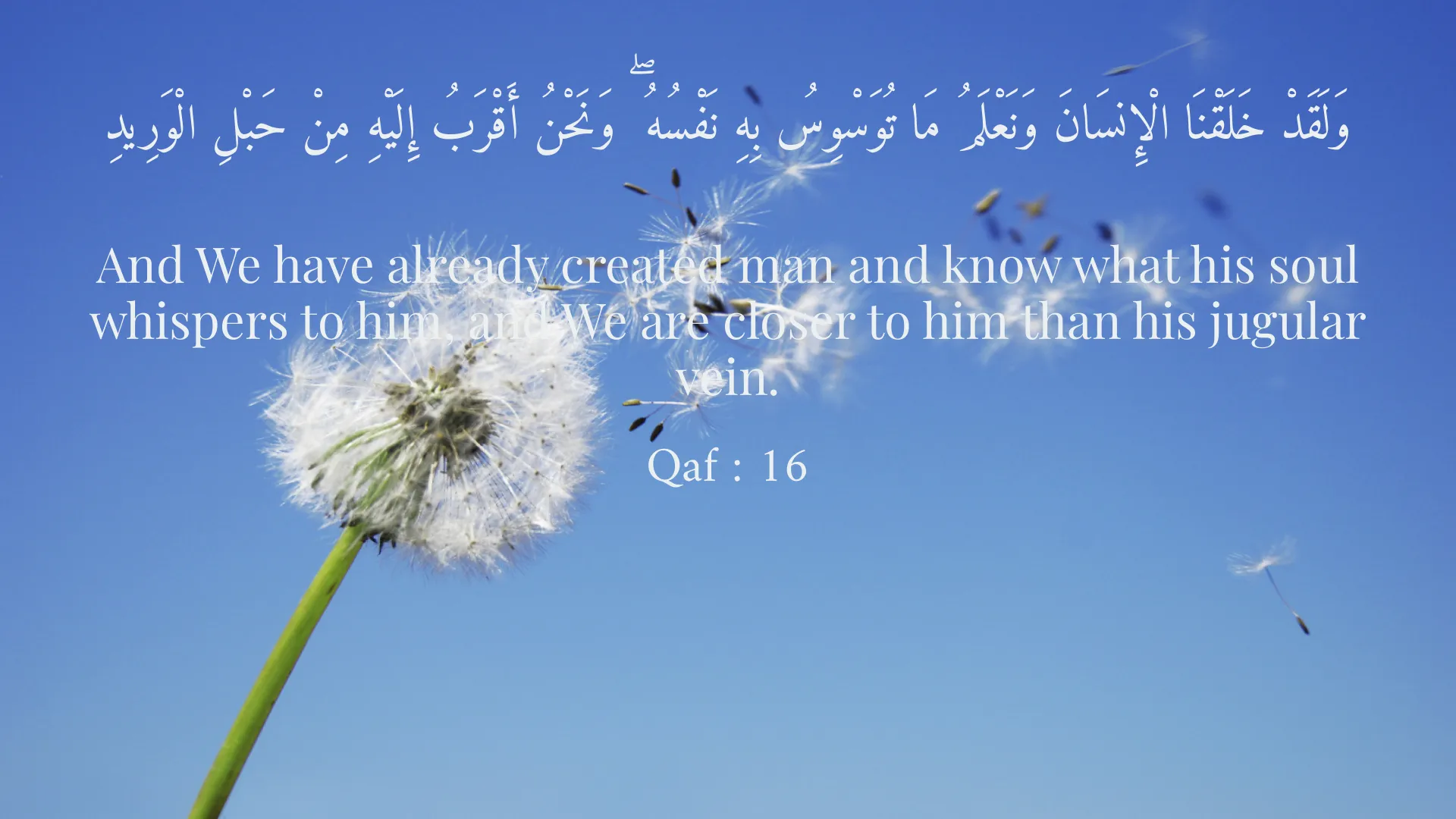
وَلَقَدْ خَلَقْنَا الْإِنسَانَ وَنَعْلَمُ مَا تُوَسْوِسُ بِهِ نَفْسُهُ ۖ وَنَحْنُ أَقْرَبُ إِلَيْهِ مِنْ حَبْلِ الْوَرِيدِ
And We have already created man and know what his soul whispers to him, and We are closer to him than his jugular vein.
Qaf : 16
مَا وَدَّعَكَ رَبُّكَ وَمَا قَلَىٰ
Your Lord has not forsaken you, nor has He become displeased.
Ad-Duha : 3
أَحَسِبَ النَّاسُ أَن یُتْرَکُوا أَن یَقُولُوا آمَنَّا وَهُمْ لَا یُفْتَنُونَ
Do people think that they will be left alone because they say, 'We believe,' and will not be tested?
Al-Ankabut : 2
وَإِذَا سَأَلَكَ عِبَادِي عَنِّي فَإِنِّي قَرِيبٌ ۖ أُجِيبُ دَعْوَةَ الدَّاعِ إِذَا دَعَانِ ۖ فَلْيَسْتَجِيبُوا لِي وَلْيُؤْمِنُوا بِي لَعَلَّهُمْ يَرْشُدُونَ
And when My servants ask you, [O Muhammad], concerning Me - indeed I am near. I respond to the invocation of the supplicant when he calls upon Me. So let them respond to Me [by obedience] and believe in Me that they may be [rightly] guided.
Al-Baqarah : 186
Short Story
It is narrated that a dervish lived for many years in a dry, barren desert, and despite all hardships, he never despaired of God's grace. One day, a traveler saw him and asked in surprise: "O man of God, how do you sustain yourself and survive in this arid desert? Do you not ask yourself why God has abandoned you here?" The dervish smiled and said: "My brother, you judge by my outward appearance and assume I have been abandoned. But I have never seen myself abandoned. Do you not know that the Creator is the Sustainer? Sometimes rain falls from the sky, and sometimes a spring gushes from beneath the earth. How could He who provides for the birds of the air and feeds the fish of the sea forget His servant? These hardships are meant for us to turn to Him more and to recognize the greatness of His power. He who created us is not heedless of our state for a single moment." The traveler was deeply affected by the dervish's words and understood that the feeling of abandonment is merely a product of a troubled mind, and that God is always watching and merciful.