Quranic Answer
Feeling useless or worthless is a profound human experience, occasionally distressing, that many of us encounter throughout our lives. This sensation can stem from various factors, including comparing ourselves to others, societal pressures, failing to achieve goals, or confronting life's inevitable challenges. However, from the perspective of the Holy Quran, this feeling is largely a misunderstanding of humanity's true status and the ultimate purpose of creation. The Quran clearly and explicitly articulates the invaluable worth of human beings and their noble purpose, offering profound remedies to overcome such debilitating feelings. The first and most crucial point emphasized by the Quran is the purposefulness of human creation. In numerous verses, Almighty Allah declares that humanity was not created in vain. In Surah Adh-Dhariyat, verse 56, He states: “And I did not create the jinn and mankind except to worship Me.” This pivotal verse signifies that our existence has a sublime, divine objective: to worship Allah. Yet, worship in Islam is not confined merely to ritualistic practices; rather, any action performed with sincere intention for the sake of Allah can be considered an act of worship. This encompasses seeking knowledge, working diligently to earn a lawful livelihood, helping others, being kind to parents, and even a simple smile. When individuals realize that every moment of their lives can be transformed into an act of worship, and that they are playing a vital role in the divine scheme of creation, the feeling of uselessness gives way to a profound sense of purpose and self-worth. Even when one is unable to undertake grand tasks due to illness, old age, or specific circumstances, their mere existence and their heartfelt connection with Allah hold immense value. The very essence of faith and the earnest endeavor to gain divine pleasure provide meaning and direction to one’s life, transforming seemingly mundane existence into a purposeful journey. The second key concept is the inherent dignity and honor bestowed upon humanity. Allah states in Surah Al-Isra, verse 70: “And We have certainly honored the children of Adam and carried them on the land and sea and provided them with good things and preferred them over much of what We have created, with [definite] preference.” This verse explicitly affirms that human beings are creatures endowed with inherent dignity. This honor is a divine gift, unrelated to worldly successes, social status, wealth, or even physical abilities. Simply being human is a tremendous blessing. When a person feels useless, it might be that they have overlooked or forgotten this intrinsic dignity. The Quran reminds us that we were fashioned by Allah's mighty hand, and into us was breathed His spirit; how then can we be worthless? This self-awareness of one's existential value forms the bedrock for overcoming feelings of uselessness. Every human being, irrespective of their outward circumstances, possesses a divine value that should never be underestimated or trivialized. The third Quranic approach to counter feelings of uselessness is to focus on the concept of trials and tribulations in life. The Quran describes worldly life as a realm of tests and trials. In Surah Al-Baqarah, verse 155, Allah says: “And We will surely test you with something of fear and hunger and a loss of wealth and lives and fruits, but give good tidings to the patient.” Problems, challenges, and even moments of weakness and inability are integral parts of this divine examination. The feeling of uselessness itself can be part of this test, designed to gauge our patience, reliance on Allah, and perseverance. From this perspective, even difficult and challenging moments can become sources of growth and spiritual elevation, rather than reasons for feeling worthless. Every step we take in confronting hardships, and every sincere intention we harbor to overcome them, is recorded in the sight of Allah and adds to our worth. This perspective profoundly transforms one's outlook on difficulties, turning them into opportunities for spiritual enrichment. The fourth crucial point is not to belittle good deeds and to avoid despair. Sometimes, feelings of uselessness arise because we believe our contributions are not significant enough or lack sufficient impact. The Quran, in Surah Az-Zalzalah, verses 7 and 8, assures us: “So whoever does an atom’s weight of good will see it, * And whoever does an atom’s weight of evil will see it.” These verses provide immense comfort, affirming that no good deed, no matter how minuscule, goes unnoticed by Allah and retains its full value. A smile, an encouraging word, a sincere prayer for another, or even a positive thought can be profoundly valuable. Therefore, we do not need to perform extraordinary feats to feel worthy; rather, these small, everyday actions performed with pure intentions can imbue our lives with profound meaning. Furthermore, the Quran vehemently prohibits despair. In Surah Az-Zumar, verse 53, it states: “Say, ‘O My servants who have transgressed against themselves [by sinning], do not despair of the mercy of Allah. Indeed, Allah forgives all sins. Indeed, it is He who is the Forgiving, the Merciful.’” This verse applies not only to sins but to any form of despair, including despair in our own abilities and worth. Allah's mercy is boundless, and He has always left the door open for His servants to return and regain their worth. Finally, connecting with Allah and His remembrance (Dhikr) serves as a potent antidote to feelings of uselessness. The Quran, in Surah Ar-Ra'd, verse 28, states: “Those who have believed and whose hearts are assured by the remembrance of Allah. Unquestionably, by the remembrance of Allah hearts are assured.” When the heart neglects the remembrance of Allah, a void may be created, which can then be filled with negative thoughts such as worthlessness. The remembrance of Allah, whether through prayer, supplication (du'a), recitation of the Quran, contemplation of creation, or any form of recalling the Divine presence, bestows tranquility upon the heart and connects individuals to the core of their being and their primary purpose. This connection is an inexhaustible source of meaning and motivation that dispels feelings of uselessness. Whenever the sensation of uselessness creeps in, we should turn to these verses and remind ourselves that we are valuable creations of Allah, endowed with a noble purpose, and that every small effort we make is immense in His sight. With reliance on Allah, patience, and persistent effort, we can overcome this feeling and lead a meaningful and fulfilling life.
Related Verses
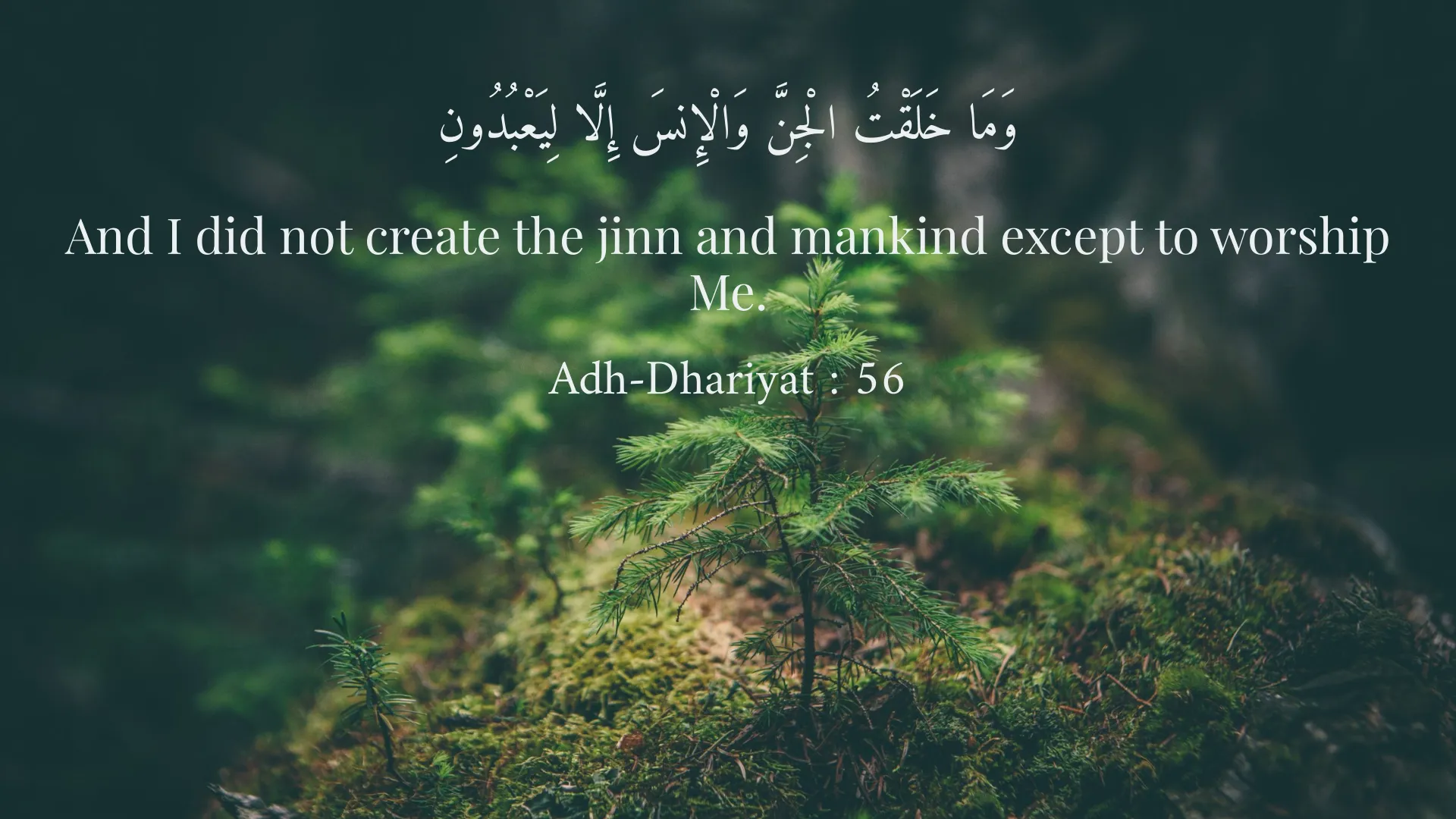
وَمَا خَلَقْتُ الْجِنَّ وَالْإِنسَ إِلَّا لِيَعْبُدُونِ
And I did not create the jinn and mankind except to worship Me.
Adh-Dhariyat : 56
وَلَقَدْ كَرَّمْنَا بَنِي آدَمَ وَحَمَلْنَاهُمْ فِي الْبَرِّ وَالْبَحْرِ وَرَزَقْنَاهُم مِّنَ الطَّيِّبَاتِ وَفَضَّلْنَاهُمْ عَلَىٰ كَثِيرٍ مِّمَّنْ خَلَقْنَا تَفْضِيلًا
And We have certainly honored the children of Adam and carried them on the land and sea and provided them with good things and preferred them over much of what We have created, with [definite] preference.
Al-Isra : 70
وَلَنَبْلُوَنَّكُم بِشَيْءٍ مِّنَ الْخَوْفِ وَالْجُوعِ وَنَقْصٍ مِّنَ الْأَمْوَالِ وَالْأَنفُسِ وَالثَّمَرَاتِ ۗ وَبَشِّرِ الصَّابِرِينَ
And We will surely test you with something of fear and hunger and a loss of wealth and lives and fruits, but give good tidings to the patient.
Al-Baqarah : 155
فَمَن يَعْمَلْ مِثْقَالَ ذَرَّةٍ خَيْرًا يَرَهُ
So whoever does an atom’s weight of good will see it,
Az-Zalzalah : 7
Short Story
In Saadi's Gulistan, it is narrated that a dervish, despite being poor and in need, never complained about his poverty and was always grateful. One day, a king saw him and asked, "O dervish, how are you so joyful in this state?" The dervish replied, "O King, I am not useless. Every morning when I wake up, I know that I have hands for prayer and a heart for the remembrance of God. Though I have no treasures, I possess a treasure of faith and contentment that no king has. The value of a human being lies in their good deeds and pure intentions, not in their possessions." The king took heed of his words and understood that true peace lies within, in a sense of purpose, not in the glitter of the world.