Quranic Answer
The phenomenon of intention and its alteration is a profound and crucial topic within human psychology and the spiritual journey, especially when viewed through the lens of Quranic teachings. While the Holy Quran does not present an explicit, bulleted list of reasons for why intentions change, it provides a comprehensive framework for understanding this phenomenon by detailing human nature, external influences, and internal struggles. In Islam, intention (niyyah) is not merely a fleeting thought, but a resolute determination of the heart and the soul's orientation towards an action. The value of human deeds is fundamentally dependent on the underlying intention. This foundational principle is encapsulated in the famous prophetic saying: “Indeed, actions are judged by intentions.” Therefore, comprehending why intentions fluctuate is vital for any Muslim striving for divine proximity and self-rectification. One of the most significant factors highlighted in the Quran, which profoundly influences the stability and purity of intentions, is the whisperings and deceptions of Satan (Shaytan). Satan, the sworn enemy of humanity, constantly endeavors to deviate the human heart and intention through various means. He instills fear of poverty to deter individuals from spending in the way of Allah, or he beautifies sin to lure a pure intention towards corruption. The Quran explicitly refers to Satan's destructive role in numerous verses. For instance, in Surah Al-Baqarah, verse 268, it states: "Satan threatens you with poverty and orders you to immorality, while Allah promises you forgiveness from Him and bounty. And Allah is all-Encompassing and Knowing." This verse clearly illustrates how Satan, with false promises and fear-mongering, weakens good intentions and pushes individuals towards sin. An intention to help the needy might shift to one of hoarding wealth for oneself due to the fear of personal destitution instilled by Shaytan. Secondly, the allure and seduction of worldly life (Dunya) and its transient adornments play a major role. The Quran repeatedly warns against the ephemeral and fleeting nature of this world and the dangers of becoming overly attached to it. When the human heart becomes captivated by the impermanent possessions of this world—be it wealth, power, or fame—its pure intentions, which were initially directed towards the Hereafter and Allah's pleasure, gradually become tainted with worldly desires. The purpose of worship might shift from seeking divine pleasure to seeking ostentation and public praise, or the intention to serve humanity might transform into a quest for personal gain and influence. In Surah Al-Hadid, verse 20, Allah articulates this truth: "Know that the worldly life is only play and amusement, and adornment and boasting to one another, and competition in increase of wealth and children - like the example of a rain whose [resulting] plant growth pleases the disbelievers; then it dries and you see it [become] yellow; then it becomes [scattered] debris. And in the Hereafter is severe punishment and forgiveness from Allah and approval. And what is the worldly life except the enjoyment of delusion." This verse vividly demonstrates how preoccupation with the superficial and transient aspects of this world can derail one's core intentions and divert them from the path of truth. Third, and perhaps the most fundamental cause, is the weaknesses and inclinations of the Nafs al-Ammarah (the soul that inclines to evil). Humans possess a soul that gravitates towards comfort, desires, and arrogance. This inner self constantly pulls individuals towards sin and self-centeredness, and it can alter good intentions that stem from a pure disposition. Verse 53 of Surah Yusuf alludes to this bitter truth: "And I do not acquit myself. Indeed, the soul is a persistent enforcer of evil, except for what my Lord has mercy upon. Indeed, my Lord is Forgiving and Merciful." The struggle against this rebellious soul is termed the Greater Jihad, and in this battle, intentions are constantly tested and prone to change. Sometimes, an individual begins an endeavor with a pure intention, but due to the weakness of the self or exhaustion on the path, their initial intention weakens, and worldly objectives or a desire for fame take its place. Weakness of faith (Iman) and certainty (Yaqeen) is another significant reason for the instability of intentions. When a person's faith weakens, their heart becomes more vulnerable to temptations and worldly attachments. An individual with strong faith remains steadfast on their path, and their intentions are more resolute. However, someone with weak faith is easily swayed by every wind and storm, causing their intentions to change and potentially leading them astray from the straight path. The Quran repeatedly emphasizes the importance of strengthening faith and reliance on Allah, as these serve as a shield against negative shifts in intentions. Furthermore, life experiences and divine trials can also impact intentions. Sometimes, a person begins a task with a pure intention, but upon encountering difficulties, failures, or even sudden successes, their intention transforms. This transformation can be positive (e.g., greater patience and perseverance) or negative (e.g., despair or arrogance). Allah states in the Quran that He tests His servants with both good and evil to reveal the truth of their intentions. Ultimately, it must be acknowledged that the human heart, by its very nature, is continuously in a state of flux. These changes can be either positive or negative. The role of the believer in this dynamic is to constantly purify their intentions and guide them towards divine pleasure through the remembrance of Allah (dhikr), seeking steadfastness from Him (dua), perseverance in the path of truth, and avoiding sins and tempting factors. This is an ongoing effort and an internal struggle that continues until the last moments of life. Therefore, the changing of intentions is not only natural but also a part of spiritual dynamism and divine testing, providing an opportunity for continuous growth and purification.
Related Verses
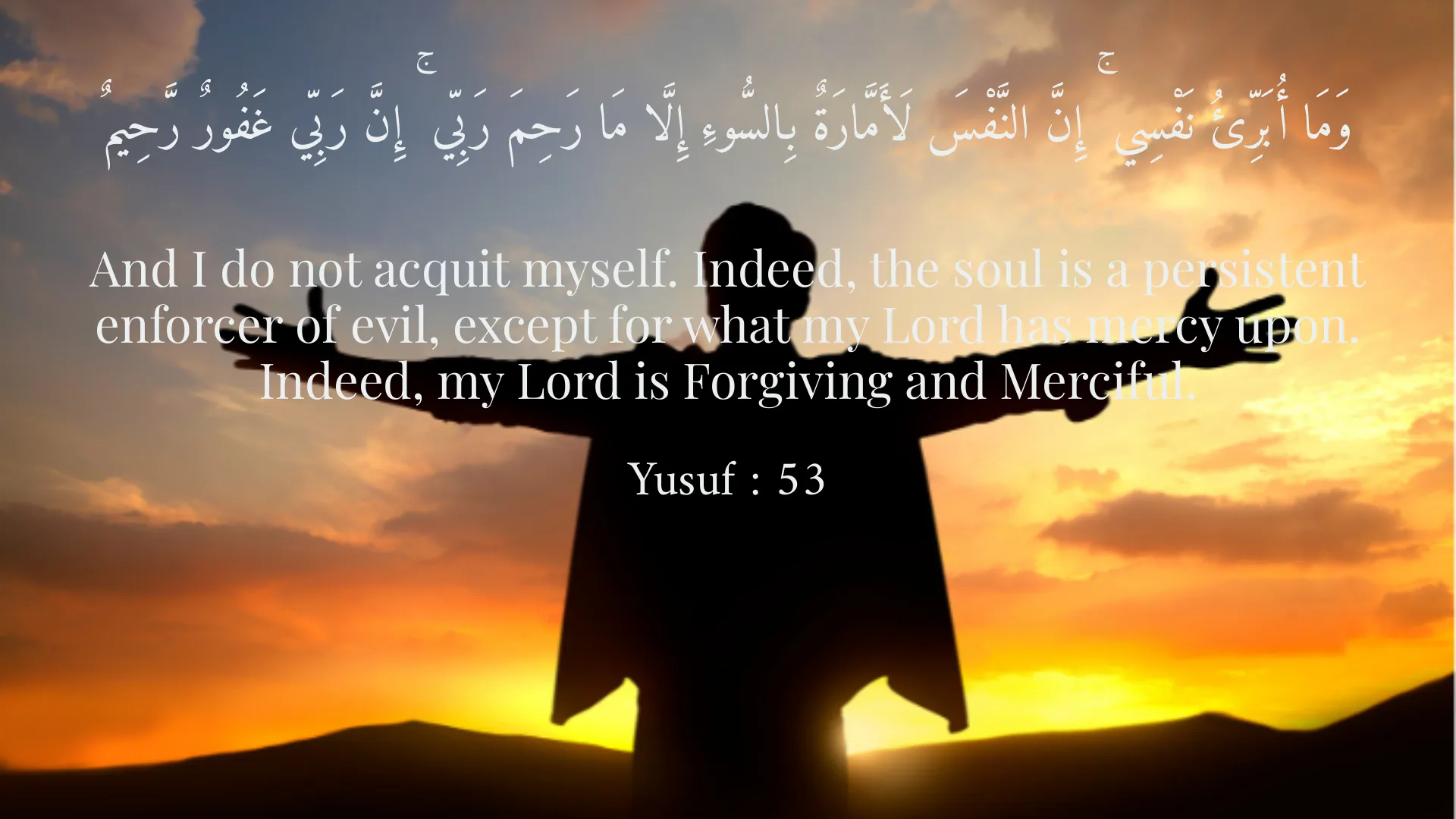
وَمَا أُبَرِّئُ نَفْسِي ۚ إِنَّ النَّفْسَ لَأَمَّارَةٌ بِالسُّوءِ إِلَّا مَا رَحِمَ رَبِّي ۚ إِنَّ رَبِّي غَفُورٌ رَّحِيمٌ
And I do not acquit myself. Indeed, the soul is a persistent enforcer of evil, except for what my Lord has mercy upon. Indeed, my Lord is Forgiving and Merciful.
Yusuf : 53
الشَّيْطَانُ يَعِدُكُمُ الْفَقْرَ وَيَأْمُرُكُم بِالْفَحْشَاءِ ۖ وَاللَّهُ يَعِدُكُم مَّغْفِرَةً مِّنْهُ وَفَضْلًا ۗ وَاللَّهُ وَاسِعٌ عَلِيمٌ
Satan threatens you with poverty and orders you to immorality, while Allah promises you forgiveness from Him and bounty. And Allah is all-Encompassing and Knowing.
Al-Baqarah : 268
اعْلَمُوا أَنَّمَا الْحَيَاةُ الدُّنْيَا لَعِبٌ وَلَهْوٌ وَزِينَةٌ وَتَفَاخُرٌ بَيْنَكُمْ وَتَكَاثُرٌ فِي الْأَمْوَالِ وَالْأَوْلَادِ ۖ كَمَثَلِ غَيْثٍ أَعْجَبَ الْكُفَّارَ نَبَاتُهُ ثُمَّ يَهِيجُ فَتَرَاهُ مُصْفَرًّا ثُمَّ يَكُونُ حُطَامًا ۚ وَفِي الْآخِرَةِ عَذَابٌ شَدِيدٌ وَمَغْفِرَةٌ مِّنَ اللَّهِ وَرِضْوَانٌ ۚ وَمَا الْحَيَاةُ الدُّنْيَا إِلَّا مَتَاعُ الْغُرُورِ
Know that the worldly life is only play and amusement, and adornment and boasting to one another, and competition in increase of wealth and children - like the example of a rain whose [resulting] plant growth pleases the disbelievers; then it dries and you see it [become] yellow; then it becomes [scattered] debris. And in the Hereafter is severe punishment and forgiveness from Allah and approval. And what is the worldly life except the enjoyment of delusion.
Al-Hadid : 20
Short Story
Once upon a time, there was a simple-hearted and contented dervish who, with pure intention, had dedicated his life to worship and contentment. He was satisfied with the bare minimum, and his heart found peace in the remembrance of God. Days turned into years until, one day, he found a chest full of golden coins. Initially, he intended to spend this wealth in the way of God, but the whispers of his lower self and the glitter of the world gradually changed his intention. Instead of charity, he began to dream of building a magnificent house, then thought of engaging in trade to multiply his wealth. Little by little, his initial pure intention was forgotten. Sa'di wisely said: 'Setting one's heart on the world is the affliction of religion and the comfort of the heart.' And so, the dervish's intention transformed from sincere worship to accumulating worldly possessions, and peace departed from his heart.