Quranic Answer
Title: The Danger of Self-Sufficiency: A Reflection on Human Spiritual Forgetfulness Introduction Human beings, for the majority of their lives, experience periods of comfort and ease, often lulling them into a state of complacency. During these times of tranquility, there exists a real danger of unconsciously believing that they do not require God. This phenomenon is not merely an observation but a recurring theme found within various religious texts, most notably the Quran. It warns of the tendency for man to forget the divine during moments of ease and to instead embrace a sense of self-sufficiency and self-centeredness that can lead to spiritual neglect. This article will explore the implications of this forgetfulness and emphasize the necessity for individuals to remain vigilant and aware of their need for divine guidance, particularly in times of comfort. Self-Sufficiency and Forgetfulness Throughout human history, individuals have often strived for self-sufficiency, believing that they are capable of navigating life's challenges without divine assistance. When life is comfortable, it is easy to fall into the trap of thinking that one’s achievements are solely the product of personal effort. However, such a perspective can lead to a form of spiritual arrogance, where individuals may overlook their dependence on God. The Quran addresses this issue directly, for instance in Surah Az-Zumar, verse 53, which states, 'Say, O My servants who have believed, fear your Lord. For those who do good in this world is good, and the earth of Allah is spacious. Indeed, the patient will be given their reward without account.' This verse urges believers to remain grounded in their faith and to cultivate a sense of humility, recognizing that goodness and success are not solely from their own merit but are fundamentally blessings bestowed by God. A Reflection on Surah Al-Alaq Additionally, Surah Al-Alaq, verses 6 to 7 states, 'Indeed, man transgresses because he sees himself self-sufficient.' This declaration serves as a profound reminder that an inflated sense of self-worth may prevent one from fully submitting to God. It is critical to understand that self-sufficiency, while often celebrated in a modern context, can become a hindrance to spiritual growth. When individuals prioritize their own abilities and achievements, they inadvertently dismiss the larger role that divine providence plays in their lives. As such, faith should not be relegated to times of hardship alone, but rather embraced continuously, recognizing that ease is equally a test of one's faith and humility. The Paradox of Comfort The paradox of comfort is that it can simultaneously provide peace yet lead to spiritual apathy. In moments of stress and struggle, people are often drawn closer to God—praying for assistance, seeking forgiveness, and nurturing their faith. Conversely, during times of ease, the urgency of prayer and remembrance can wane, as individuals may feel less inclined to seek divine support or guidance. This forgetfulness can have consequences not only for one’s spiritual health but also for their moral and ethical judgments. The Quran invites believers to consider the transitory nature of worldly comforts and encourages them to remain steadfast in their remembrance of God, irrespective of their circumstances. Such an approach fosters a stronger, more resilient faith that remains anchored in gratitude and humility. The Role of Prayer and Remembrance To counteract the tendencies of forgetfulness and self-centeredness, individuals are encouraged to engage in regular prayer (Salah) and remembrance (Dhikr) of God. These practices serve as crucial reminders of one’s relationship with the divine, providing a spiritual anchor amid the distractions of daily life. In moments of comfort, it is especially important to acknowledge blessings as gifts from God, rather than mere outcomes of personal effort. By doing so, believers can cultivate a mindset that appreciates the divine hand in their successes while remaining humble and submissive in their endeavors. Furthermore, prayer and remembrance allow individuals to express gratitude for their comforts and to remain conscious of their vulnerabilities. It is imperative to understand that no state—be it comfort or struggle—exists outside the realm of divine will. By remaining thankful and spiritually connected, individuals can foster a life imbued with purpose and meaning, rather than one driven by self-sufficiency and misplaced priorities. Lessons from Spiritual Teachings Many spiritual teachings emphasize the transient nature of earthly pleasures and the importance of cultivating a heart that remains receptive to divine guidance. The teachings of various prophets and holy figures remind us that both trials and blessings are pathways to deeper spiritual understanding. In many traditions, stories are recounted to illustrate the necessity of recognizing one's limitations and the chronic nature of human forgetfulness. Reflection on these teachings can guide believers in navigating life’s ebb and flow, ensuring they remain anchored in faith irrespective of circumstances. Conclusion In conclusion, the danger of self-sufficiency during times of comfort must not be underestimated. Humans often risk forgetting God during moments of ease, falling prey to spiritual forgetfulness fostered by self-centeredness. The Quran warns believers about the perils of such independence and emphasizes the importance of remaining vigilant in faith. Surat Az-Zumar and Surat Al-Alaq serve as potent reminders to cultivate humility, utilize prayer, and engage in remembrance to ward off complacency. By recognizing all blessings as gifts and understanding that comfort can be both a blessing and a test, individuals can lead lives that are reflective of gratitude, faith, and deep spiritual awareness. Ultimately, the journey of faith calls for constant remembrance and reliance on God, regardless of the state of one’s worldly circumstances. Through these reflections, believers can attain a balanced perspective towards comfort, taking heed from warnings about self-sufficiency, and endeavoring to remain ever-mindful of their need for divine guidance and support.
Related Verses
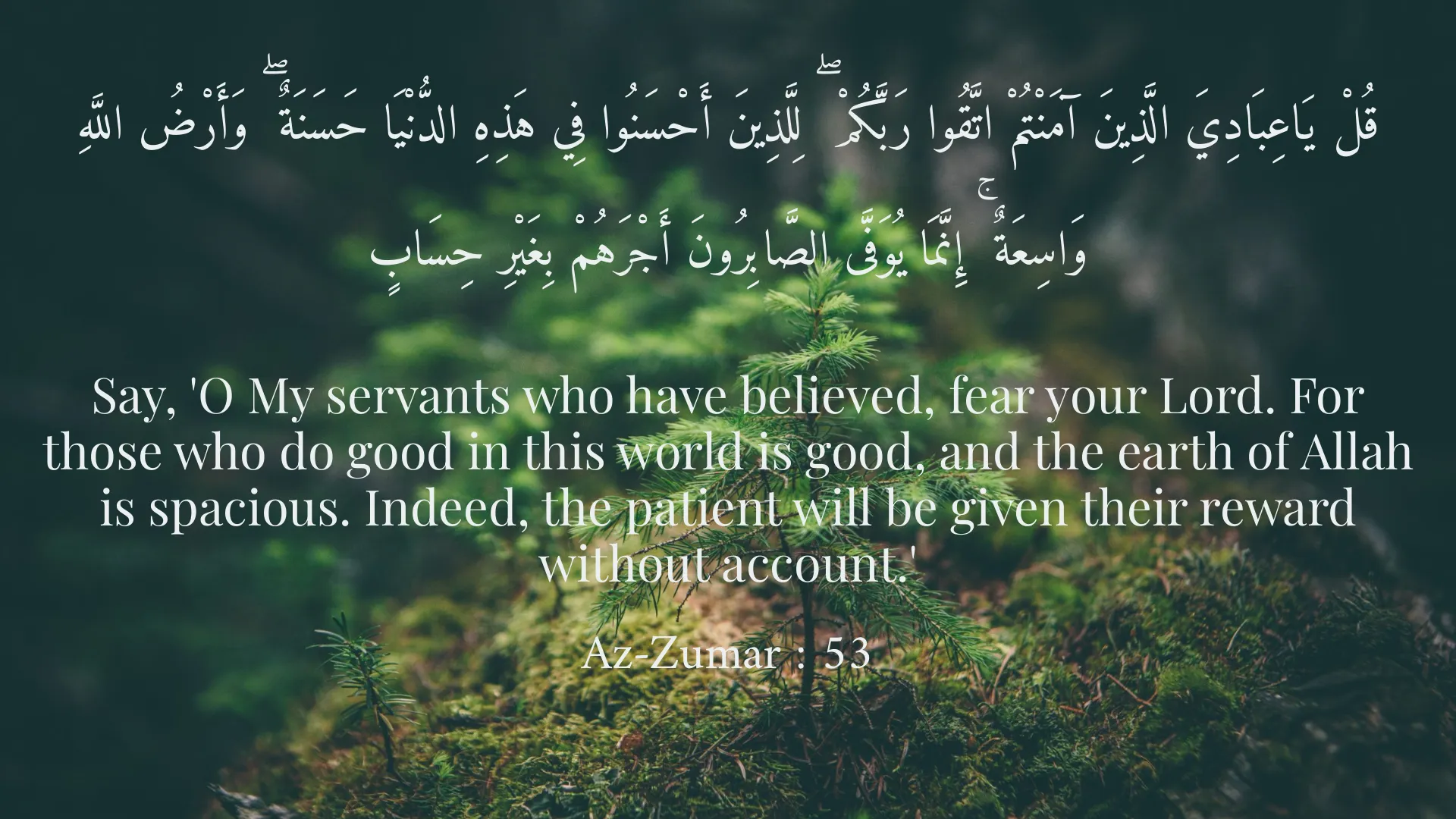
قُلْ يَاعِبَادِيَ الَّذِينَ آمَنْتُمْ اتَّقُوا رَبَّكُمْ ۖ لِلَّذِينَ أَحْسَنُوا فِي هَذِهِ الدُّنْيَا حَسَنَةٌ ۖ وَأَرْضُ اللَّهِ وَاسِعَةٌ ۚ إِنَّمَا يُوَفَّى الصَّابِرُونَ أَجْرَهُمْ بِغَيْرِ حِسَابٍ
Say, 'O My servants who have believed, fear your Lord. For those who do good in this world is good, and the earth of Allah is spacious. Indeed, the patient will be given their reward without account.'
Az-Zumar : 53
كَلَّا إِنَّ الْإِنْسَانَ لَيَطْغَىٰ أَن رَّءَاهُ اسْتَغْنَىٰ
No! Indeed, man transgresses because he sees himself self-sufficient.
Al-Alaq : 6
Short Story
Once upon a time, a young man named Amir was seeking spiritual peace. He would remember God in times of trouble and turn to Him in prayer. However, when he overcame his difficulties, he often forgot about God. One day, a wise old man told him, 'Amir, you remember God when you're in hardship, but you should also sincerely remember Him in times of ease.' This statement made Amir reflect and he decided to keep the remembrance of God with him at all times, even during moments of comfort.