Quranic Answer
The question of why some believers might appear emotionless is a nuanced one, requiring a deep understanding of both Quranic teachings and human psychology. It is crucial to clarify that the Holy Quran never advocates for emotionlessness or neutrality in the face of life's events. Instead, it emphasizes the proper management of emotions and their redirection towards divine pleasure. If some believers seem emotionless outwardly, this is typically not an indication of a lack of emotions but rather a reflection of deeper inner states and virtues heavily emphasized in the Quran. These states include reliance on God (Tawakkul), patience (Sabr), detachment from worldly matters (Zuhd), and God-consciousness (Taqwa), which will be discussed in detail. Firstly, and perhaps most significantly, the concept of 'Tawakkul' or complete reliance on God can lead to this perception. Tawakkul means placing full and unconditional trust in God’s plan and power in all aspects of life. When a believer reaches this level of reliance, worldly anxieties, fear of the future, or grief over losses can no longer profoundly disturb them. They understand that everything is in God's hands and that whatever happens contains a wisdom and goodness, even if it appears undesirable. This inner peace and lack of intense agitation might be interpreted by an external observer as emotionlessness, whereas, in reality, it is the pinnacle of spiritual assurance and tranquility of the soul. The Quran mentions Tawakkul in several verses. For instance, in Surah Al-Imran, verse 159, it states: "...then when you have taken a decision, put your trust in Allah, certainly, Allah loves those who put their trust in Him." This reliance empowers the believer to stand firm and steadfast in the face of adversities, and this steadfastness is sometimes mistakenly perceived as indifference. Secondly, the virtue of 'Sabr' or patience plays a vital role. In Islam, patience is not merely passive endurance of difficulties but actively persevering through hardships, maintaining self-control during calamities, and steadfastly adhering to God's commands. A patient believer, in times of affliction and distress, neither complains excessively nor shows extreme agitation. Instead of expressing intense dissatisfaction, they remember God and seek His help. This self-restraint and calmness in the face of tribulations, stemming from the strength of faith and hope for divine reward, can give an impression of being emotionless. In Surah Al-Baqarah, verse 155, we read: "And We will surely test you with something of fear and hunger and a loss of wealth and lives and fruits, but give good tidings to the patient." This verse indicates that tests are an integral part of the path of faith, and patience is a distinguished characteristic of believers. True patient individuals manage their grief and sorrow internally, seeking solutions with reliance on God, rather than exhibiting them excessively. Thirdly, 'Zuhd' or detachment from excessive worldly concerns contributes to this perception. Zuhd in Islam does not mean complete withdrawal from the world and its pleasures. Instead, it signifies not allowing the heart to become overly attached to material possessions and understanding the truth that this world is a passage, not a permanent dwelling. A believer who has reached a degree of Zuhd is neither excessively joyful upon gaining worldly wealth or status, nor profoundly saddened by their loss. This is because they recognize true value in eternal matters and understand that worldly possessions are fleeting. This state, beautifully articulated in Surah Al-Hadid, verse 23: "So that you do not grieve over what has escaped you nor exult [arrogantly] over what He has given you. And Allah does not like every self-deluded and boastful person," might appear to others as disinterest or emotionlessness towards the fluctuations of worldly life, while it is a sign of insight and a profound perspective on the realities of existence. Fourthly, 'Taqwa' or God-consciousness is another factor. Taqwa means guarding oneself against sins and being constantly mindful of God. A God-conscious believer, due to a perpetual awareness of God's presence and accountability on the Day of Judgment, tends to be more serious and thoughtful. They refrain from idle talk or actions that might deviate them from the straight path, and this state might be accompanied by less unnecessary joking or excessive laughter. This seriousness and composure can be mistakenly interpreted as a lack of vivacity or emotion. However, in the heart of a pious believer, the love for God and the longing to meet Him have replaced any fleeting pleasures, and this love bestows a unique depth and richness upon their soul. Furthermore, achieving 'inner tranquility' stemming from the remembrance of God plays a significant role in this outward appearance. The Quran states: "Those who have believed and whose hearts are assured by the remembrance of Allah. Unquestionably, by the remembrance of Allah hearts are assured" (Surah Ar-Ra'd, verse 28). This tranquility protects the believer from the severe emotional fluctuations typically experienced by individuals lacking spiritual anchors. In the ups and downs of life, they maintain an emotional stability that originates from the strength of their faith. In conclusion, it must be emphasized that believers are never truly emotionless. They experience love, affection, compassion, grief, and joy, but these emotions are managed within the framework of divine teachings. They show love to others, are affected by the suffering of others, and rejoice in the triumph of truth. However, instead of allowing emotions to take control, they are guided by reason and faith. What appears from afar as emotionlessness is, in reality, a sign of spiritual maturity, steadfastness of faith, deep reliance on the Creator, and inner peace derived from connection to the boundless source of existence. This state is not a deficiency but the pinnacle of human perfection and true tranquility that every human being seeks.
Related Verses
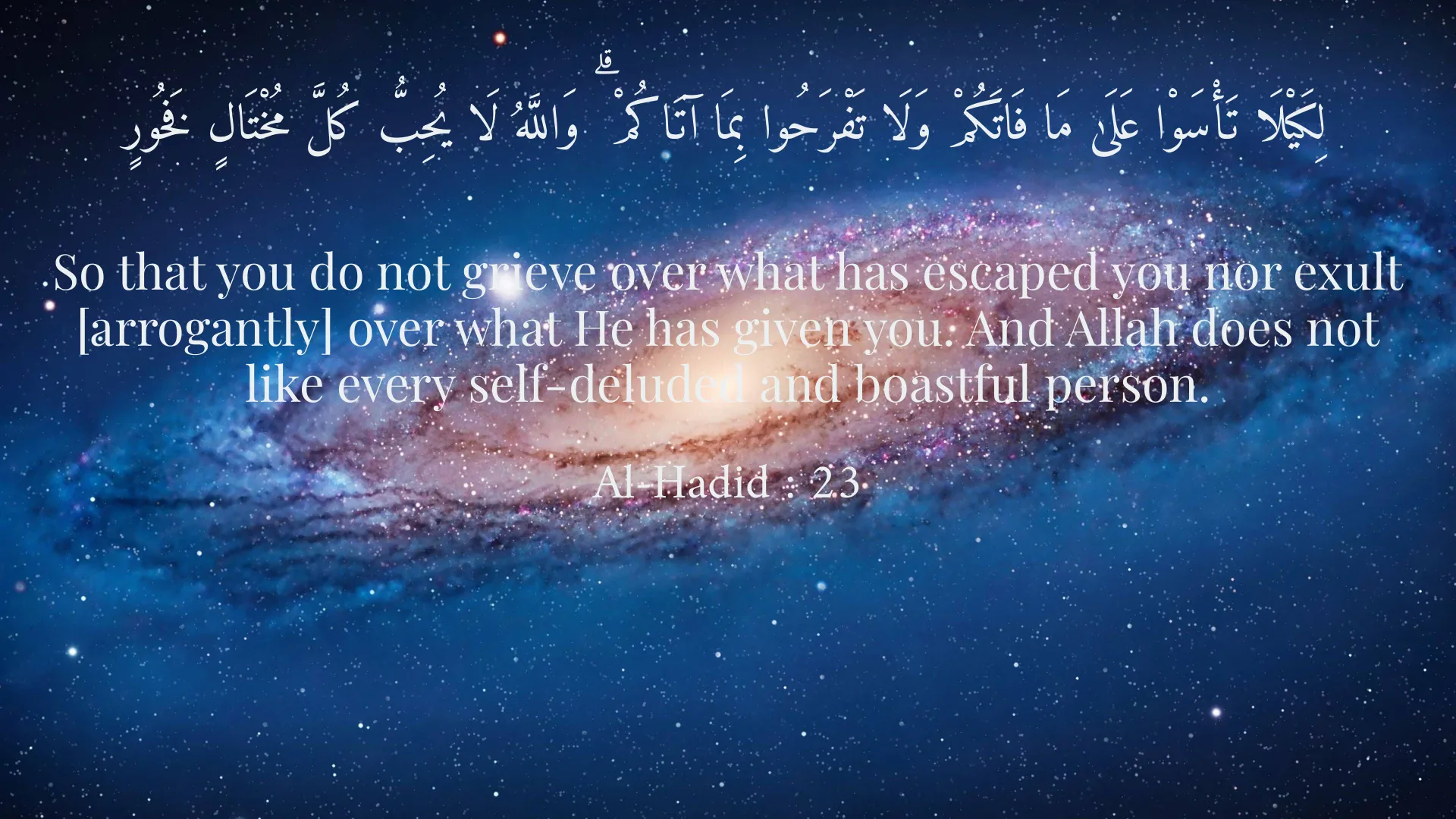
لِكَيْلَا تَأْسَوْا عَلَىٰ مَا فَاتَكُمْ وَلَا تَفْرَحُوا بِمَا آتَاكُمْ ۗ وَاللَّهُ لَا يُحِبُّ كُلَّ مُخْتَالٍ فَخُورٍ
So that you do not grieve over what has escaped you nor exult [arrogantly] over what He has given you. And Allah does not like every self-deluded and boastful person.
Al-Hadid : 23
الَّذِينَ آمَنُوا وَتَطْمَئِنُّ قُلُوبُهُم بِذِكْرِ اللَّهِ ۗ أَلَا بِذِكْرِ اللَّهِ تَطْمَئِنُّ الْقُلُوبُ
Those who have believed and whose hearts are assured by the remembrance of Allah. Unquestionably, by the remembrance of Allah hearts are assured.
Ar-Ra'd : 28
يَا أَيُّهَا الَّذِينَ آمَنُوا اصْبِرُوا وَصَابِرُوا وَرَابِطُوا وَاتَّقُوا اللَّهَ لَعَلَّكُمْ تُفْلِحُونَ
O you who have believed, persevere and endure and remain stationed and fear Allah that you may succeed.
Al-Imran : 200
Short Story
They say that in ancient times, there was a wealthy king who, despite the vastness of his kingdom and the multitude of his armies, was constantly anxious and troubled in heart. One day, he passed by a monastery and saw a dervish, with torn clothes and an empty bowl, sitting in a state of utmost peace and nonchalance. The king, surprised, asked: "O Dervish, what has come upon you that with such meager possessions, you are so at ease, while I, with all this bounty, have not a moment's peace?" The dervish, with a calm smile, replied: "O King, you have attached your heart to this fleeting world and what you possess from it, hence you constantly fear its loss, and your joy is also unstable. But I have entrusted my heart to God, and I know He is the Provider. I am neither saddened by what I lack, nor excessively joyful over what I have. For I know that everything is transient, and only He remains." The king took heed of these words and understood that true peace lies in attaching one's heart to the Creator, not to apparent reasons or worldly possessions. This dervish, though seemingly indifferent to the world outwardly, had a heart full of reliance and assurance—a state that might be perceived as emotionlessness from afar, but in reality, was the peak of security and tranquility.